Health, care and control: Entanglements of healthcare provision in immigration detention
A new thematic series critically examines the entanglements between healthcare provision and state violence in detention centres in Greece and Italy
Posted:
Time to read:
5 Minutes
Post by Andriani Fili and Francesca Esposito. Andriani is a Wellcome Trust Postdoctoral Research Fellow at the Centre for Criminology, University of Oxford, and co-director of Border Criminologies.
Francesca is a researcher at the Department of Psychology "Renzo Canestrari", University of Bologna and associate director at Border Criminologies. This post is the introduction to a thematic series on healthcare and detention.
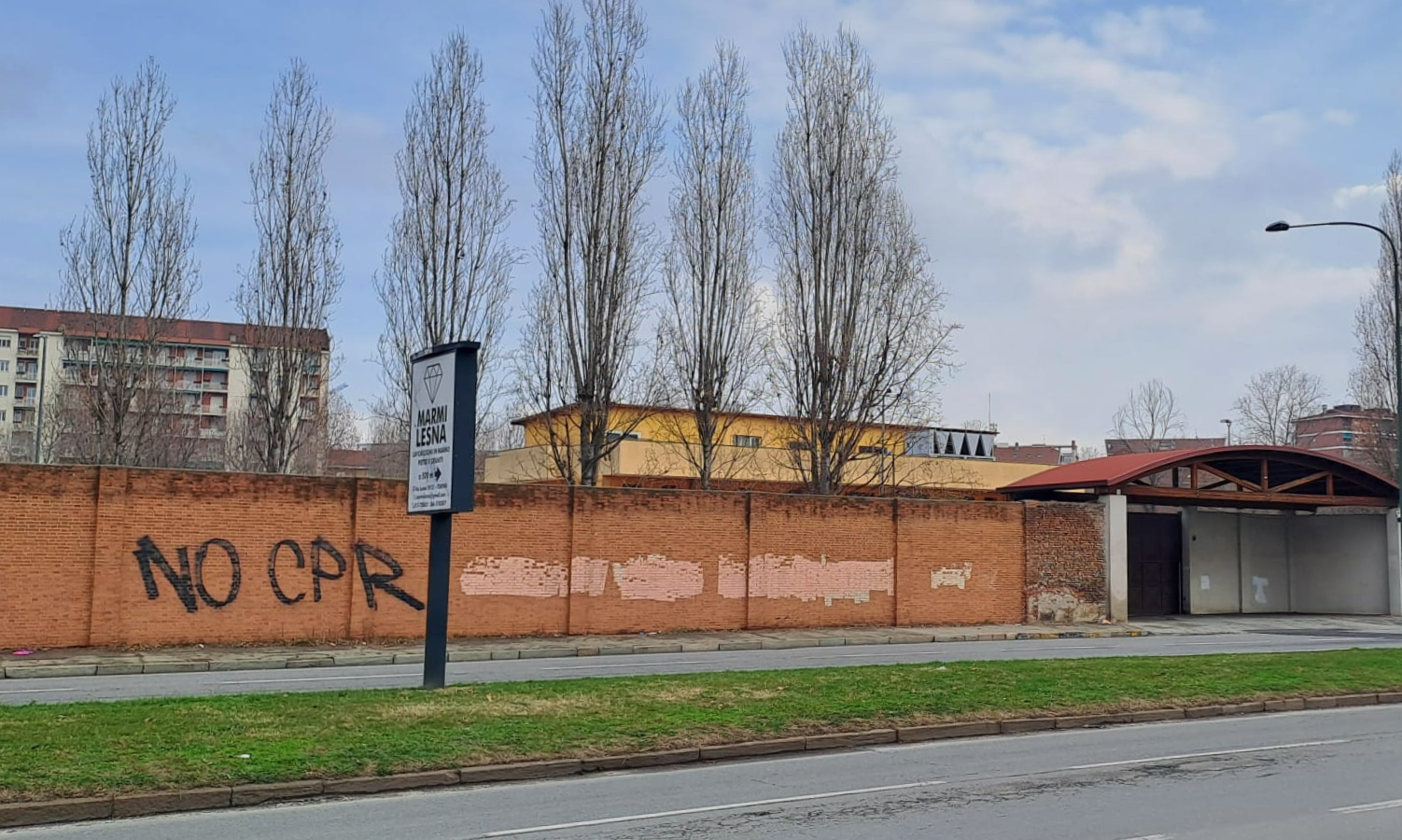
Across Europe, the provision of healthcare within immigration detention centres remains a site of moral tension and political contestation. While framed as a humanitarian duty, health interventions frequently operate within logics of surveillance and discipline. Italy and Greece, two major gateways of European migration control, offer crucial vantage points from which to understand these dynamics, yet comparative research remains limited.
This new thematic series will build on the authors’ ongoing collaborative work on detention regimes and state violence. This follows a recent workshop organised at the University of Bologna as part of the project Health, Care, and Control: Entanglements of Healthcare Provision in Immigration Detention in Italy and Greece. The project was funded by the British Academy through the Newton International Fellowships Alumni 2025. It critically examines the entanglements between healthcare provision and state violence in detention centres in Greece and Italy, exploring how practices of care intersect with mechanisms of control, shaping the lived experiences of those confined and the legitimacy of these custodial regimes.
Building on existing interview, observational, and policy data, and developed in dialogue with activists, community-based organisations and people with lived experience of detention, the project seeks to identify how healthcare systems both mitigate and reproduce institutional harm. It also aims to contribute new comparative insights to debates on health governance, punishment, and migration control, and potentially feed into the open-access Detention Landscapes platform.
Healthcare in detention is not neutral
The workshop, held in February 2026, was organised around a core question: When, how, and at what cost does healthcare provision in immigration detention function as a mechanism of control – and where, if anywhere, does it open possibilities for resistance, accountability, or systemic challenge?
Practitioners, activists, healthcare professionals, lawyers, journalists, and researchers from Italy and Greece engaged with this question across three main themes:
- The medicalisation of detention and the production of institutional legitimacy:
How does the presence of healthcare services contribute to the legal, political, or moral justification of detention? How are concepts such as vulnerability, fitness for confinement, and care mobilised in administrative and legal processes?
- Ethical and professional dilemmas of providing care within coercive settings:
What ethical conflicts arise for healthcare professionals, lawyers, and NGO workers operating within detention? How are harm, complicity, refusal, and professional responsibility negotiated in practice?
- The strategic possibilities and limits of mobilising healthcare to challenge detention regimes:
Under what conditions can healthcare practices, medical evidence, or public health framings be used to challenge detention? Where do such strategies risk reinforcing the very systems they seek to contest?

The core argument that framed our discussions, and which also underpins the pieces composing this thematic series, is that healthcare in detention is not neutral. It simultaneously provides treatment, enables detention to function administratively, and contributes to the legitimisation of detention regimes. The mere presence of healthcare services can make detention appear humane, even when care is minimal or inadequate. Yet, as campaigns by Italian doctors and psychologists against detention reveal, healthcare is also a site of resistance. As has been explored on this blog, the demand on doctors to declare a person ‘fit’ for detention in Italy reveals a clinical paradox. Care can both produce and sustain harm, as well as challenge it. But relying on healthcare to contest detention carries its own risks, not least that of reinforcing the system it seeks to challenge.
Incompatibility between care and structural exclusion
Across Italy and Greece, the patterns are consistent. Access to healthcare for those detained is limited and often mediated by police. Health and psychological care are fragmented, under-resourced, and discontinuous. Psychotropic medication is administered at rates far exceeding those in outside populations, raising serious concerns about sedation as a management tool rather than a therapeutic one. Detained people are frequently unaware of what type of drugs they are being given. Chronic conditions go untreated. Follow-up care after release barely exists.
The gap between what detention looks like on paper and what it looks like in practice is stark, and healthcare is no exception. Official documents describe humane, structured environments offering activities and support. But participants with direct experience from the field document something completely different: degrading conditions, constant distress, self-harm, suicide attempts, and institutional records that systematically reframe suffering as behaviour to be managed. Medical absence, or the withdrawal of care, can function as a form of violence. Neglect and abandonment, alongside direct medical violence, together constitute what has been described as a necropolitical regime of ‘uncare’. Externalisation, as in the case of Italian centres in Albania, further reduces visibility and accountability, intensifying the opacity of healthcare conditions.
For healthcare professionals working inside these systems, the ethical costs are high. Most are employed by the private companies managing the centres, raising acute questions of dual loyalty. Staff face precarious contracts, unsafe conditions, high stress, and burnout. Healthcare practitioners working outside detention, such as those within the Italian public health system, face direct pressure to certify people as “fit for detention” under conditions that make proper assessment impossible: limited time, no interpreters, institutional pressure from police and, oftentimes, medical directors. Some refuse. But refusal is not without consequence, as the criminalisation of Italian doctors, which has recently seen a dramatic escalation, is making painfully clear. In Greece, healthcare professionals frequently operate within institutional environments where access to patients, referrals to external hospitals, and movement within detention centres are mediated by police authorities. This risks compromising professional obligations towards patients, due to organisational pressures linked to detention and deportation objectives. As such, healthcare data feeds directly into administrative and legal decision-making.
None of this is accidental. It is, as one workshop participant put it, a system that may be structurally designed to fail: for migrants, as well as for the professionals asked to 'care' for them within it. The evidence emerging from Greek and Italian detention centres suggests that the central problem is not simply the quality of healthcare provision. Rather, it is the incompatibility between care and a system structured around exclusion. In these settings, harm is not incidental but structurally produced. Calls for better healthcare are undoubtedly necessary. Yet they also raise a deeper question: can detention ever be compatible with health? And, more urgently, how do we move from documenting violence towards active challenges and, ultimately, abolition?
These questions are at the heart of this thematic series. They are also even more necessary to ask in light of the recent implementation of the new European Pact on Migration and Asylum. Alongside the 2026 EU Return Regulation and the broader expansion of detention across Europe, this new legislation will significantly strengthen the entanglements between care, detention and coercive border control.
Challenging carceral border regimes
Health and vulnerability assessments are an integral part of the widely contested "robust screening" procedures being implemented at external borders – to which everyone without a valid visa will be subjected. These procedures will, in many cases, result in people’s detention.
Recent legislative developments will deepen existing ethical tensions for ‘care’ within carceral border regimes and extend the reach of detention. As recent events in Italy show us, they will also increase the risk of criminalisation for those who try to challenge border violence, even from a healthcare point of view. This thematic series aims to contribute to the scholarly and political conversation needed to understand and confront what is coming.
We close with a word of solidarity for all Italian healthcare professionals who, in recent days and months, have faced investigation and criminalisation for doing what health professionals do: providing care. No one should be targeted for a life-affirming act. We extend a particular message of solidarity to our colleague Nicola Cocco — one of the authors of this series — who has been singled out for the positions he has taken and the courageous role he has played in healthcare workers' campaigns. Caring for human life, and its dignity, is what health professionals and activists do. It is what we have always done and what we will continue to do. And it is what we will always defend.
The project Health, Care, and Control: Entanglements of Healthcare Provision in Immigration Detention in Italy and Greece was funded by the British Academy through the Newton International Fellowships Alumni 2025 (grant number: NA25\100011).
Any comments about this post? Get in touch with us! Send us an email, or find us on LinkedIn, Bluesky and Instagram.
How to cite this blog post (Harvard style):
A. Fili and F. Esposito. (2026) Health, care and control: Entanglements of healthcare provision in immigration detention. Available at:https://blogs.law.ox.ac.uk/border-criminologies-blog/blog-post/2026/09/health-care-and-control-entanglements-healthcare. Accessed on: 16/10/2026Keywords:
Healthcare and detention
Share:
With the support of