Caged Histories: Violence, resistance, and the work of making detention visible
Caged Histories brings together over a decade of research on Greek immigration detention, shedding light on violence – and resistance – in these blind spots
Posted:
Time to read:
4 Minutes
Post by Andriani Fili. Andriani is a Wellcome Trust Postdoctoral Research Fellow at the Centre for Criminology, University of Oxford, and co-director of Border Criminologies.
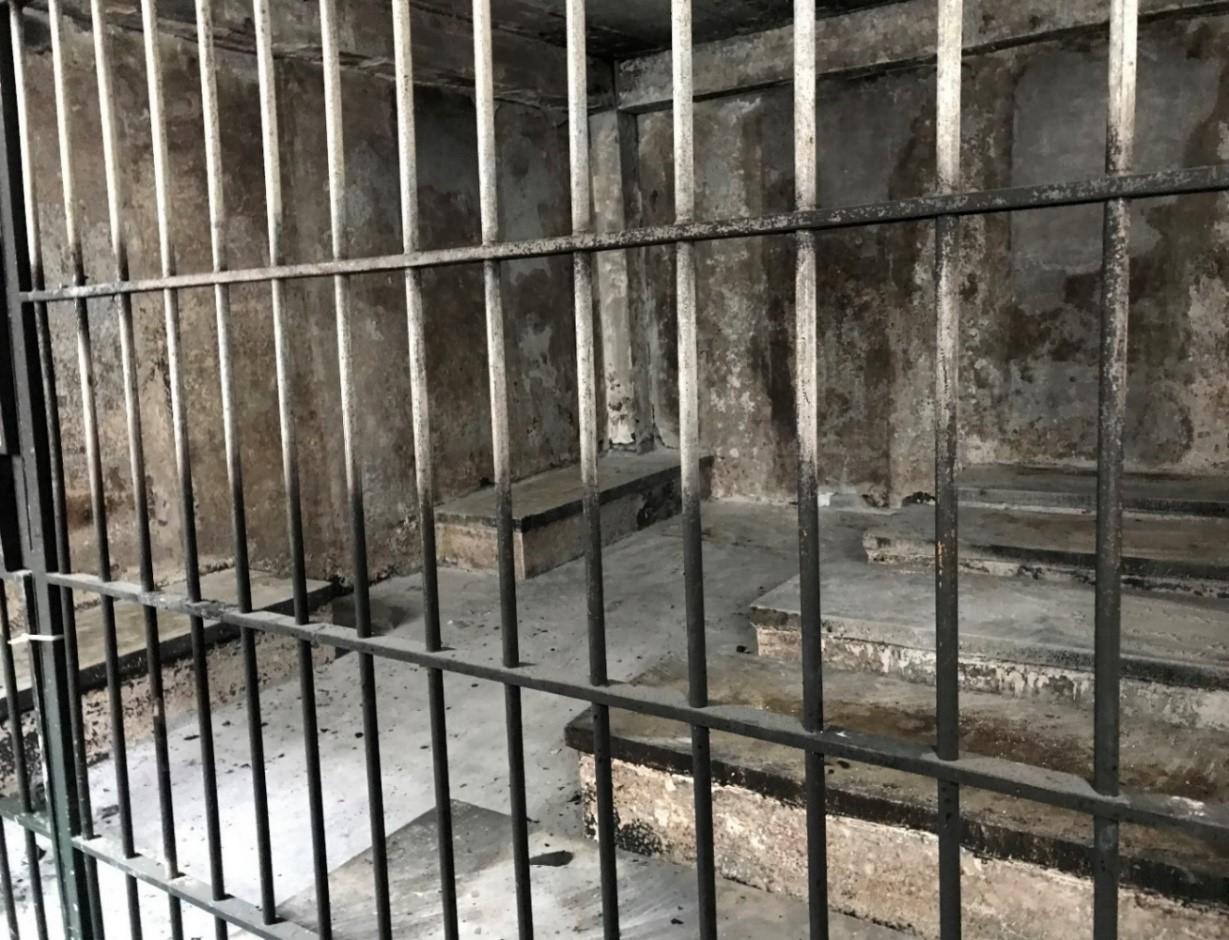
Writing Caged Histories was never just about producing a book. It was about making visible immigration detention in Greece; a system that has long depended on obscurity, fragmentation, and forgetting.
This project brings together more than a decade of research and practice inside and around Greek detention centres. It draws on my PhD research, but also on years of working as an NGO practitioner, collaborating with lawyers, activists, and monitors, and returning to spaces of confinement that are designed to resist scrutiny. The book emerged slowly, unevenly, and often painfully, shaped by doubt, exhaustion, and moments where continuing felt impossible. Working for years in sites of confinement, alongside people living through profound injustice, leaves marks. That emotional toll, often described as burnout, secondary trauma, or moral injury, is not incidental to this kind of research. It is part of the knowledge-producing process itself, and it speaks directly to the ethical stakes of studying state violence.
Why detention?
When I began this work, there was no sustained academic account of immigration detention in Greece from the inside. Detention appeared in fragments: in NGO reports, in moments of scandal, in border crises. But it was rarely examined as a system with a history, a bureaucracy, and an everyday life. Writing Caged Histories meant piecing together something that had never been assembled before: a genealogy of detention as it has operated across sites, institutions, and decades. That task was slow and unsettling, not least because it involved documenting a system that had existed for years without being meaningfully questioned or held to account.
At the heart of the book is a concern with visibility and forgetting. Over the past three decades, immigration detention in Greece has expanded dramatically, yet its history remains largely untold. Political and media attention has focused overwhelmingly on borders and refugee camps, especially during moments of crisis and spectacle. Detention centres, particularly those on the mainland, have remained obscured, fragmented, and rendered illegible. This obscurity is not accidental. It is actively produced through bureaucratic ambiguity, selective visibility, and systematic practices of forgetting. This is also why the book focuses on detention sites rather than camps. Detention operates as a blind spot within an already spectacular border regime.
By centring detention, Caged Histories challenges the racialised distinction between “good refugees” and “bad migrants,” by showing how this divide is spatially produced: refugees are rendered visible and governable in camps, while migrants are rendered disposable in detention. By shifting attention from camps to detention, the book shows how the refugee–migrant divide functions less as a legal boundary and more as a spatial and moral hierarchy that legitimises confinement.
Violence as a system, not an exception
Across the book, what emerges is not simply the presence of violence, but its extensiveness and durability. Violence appears across sites, across time, and across administrative regimes. It is not episodic or aberrational; it is woven into the everyday functioning of detention. And yet, the system has endured.
One of the book’s central claims is that this endurance is made possible by a profound failure of accountability. Responsibility is endlessly displaced: between police and courts, between national authorities and the European Union, between humanitarian actors and monitoring bodies. Part of what allows this displacement to persist is the continual difficulty of naming violence itself. Violence is widely acknowledged to exist, yet it is rarely made central, to policy debates, to monitoring frameworks, or even to academic analysis. It is often treated as either too exceptional to theorise or too diffuse to measure, and in both cases, it slips from view.
Chapters examining oversight, humanitarianism, and monitoring show how these practices often end up stabilising rather than challenging detention. Violence is not denied outright, but reframed as excessive, isolated, or unfortunate, something that can be managed without questioning the system that produces it. In this way, violence is repeatedly treated as exceptional, while the system that generates it is left intact.
Resistance as diagnosis
At the same time, Caged Histories is not only a book about violence. It is also a book about resistance. Throughout the chapters, I centre the actions and refusals of people who were detained, acts that are often quiet, fragile, and easily overlooked, but that nonetheless matter. Resistance in the book is not romanticised or treated as exceptional. It is taken for granted as a condition of detention itself.
Resistance takes many forms: collective protests, hunger strikes, self-harm, refusal, silence, withdrawal. These acts are frequently dismissed by the authorities and monitors alike as manipulative, irrational, or apolitical, yet they are precisely the moments through which the workings of power inside detention are exposed. Resistance is therefore treated in the book not as a moral counterpoint to violence, but as a diagnostic tool for understanding it. By tracing how acts of resistance are reinterpreted, suppressed or punished, the book shows how detention depends on violence not only to control bodies, but to erase dissent and maintain order.
In this sense, resistance reveals the fragility of the detention regime itself. The intensity of the response provoked by acts of resistance – responses such as dispersal, isolation, criminalisation, physical force, –makes visible how threatened the system is by even the smallest acts of refusal. Taking resistance seriously means refusing the idea that detainees are passive victims, while also refusing the temptation to turn resistance into a redemptive story.
Beyond the book: Detention Landscapes
While publishing Caged Histories marks an important moment, the work does not end here. One of the clearest lessons from writing this book was the limit of the single-author account. Detention is sustained through fragmentation, obscurity, and dispersion, and challenging it requires forms of knowledge-making that are equally collective.
This is what led to the development of Detention Landscapes, a collaborative platform created with colleagues, activists, architects, researchers, and people with lived experience. Detention Landscapes documents detention not only through text, but through space, images, maps, architectural plans, testimonies, and legal documents. It brings together dispersed forms of knowledge to make visible what is otherwise rendered illegible or deliberately forgotten.
What matters to me about Detention Landscapes is not only the archive it creates, but the way it is produced. It is collaborative, transnational, and deliberately unfinished. It resists the idea that detention can be understood from a single vantage point, or that expertise belongs only to academics. In that sense, it reflects the same commitments that underpin Caged Histories: treating research as a form of witnessing, refusing isolation, and insisting that knowledge production itself is a political act.
While this book bears my name on the cover, it is inseparable from the collective labour, trust and solidarity that made it possible, and from the ongoing work that continues beyond it. My hope is that Caged Histories, alongside projects like Detention Landscapes and the community fostered by Border Criminologies, contributes not only to academic debates, but to wider struggles against detention, and to the collective work of imagining and building a cage-free future.
Any comments about this post? Get in touch with us! Send us an email, or find us on LinkedIn and Bluesky.
How to cite this blog post (Harvard style):
A. Fili. (2026) Caged Histories: Violence, resistance, and the work of making detention visible . Available at:https://blogs.law.ox.ac.uk/border-criminologies-blog/blog-post/2026/02/caged-histories-violence-resistance-and-work-making. Accessed on: 23/10/2026Share:
With the support of