The stethoscope as a tool of border control: resisting the pathogenicity of immigration detention
The demand on doctors to declare a person 'fit' for immigration detention in Italy reveals a clinical paradox at the heart of the border regime
Posted:
Time to read:
4 Minutes
Guest post by Nicola Cocco, Valentina Marchese, Federico Nicoli, Giulia Russo, Jacopo Testa, Alice Corsaro, Marco Mazzetti. The authors are medical doctors from different disciplines actively engaged in the Italian Society of Migration Medicine (Società Italiana di Medicina delle Migrazioni – SIMM). The society was established in the 1990s at the instigation of groups and organisations working to ensure the right to healthcare for migrants living in Italy. Today, SIMM operates as a national policy network with the aim of promoting the health of migrant people through training, research, the establishment of healthcare networks and advocating for an equitable, effective and culturally sensitive healthcare for all.
In February 2026, the Infectious Diseases Department of a hospital in Ravenna, Italy, became the scene of an unprecedented police search. Eight infectious disease specialists were placed under investigation for issuing health certificates of “unfitness for detention” for migrants destined for Pre-repatriation Detention Centres (CPR), accused of having produced "ideological falsehoods" to prevent migrant people from ending up in those centres.
This episode is not just a local legal case – it is the tip of an iceberg that reveals a systemic and violent friction between migration policies and medical ethics. As physicians, we are increasingly being asked to serve as the gatekeepers of a detention system that we know, scientifically and ethically, to be pathogenic – that is, capable of causing harm to the physical and mental well-being of those who enter.
The clinical paradox of ‘fitness’ for detention
In Italy, as in many other European countries, a person cannot be detained in an immigration detention centre without a medical certificate stating they are "fit for life in a restricted community." At first glance, this looks like a safeguard. In reality, it is a clinical paradox.
International health agencies, including the World Health Organisation, are unanimous: administrative immigration detention is inherently harmful. These centres are not merely places of confinement; they have been defined as "torturing environments" where social isolation, legal uncertainty, and systematic deprivation of dignity cause severe and often irreversible physical and mental deterioration.
As doctors, we find ourselves at a crossroads. To certify a patient as "fit" for such an environment is to ignore the fundamental Hippocratic principle of primum non nocere (first, do no harm). How can a physician certify that a body is compatible with a place known to destroy its psychophysical integrity?
Working on the frontline, we observe what we call the embodiment of structural violence. In our daily practice, we don't just see diseases; we see the biological results of exclusion. We see chronic infectious diseases exacerbated by overcrowding, and we see sedation as a policy – the massive use of psychotropic drugs to manage despair and fill the empty time of detention. By signing that certificate, the doctor ceases to be a healer and becomes a ‘notary’ of the border, providing the necessary administrative seal to a process of state-sponsored harm.
Professional dissent as duty
The investigation in Ravenna marks a dangerous shift. When the state uses criminal law to target doctors for their clinical decisions, it is attempting to strip us of our professional independence. In response, this pressure has sparked a significant movement of ‘medical dissent’ among doctors.
Led by the Italian Society of Migration Medicine (SIMM), doctors are increasingly refusing to play this role. Providing a certification of "unfitness" is not a loophole or an act of civil disobedience; it is an evidence-based medical intervention. It is the act of a physician who recognises that for a victim of torture or other cruel, inhuman or degrading treatment, a person with a severe psychiatric disorder, or someone with a chronic illness, detention is a life-threatening contraindication.
A total institution in a post-Basaglia Italy
Italy has a proud history of deinstitutionalisation. Today, the CPRs are the new total institutions – places where migrant people live a communal life under formal administration and separation from wider society, sometimes for a long period. They are "zones of non-being" where legal status overrides human rights. By certifying evidence-based "unfitness," we are following the path of Franco Basaglia, who fought to close harmful ‘mental asylums’ in Italy. He argued that total institutions cannot be reformed: they must be destroyed because they negate the person before even attempting to cure them. Similarly, we are asserting that there are no ‘second-class bodies’ and that medical ethics do not stop at the gates of a detention centre.
In addition to the conflict between professional ethics and the pathogenicity of the detention centres, there is also the issue of the healthcare provided in the Italian CPRs, which is entrusted to healthcare workers hired by the managing company, and not by the National Health System, as is the case in national prisons. This creates an additional barrier to care, for both accountability and the referral to second-level health care. Doctors working in CPRs face a dual loyalty, as they juggle their ethical duty to provide compassionate patient care with the security and operational requirements of the facility.
Looking towards Europe
With the new European Pact on Migration and Asylum coming into force, health screening will become a mandatory gateway to detention across the continent. A health and vulnerability assessment will be carried out as part of the “robust screening” to determine whether the migrant should be referred to the asylum or return procedure, which may include detention. The friction between border control and medical ethics will only intensify.
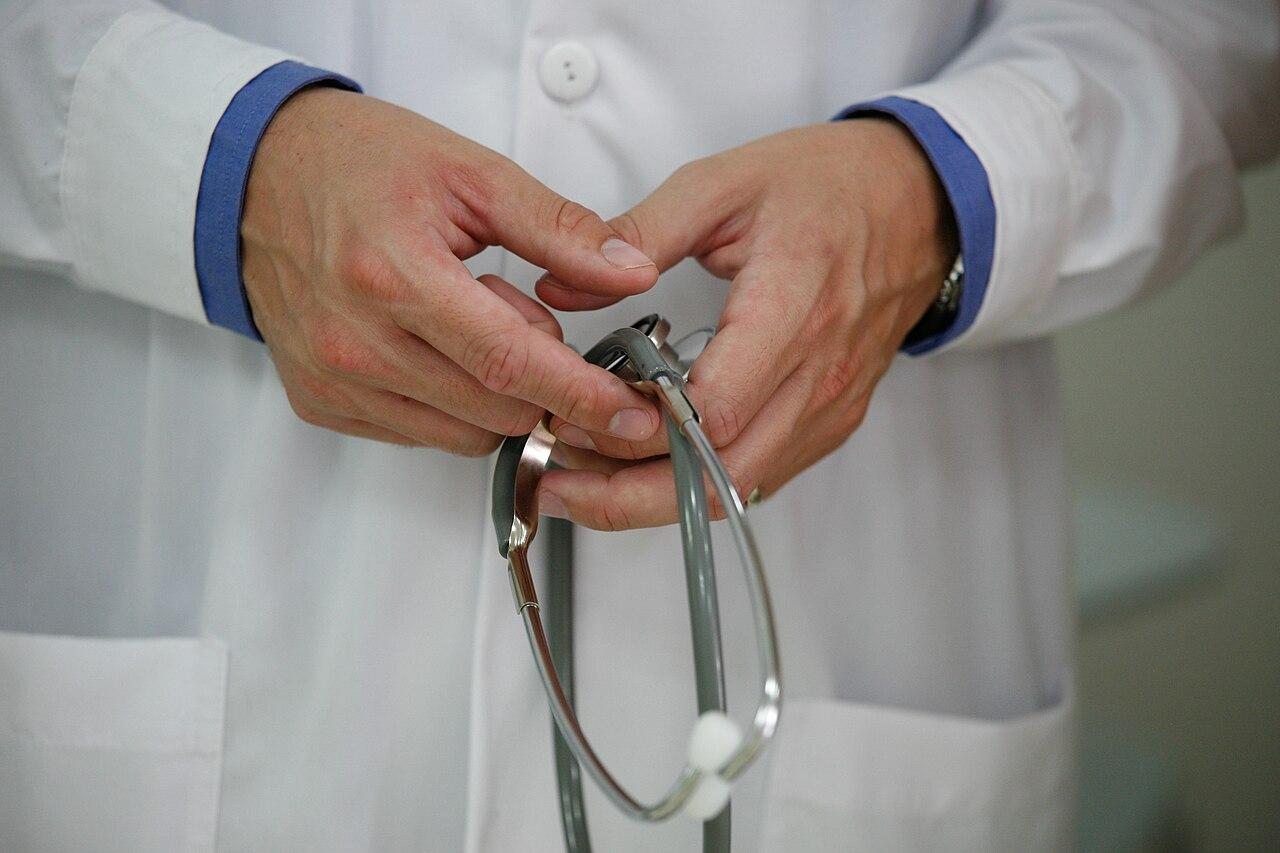
We urge the global health community and civil society to remain vigilant. We must refuse to let the stethoscope become a tool of border control. Health must remain a fundamental right, independent of legal status. Our duty is to the patient, not to the migration office. As the doctors in Ravenna have shown, sometimes the most ethical medical act is a firm, evidence-based "no."
Any comments about this post? Get in touch with us! Send us an email, or find us on LinkedIn, Bluesky and Instagram.
How to cite this blog post (Harvard style):
N. Cocco, V. Marchese, F. Nicoli, G. Russo, J. Testa, A. Corsaro and M. Mazzetti. (2026) The stethoscope as a tool of border control: resisting the pathogenicity of immigration detention. Available at:https://blogs.law.ox.ac.uk/border-criminologies-blog/blog-post/2026/05/stethoscope-tool-border-control-resisting-pathogenicity. Accessed on: 16/10/2026Keywords:
Healthcare
Share:
With the support of