The sea as silent witness: Toward a community of care in maritime refugee research
Scholars working with maritime refugees must sometimes practice strategic silence in order to also practice care
Posted:
Time to read:
6 Minutes
Guest post by Gerhard Hoffstaedter and Michael Gordon. Gerhard is Associate Professor of Anthropology at the University of Queensland, specialising in refugee studies in Southeast Asia. He co-leads the Maritime Refugee Lab, documenting and theorising maritime refugee journeys and experiences. His publications include Modern Muslim Identities (NIAS Press, 2011), Urban Refugees (Routledge, 2015), and 80+ peer-reviewed articles and chapters. Michael is an Assistant Professor of Political Science at Brock University. His research focuses on irregularised migration and the politics of the sea through exploring the intersections of sovereignty, solidarity, and forced migration at the edges of the Global North. Currently, he serves as a Co-Editor of Refuge: Canada’s Journal on Refugees, and a BSIA Fellow with the Balsillie School of International Affairs.
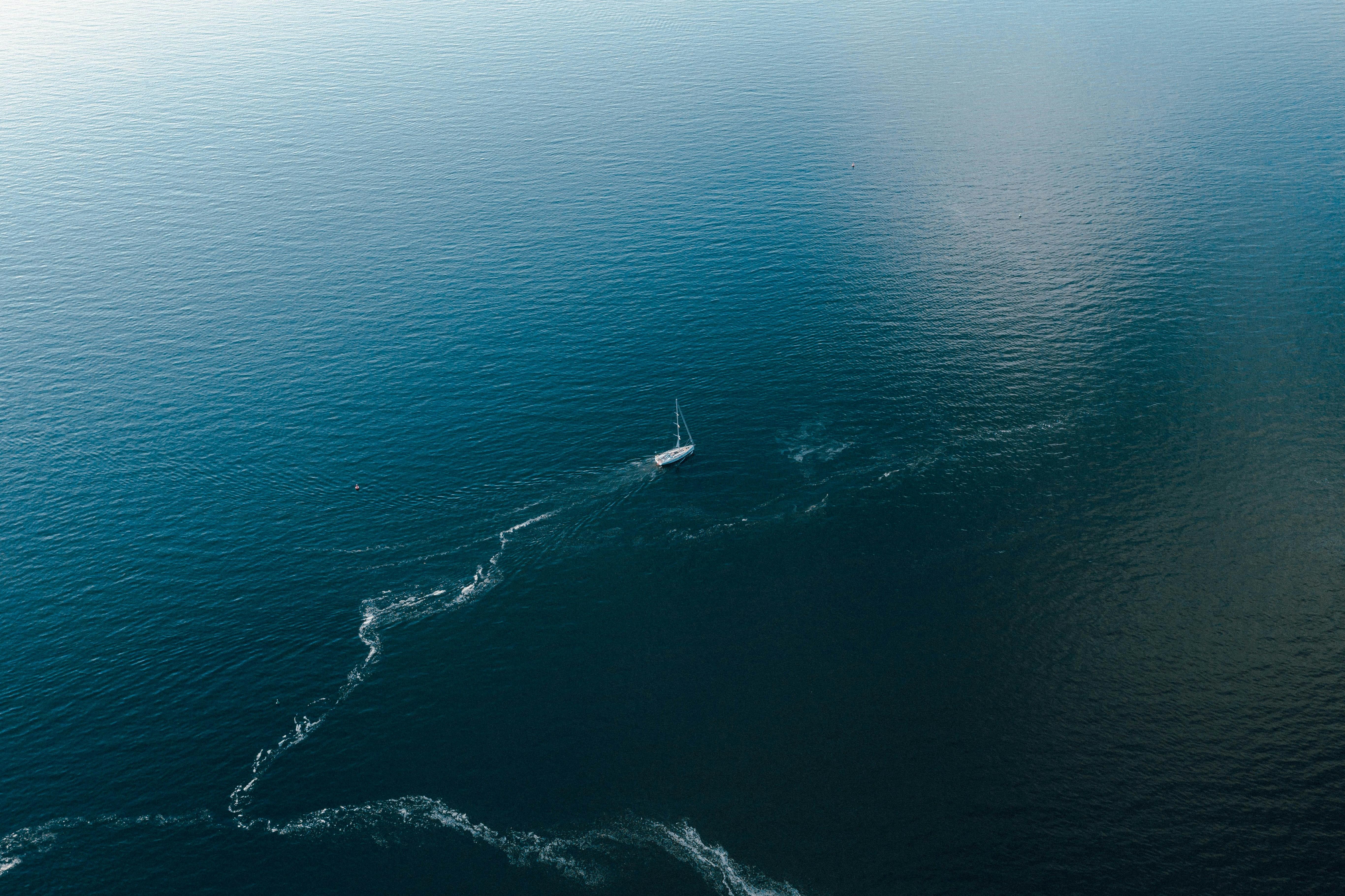
The sea is a deeply paradoxical space: simultaneously leisure and struggle, freedom and capture, life and death. The sea holds a romantic, often mythologised position in our literature, history, politics and minds; yet what happens upon its surface to those fleeing persecution often remains unseen, unrecorded, and unmourned.
As migration scholars working with maritime refugees, we dwell in an uncomfortable ethical space. We desire information from people on boat journeys, yet asking survivors to recall these journeys has the potential to retraumatise them as they discuss their experiences with researchers. We want to make visible the violence of these crossings, to document the hunger, deprivation and torture aboard many vessels. Yet making these journeys too visible can endanger the very people we seek to support. Information shared with academics can find its way to a range of stakeholders. Strategies of movement, once revealed, can be countered by enforcement regimes. Better information might save lives, but it might also cost them. This is the thin red line we walk.
What forms of ethical practice are possible when working with people navigating such precarious spaces? How do we conduct research that documents atrocity without becoming extractive? How do we bear witness without inadvertently producing surveillance? How do we navigate the need for strategic silence while also working towards systemic change?
When to confront and when to accompany
Recent scholarship on maritime rescue offers a provocative answer. Through her activism and work with search and rescue organisation Sea-Watch, Morana Miljanovic describes how ‘pirate care’ as enacted by the crew, represents a confrontational ethics that challenges the dichotomous choice between humanitarian neutrality and political action. In this representation, pirate care opens space to imagine alternative forms of assistance that refuse to adopt the same deadly structures present in wider society. Sea-Watch crews don’t just save lives; they actively challenge the legal frameworks that create deadly maritime borders, documenting state failures and publicly shaming authorities who ignore boats in distress or contribute to their refoulment.
This confrontational care operates differently from ‘accompaniment’, the Jesuit maxim of walking alongside refugees and building relationships of mutual transformation rather than extraction. In this alternative framing of care, accompaniment becomes a means of supporting people on the move fighting for justice while demonstrating through direct action that they are not forgotten. Both approaches are essential, and neither alone is sufficient. The research ethics we need must engage these modalities of care, deploying them strategically depending on context, risk and need.
Sometimes care means public confrontation: publishing survivor testimonies that expose state cruelty, providing evidence for future tribunals, shaming governments who turn boats away or openly deny the disembarkation of survivors. For example, former Sea-Watch Captain, Carola Rackete engaged in a well-documented refusal of state port closures, by entering the port of Lampedusa despite the warning of criminal prosecution at the hands of the Italian state.
At other times, care demands strategic silence or withholding information about routes, protecting identities, refusing to share data that might enable interdiction. In this context the most visible example has been Médecins Sans Frontières and their refusal to hand over voyage data recorder information in 2022, whereas researchers largely act through omission rather than refusal. And always, care requires reciprocity, ensuring our research isn’t extractive and that we remain accountable to the people whose stories we tell.
Building communities of care
What emerges is not a single ethical framework but ‘community of care’ of researchers, activists, humanitarian workers, whose roles are often overlapping and entangled. Most centrally, communities of care are defined by refugees themselves. As refugees share the intimate details of their stories, they contribute to sharing information, challenging assumptions, and navigate ethical tensions. Collectively, the building and maintaining of these networks of care is all part of ensuring survival on arduous sea journeys.
A community of care approach necessitates a shift from research on refugees to research with and alongside them, building relationships where analytical insights emerge through dialogue. Crucially, this approach opens the way for refugees to become collaborators in interpreting their experiences, rather than subjects. Yet this paradoxically requires researchers to sometimes exercise protective judgement, even when collaborators consent to disclosure, for example when a refugee might willingly share route details without fully grasping how information circulates through academic and policy networks. In this context, researchers practicing (radical) models of care need to navigate how that information may actually contribute to harm for the wider migrant community. Certainly, non-disclosure might be required despite the professional benefits that come with publication or the novelty of insights uncovered. The goal is not to hoard knowledge but to navigate together the complex landscape of risks, determining collaboratively what information serves the community’s interests.
This approach centres ongoing dialogue, genuine relationship-building, and willingness to be transformed through encounters with our interlocutors rather than maintaining analytical distance. It means collaborative analysis where refugees help interpret findings and co-author research, not just providing raw data. It means material reciprocity; sustained support for community initiatives, advocacy work, and practical needs. In much of Gerhard’s work, for example, he has sought to build capacity in the communities he works in, through social science skills training and supporting projects such as community organisations, reporting, media outlets or advocacy. We must recognise the immense ethical demands this places on our work. We are not border guards and our work should not contribute to those harms.
The politics of witness-bearing
It’s been more than ten years since the 2015 Andaman Sea crisis, when thousands of refugees became stranded in the Andaman Sea due to increased naval pushbacks and surveillance. In that time, the only things that have changed are the numbers of boats, and where they run aground. Shifting enforcement and lack of disembarkation continue to haunt these waters. In the Andaman Sea – its coastline home to Myanmar, Thailand and Malaysia – most states ignore Rohingya boats wilfully, content that vessels will find landing elsewhere.
Documentation becomes witness-bearing, a political and ethical act. We document not just for academic audiences but for future generations who may use these accounts as evidence in trials, for memorialisation, for cultural survival. We document to counter state narratives of ignorance, to prove authorities knew boats were in distress and chose inaction. We document because the alternative is allowing these journeys to vanish without a trace, as if the lives aboard them never mattered.
Yet witness-bearing demands constant ethical vigilance. Unlike research in other contexts, the consequences of information-sharing in maritime refugee studies are not hypothetical. They are immediate, potentially fatal, and unequally distributed. They can include direct physical harm, imprisonment, extortion or death to themselves, family members or the community. Researchers bear minimal risk; refugees bear all of it.
Dwelling in the interstitial
There is no clean ethical position in this work. As researchers, activists and scholars, we inhabit an ‘interstitial space’, a productive site between different worlds where genuine encounter occurs but contradictions remain unresolved. We simultaneously need information and must protect it. We need to make violence visible and keep survival strategies hidden. We need to bear witness and sometimes maintain silence.
This requires us to constantly ask: whose interests does our knowledge serve? Who bears the risks of its circulation? What forms of care does our work enact? And are we willing to sometimes choose silence, sometimes confrontation, always maintaining relationships guided by what the moment and community demand?
The way forward is not to resolve these tensions but to hold them carefully, mixing confrontational and quiet care as contexts demand, building communities of mutual accountability, and remembering that our research serves those navigating these deadly waters, not states seeking to control them, and not academic careers built upon them.
The sea keeps its secrets. Our task is to reveal what must be known whilst protecting what must remain hidden, to care like pirates when confrontation is needed and accompany quietly when asked, to build communities of ethical practice that refuse the extractive logics of both academic knowledge production and border enforcement regimes. This is the thin red line we walk; not with certainty, but with care.
This article was developed during a writeshop in Kuala Lumpur for the Maritime Refugee Lab, funded by the Volkswagen Foundation.
Any comments about this post? Get in touch with us! Send us an email, or find us on LinkedIn and Bluesky.
How to cite this blog post (Harvard style):
G. Hoffstaedter and M. Gordon. (2026) The sea as silent witness: Toward a community of care in maritime refugee research . Available at:https://blogs.law.ox.ac.uk/border-criminologies-blog/blog-post/2026/03/sea-silent-witness-toward-community-care-maritime. Accessed on: 10/10/2026Keywords:
(Field) Research and Methods
Share:
With the support of