Traces of Life, ሂወት: Describing the ‘refugee abyss’ through coffee ceremony
At a gathering in Cairo, participants shared stories of border crossings, captivity and trafficking. One woman placed her story inside a glass jar, entrusting the unsayable to us
Posted:
Time to read:
5 Minutes
Guest post by Hyab Teklehaimanot Yohannes. Hyab is a Lecturer and Researcher in Forced Migration and Decolonial Education with the UNESCO Chair for Refugee Integration through Education, Languages, and Arts at the University of Glasgow, Scotland.
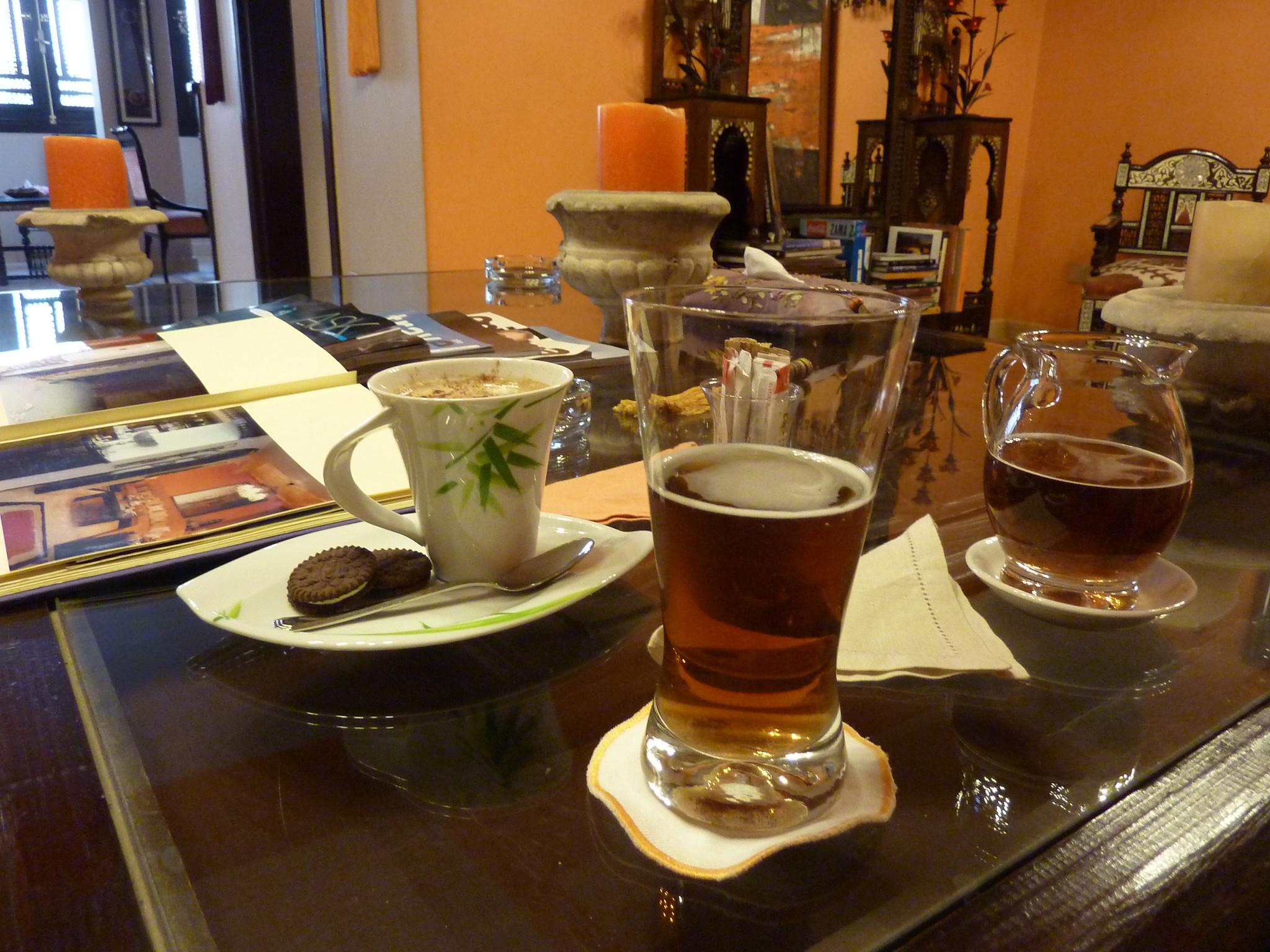
Her name was Hiwet. In Tigrinya, Hiwet means life. We would understand the resonance of her name only later, although life was already present in the calmness and dignity with which we inhabited a space saturated with harrowing and haunting stories.
Hiwet made us coffee while we introduced ourselves. We were participants gathered in Cairo, Egypt, whose conversations and experiences contributed to the fieldwork for the book The Refugee Abyss. During the gathering, we shared encounters and reflections on forced displacement. Seated together, participants posed a profound question that would come to haunt the book from its opening pages: “Does the world know we exist?”
The book conceptualises the ‘refugee abyss’ as a condition of juridico-political de-existence that begins in the ‘womb-abyss’, the nation-state that gives birth to and devours life, where violence forecloses the possibility of dignified existence. It deepens through forced displacement and destitution in the ‘belly of the abyss’, encompassing borders, deserts, camps, and asylum systems, where dehumanisation, violability, and disposability become instruments of necropolitical violence. Within the book’s pages, our stories emerge as displaced voices, like sketches of breath and poetic cries traced against the darkness of the abyss, bearing witness to lives that violence seeks to erase and insisting, through the very act of ‘breathing-writing’, that we exist.
The coffee ceremony
The coffee ritual held the fragile insistence of life within the abyss, where our questions and poetic cries reached towards what remained of our humanity. Hiwet moved between the kitchen and the room, measuring the water, tending the roasting beans, grinding them slowly, heating the ጀበና/ jebena (the clay pot) and arranging the ፉንጃል/ funjals (the small coffee cups). We watched the coffee beans darken over the heat. Their fragrance slowly filled the room, roasted, earthy, bitter, almost sweet. Smoke rose in delicate threads. Hiwet ground the beans with a pestle, and the rhythm of wood against mortar entered the pauses between the voices. Water came to the boil. Steam lifted from the pot, touched her face, and gradually filled the room.
The coffee ceremony established a different temporality, a familiar hospitality. It made time tangible, and within moments, friendship had formed among us. The first round (ኣዎል, awol) summoned us into presence, into a communion without conditions. Hiwet poured the coffee slowly, tilting the jebena so that the coffee descended in a thin, continuous stream into the small cups. The coffee caught the light as it fell, then settled into its dark stillness. The youngest person in the room served us the cups. A cup moved from one hand to another. Warmth passed from cup into skin. The bitterness of coffee lingered on the tongue. Sweetness remained within bitterness.
The ceremony created a space in which friends could respond to one another through care and curiosity. The second round (ካልእ, Kale’i) opened a space where stories could be told, received and witnessed. Our shared stories opened the violence of ‘the refugee abyss’. We spoke of crossings, captivity and trafficking. We spoke of bodies burned with melted plastic in the hands of traffickers. We spoke of rape and sexual abuse, of violence repeated so frequently that it had entered the ordinariness of everyday life. Our stories carried the weight of experiences that exceeded ordinary language.
We tried to describe the abyss in multiple languages, varying our sounds and searching across their limits. We felt it. We trembled. Our bodies appeared in these accounts as sites upon which power had inscribed its most brutal forms. We showed each other our ‘open wounds and scars’, our broken bones. We also spoke of dreams and desires, of sharing and resistance, of ‘hopes’ held quietly and futures still possible, tracing the ‘poetics of refuge’.
Hiwet kept making coffee, calmly. Her calmness carried its own vocabulary. It lived in the rhythm of her hands, in the patience of the ceremony, and in the attention she gave to water, fire, coffee and cups. Her hands followed the familiar choreography of the coffee ceremony with an attentiveness that gathered the room around her. Her presence created a register of gesture, sensation and embodied knowledge within a sacred ritual. She seemed to enter the rhythm of the ritual and remain there, quietly anticipating the third round, the round of blessing. Hiwet passed the third round (በረካ, baraka) to the youngest person among us, who carried the cups around the room, offering them alongside popcorn.
The jar of tears
As we sipped the last round of coffee, Hiwet suddenly stood and went to the kitchen as our conversations were drawing to an end. There, hidden from us, she cried. She wiped her tears with a tissue and placed it inside a small glass jar. She covered the jar with a lid, then returned and sat on her small stool beside the coffee set. She finished her cup and told us: “This is my story”. She then handed us the glass jar with the tissue inside. The glass held her tears, traces that had passed through her body. She entered her story into our stories through a poetic cry that required neither explanation nor translation. She had told her story in no words other than to say, “This is my story”.
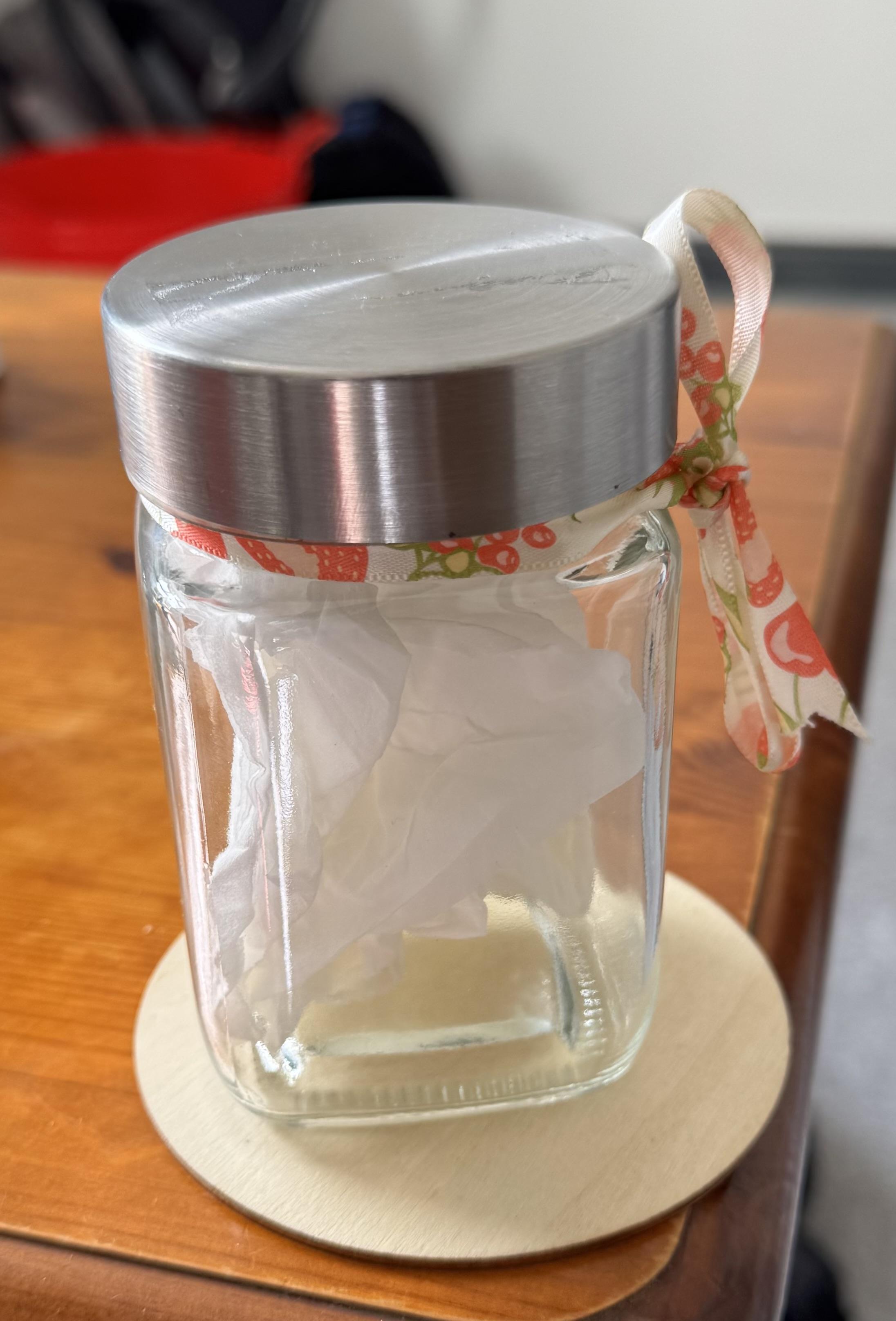
By handing us the glass jar, Hiwet shared her story with us while retaining its interiority and dignity. For a cry is never addressed to itself, her poetic cry reached towards us. For a moment, the room fell into such profound silence that we could hear the faint, restless hum of mosquitoes by the window, fluttering desperately to escape the coffee smoke. We received the glass that held her poetic cry, unaware of the responsibility of receiving it. This opened our knowing into an ‘uneradicable relation with the unknown’. Hiwet’s gesture revealed knowledge as a field with limits, and those limits became ethically generative. We knew that she had cried. We could receive the tissue, hold the glass, and listen to her four words. Her interior world remained hers. Her poetic cry remained visible and inaccessible at once.
As the coffee ceremony reached its final moment, the gathering began to loosen its ritual form. We blessed Hiwet. We blessed her courage, her dignity, and the life that continued to move through her. And Hiwet’s name returned to us as life. The word became our orientation as we wished for a world in which every life could remain inviolable. We wished to be encountered, first and always, as lives among other lives. And whenever we could, we promised one another to make life possible for ourselves and for others. Life is what remains after the stories have been told, the words have reached their limits, and the coffee has cooled.
We bring Hiwet’s life and story close to you, dear reader, with reverence for the depths that words can only partially reveal. Meet her in the fullness of her humanity, with her mystery and dignity, her silences and inwardness, her wounds and her wonder. Her life and poetic cry invite a tender and reverent presence. So sit with her. Bless her. Hiwet sends her greetings from a safer place, where she is with her family.
Finally, our simplest plea to the ‘womb-abyss’ is simply this: let us live our lives.
Any comments about this post? Get in touch with us! Send us an email, or find us on LinkedIn, Bluesky and Instagram.
How to cite this blog post (Harvard style):
H. Yohannes. (2026) Traces of Life, ሂወት: Describing the ‘refugee abyss’ through coffee ceremony. Available at:https://blogs.law.ox.ac.uk/border-criminologies-blog/blog-post/2026/11/traces-life-hiwate-describing-refugee-abyss-through. Accessed on: 17/11/2026Keywords:
Refugees
Share:
With the support of