The banality of refugee deaths: Defying European apathy and irresponsibility
Beyond compassion fatigue or lack of attention, deaths at Europe’s borders have been framed by politicians and media as ‘ungrievable’. Mourning practices are emerging to resist that
Posted:
Time to read:
6 Minutes
Guest post by Marta Welander and Heidi Mogstad. Marta is a critical border and migration researcher and activist. She led Refugee Rights Europe from 2016-2021, during which time they published more than 40 research reports. Marta holds a PhD from the University of Westminster, with an ethnographic thesis on the ‘border struggles’ and technologies of bordering between the UK and France.
Heidi is a Senior Researcher at the Chr. Michelsen Institute in Norway. She holds a PhD in Social Anthropology from the University of Cambridge and an MPhil in Justice and Transformation from the University of Cape Town. Her research on European humanitarianism and refugee advocacy draws on long-term ethnographic fieldwork in Greece and Norway.
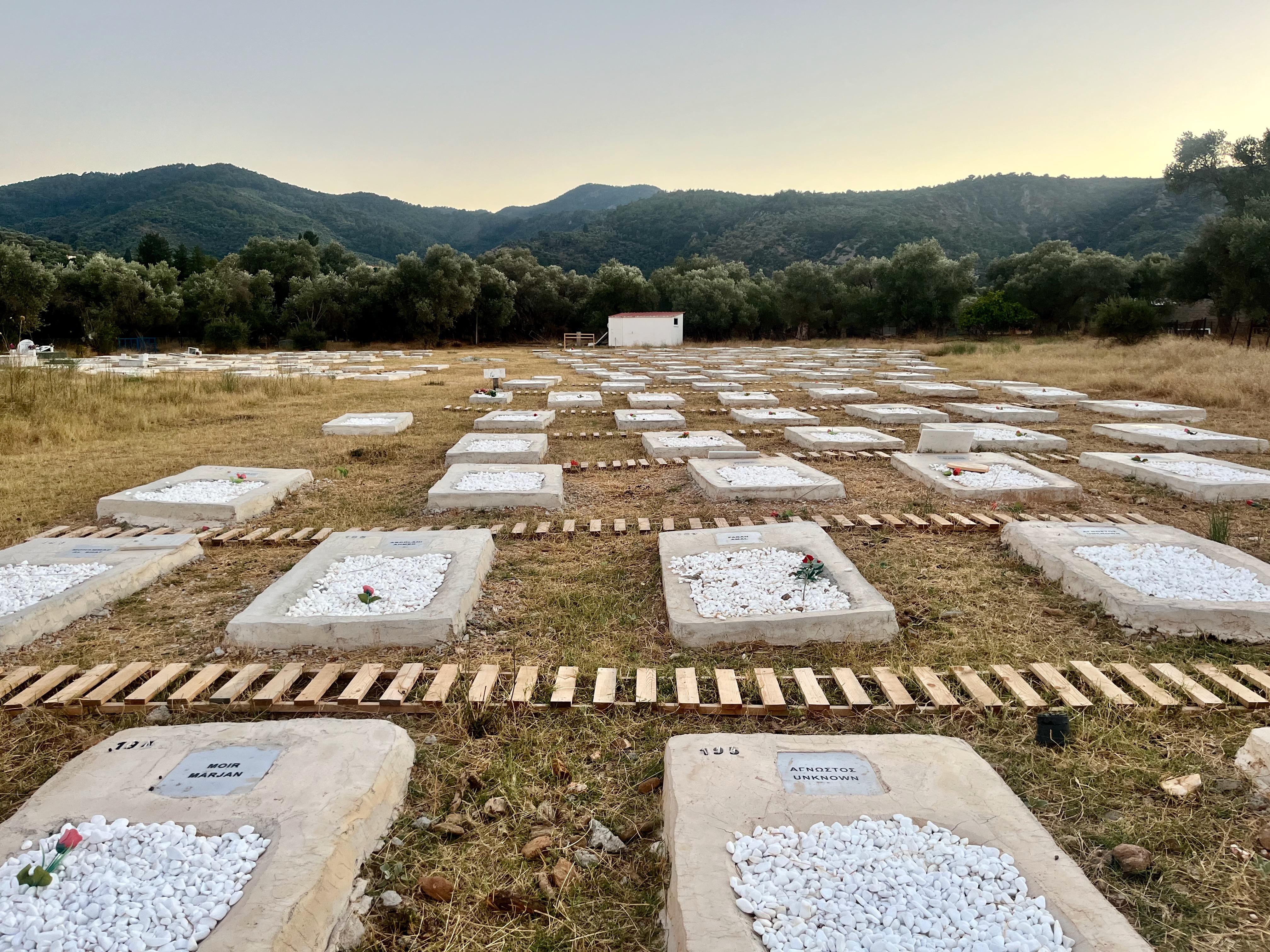
More than 30,000 people have died or gone missing in the Mediterranean since 2014, and many more perish inside Europe’s borders. They freeze in forests, suffocate in lorries, drown at sea, or die from preventable illnesses. As several scholars have noted, these deaths are not the inevitable outcome of natural dangers but the direct result of political decisions within European liberal democracies. And yet, despite their scale and avoidability, these losses generate remarkably little public grief or protest.
The routine death of refugees at Europe’s borders raises fundamental questions about the value of migrants’ lives in contemporary liberal democracies. However, standard explanations such as ‘invisibility’ or ‘compassion fatigue’ obscure more than they reveal. Drawing on a 2026 journal article published by the authors, this blog post discusses how border deaths are framed – as ‘humanitarian accidents’ rather than political injustices – and how underlying epistemological and normative orders render the lives of refugees from the Middle East and Africa ungrievable.
In this post, we explore the following questions: Why do Europeans largely fail to grieve the recurring deaths of refugees at their doorstep? And what kinds of practices are emerging to contest this indifference? Drawing on existing scholarship, qualitative media analysis, and ethnographic fieldwork, we consider both the apathy that marks mainstream responses and the counter-practices of mourning and memorialisation undertaken by migrants, NGO workers, and activists.
We explore examples from Lesvos and Calais, where activist and migrant groups seek to reassert the value and dignity of lives deemed disposable, through practices of mourning and commemoration. Building on Judith Butler’s work on the political significance of mourning, we argue that these activists transform anonymous deaths and unfortunate ‘tragedies’ into politically produced and unacceptable losses. By doing so, they demand grief, political outrage and accountability for the deaths.
Explaining apathy for migrants’ deaths
The silence surrounding border deaths is often attributed to two broad explanations: media and political neglect and compassion fatigue.
The first suggests that migrant deaths simply fail to enter public consciousness because media outlets do not prioritise them, and politicians ignore them. While some shipwrecks – such as the sinking off Pylos in 2023 – briefly capture headlines, border deaths are said to be overshadowed by other crises, from the war in Ukraine to genocide in Gaza. The second explanation, compassion fatigue, holds that repeated exposure to images of dead or suffering migrants numbs publics into apathy and detachment.
Both accounts capture important dynamics, but their explanatory power is limited. Border deaths are not absent from European media and political discourse; in fact, images of capsized boats and drowned bodies have long been central to what De Genova terms the “border spectacle.” Nor does there appear to be strong empirical evidence that the European public has simply grown “too tired” to care. More importantly, these explanations focus largely on the volume of media coverage, leaving aside the question of how border deaths are framed and interpreted.
Framing refugee deaths as ‘ungrievable’
To better understand public apathy, it is necessary to consider the representational and epistemological frames that shape moral and political responses before individual news stories are even encountered.
One important dynamic is the tendency of media and humanitarian organisations to frame border deaths as “humanitarian tragedies”. Such narratives, while often well-intentioned, depoliticise the issue by casting deaths as accidental and exceptional rather than politically produced and preventable. They address audiences as distant bystanders called upon to feel compassion, rather than as implicated citizens with political responsibility. As Lilie Chouliaraki and Didier Fassin argue, compassion can itself be depoliticising, reaffirming the moral identity of spectators while obscuring structural causes.
A second – and in our view, central – dynamic concerns the unequal distribution of moral outrage and “grievability” in our societies. According to the American feminist philosopher Judith Butler, a “grievable” life is one recognised as valuable and therefore worthy of being mourned. An “ungrievable” life, by contrast, is one that cannot be mourned because it was never recognised as fully human or meaningful in the first place. Refugees dying at Europe’s borders are often cast as threats to European security and welfare states. Moreover, even in more benevolent discourses, they tend to be portrayed not as singular persons with personal histories and aspirations, but as abstract and deprived masses – anonymous, faceless, destitute, and backwards – perhaps already lost. Within this frame, their deaths appear neither unacceptable nor unjust, but inevitable.
Such representations have their roots in longer genealogies of European colonialism and racialisation. Refugees from Africa and the Middle East (or, geographically South West Asia) have long been imagined as threats to European nation states, or as abject figures whose lives lack meaning and value. In either case, they fail to elicit grief or outrage.
Contesting ungrievability
However, indifference is not universal. Across Europe’s borderlands, practices of mourning and memorialisation are emerging that challenge the assumption that migrant deaths are ungrievable.
On the island of Lesvos, local activists and solidarity groups have worked to ensure dignified burials for those who die at sea or in camps. This has often required learning unfamiliar religious and cultural rituals, raising funds, and restoring neglected burial grounds. A recent project at Kato Tritos cemetery, dubbed ‘A Memorial to Humanity’, seeks not only to provide proper graves but also to challenge the banalisation of refugee deaths on the island and in Europe more broadly.
In Calais, the Groupe Décès was established in 2017 to coordinate funerals, raise funds for repatriations, and ensure that burials reflect the wishes of families and cultural traditions of the deceased. Funerals often draw large crowds, including migrants, local citizens, and NGO workers. These ceremonies, while deeply personal, are also political: they affirm the humanity and singularity of the deceased and implicitly contest the European border regime that rendered their lives disposable.
Other initiatives focus on naming and commemorating the dead. The Institute of Race Relations in the UK maintains a detailed timeline of border deaths, publishing names and biographical details where possible. Similarly, the ‘Memorial of Calais’, created by journalist Maël Galisson, documents refugee deaths in the region since 1999, foregrounding personal stories rather than statistics. Such projects counter the dehumanising tendency to present border fatalities as anonymous numbers and instead insist that each life counts.
Mourning as resistance
Many of these initiatives move beyond private acts of mourning and explicitly link grief to political critique. For instance, demonstrations in Calais and memorial events following shipwrecks in the English Channel often combine candlelight vigils with banners naming the dead and denouncing European border policies. Slogans such as “Your borders, our dead” directly challenge the framing of deaths as unfortunate accidents, instead naming them as preventable outcomes of political decisions.
In this sense, public mourning can be understood as a form of political defiance and resistance. Butler traces the political potential of mourning back to Antigone, who openly defied sovereign law to bury her brother. In such a way, contemporary acts of grief activism disrupt normative hierarchies of whose lives are deemed worthy of mourning, while challenging the legitimacy of border regimes that criminalise both migration and solidarity.
Grief activism also carries risks. Some critics have warned that public mourning can reproduce humanitarian tropes or fetishise migrant bodies. Others caution that remembrance projects may be co-opted by states and politicians to legitimise deterrence policies or project an image of humanitarian concern while obscuring their own responsibility for the border violence that contributes to these deaths.
Moreover, the challenges in identifying many deceased migrants limits the possibility of personal commemoration. In turn, this can limit meaningful resistance to the norms that govern the unequal distribution of grievability in European societies. These challenges are real, but they do not negate the political significance of the mourning practices themselves.
Ultimately, however, mourning the dead is not enough. As important as grief activism may be, it must be accompanied by sustained attention to the continued lives of the living – to the relationships, aspirations, and struggles of those who continue to risk their lives at Europe’s borders. As we conclude in our article: only by affirming the full humanity of both the dead and the living can we begin to challenge the lethal neglect and banalisation of border deaths in contemporary Europe.
Any comments about this post? Get in touch with us! Send us an email, or find us on LinkedIn, Bluesky and Instagram.
How to cite this blog post (Harvard style):
H. Mogstad and M. Welander. (2026) The banality of refugee deaths: Defying European apathy and irresponsibility . Available at:https://blogs.law.ox.ac.uk/border-criminologies-blog/blog-post/2026/11/banality-refugee-deaths-defying-european-apathy-and. Accessed on: 14/11/2026Keywords:
Border deaths
Share:
With the support of