Building an archive of deaths in Greek immigration detention centres
New research finds over 110 deaths of foreign nationals amid rights violations and glaring lack of healthcare and transparency.
Posted:
Time to read:
9 Minutes
Blog post by Andriani Fili, Stergios Magkriotis and Alice Troy-Donovan. The researchers are based at the University of Oxford, working on Andriani’s project ‘Medicalising Immigration Detention’. The project is funded by the Wellcome Trust.
Over 112 foreign nationals have died while held in Greek detention centres and police stations in the last 26 years. These are some of their names:
- Jadeous Kotseva. 38, Polish. Died in 2004 in Vyronas police station, Athens, while awaiting his deportation. According to reports he was suffering from chronic alcoholism.
- Nezam Hakimi. Age unknown, Afghan. Died in 2013 in Corinth detention centre. The Afghan community said he had cancer which was left untreated for four months in detention.
- Fata Abdul. 23 years old, Yemeni. Died in 2015 in a detention centre in Thessaloniki by suicide. Reports said he was held in isolation for a month prior to his death.
- Mohammed Kamran. 37 years old, Pakistani. Died in 2024 in Agios Panteleimonas police station, Athens, likely as a result of police violence.
- Hashir Latif. 30 years old, Pakistani. Died in 2025 after being declared brain dead following a suicide attempt in Amygdaleza detention centre, Athens.
- Name unknown. Age unknown. Nationality unknown. Police report that this person died in 2024 in an unknown location and on an unknown date.
People have been dying inside Greece’s police stations and immigration detention centres for decades. Yet there is no reliable public record of these deaths. Greek authorities do not routinely publish statistics showing how many foreign nationals have died in immigration or police detention, who they were, where they died, or under what circumstances.
Drawing on police data obtained through Freedom of Information requests (FOIs), as well as reports by international monitoring bodies, media archives and interviews with formerly detained people, we have documented at least 112 deaths of foreign nationals in police and immigration detention in Greece since 2000 (read our methodology for researching deaths of foreign nationals in detention). Since Greece’s first pre-removal detention centre opened in 2012, 27 deaths have been reported in these facilities. Media coverage of deaths is typically limited to brief reports that reproduce information provided by the police, with little detail about the individuals concerned or the circumstances of their deaths. The perspectives of families, friends and fellow detainees are frequently absent.
Most of those whose deaths we documented were men (82), although four were women and the gender was not recorded in 26 cases. Among the 70 individuals whose age was known, the median was 33.5 years, with 45 aged under 40. Albanian and Pakistani nationals were the largest identified nationality groups (13 each), although nationality was unspecified in 32 cases. Suicide was the most frequently recorded cause of death in official (police or governmental) sources (44 cases), followed by pathological causes (20), while no cause was reported by the authorities in 36 cases. Non-governmental sources also raised concerns about medical neglect and physical abuse in some cases. These gaps in basic information, alongside the limited documentation of the circumstances of death, are particularly striking given that the individuals died in state custody, where their identities and personal details would ordinarily be expected to be recorded.
The archive, published on Detention Landscapes in English, Greek and Arabic, was developed by University of Oxford researchers working on the Greek immigration detention system, and gathers years of documentation by activists, NGOs, journalists and monitoring bodies. Beyond counting deaths, the project seeks to situate individual cases – which have previously been presented as isolated tragedies – within a broader context of violence and medical neglect in Greece’s immigration detention system.
Deaths occur across a range of sites, including in police stations in towns and cities, and in pre-removal detention centres, which are typically located in remote areas outside cities. In documenting these deaths, our research draws attention to the links between hostile immigration policies, violence against racialised people and repressive policing in Greek society.
The project adds to long-standing efforts elsewhere to document border and immigration control related deaths where reliable government data is not available. The most extensive existing database of this kind is the UNITED List of Refugee Deaths which contains data on deaths related to Fortress Europe since 1993, including deaths in custody. Other research has highlighted the urgency of making prisoner deaths visible, neglect as a form of power, and how the mental despair created by detention and intentional organisational failure push detained people to suicide and self-harm in immigration detention.
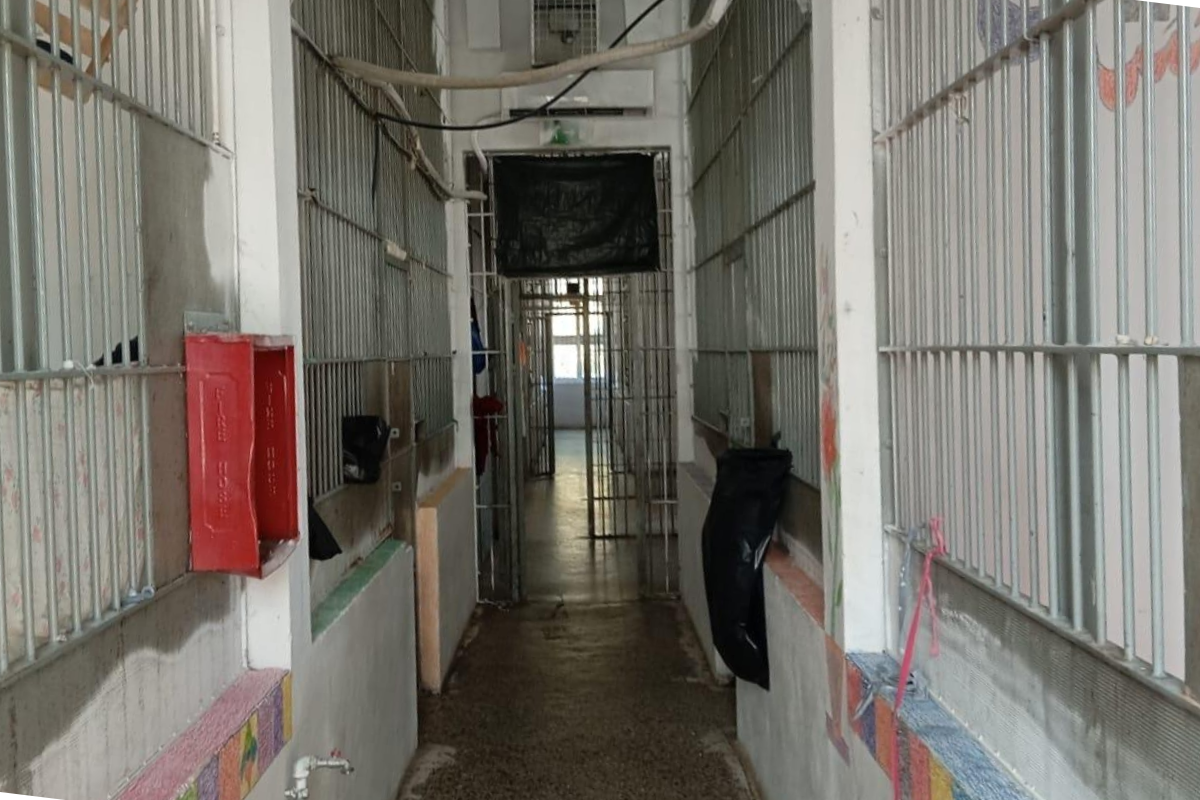
One year on from new criminalisation measures
We publish this archive now, one year after Greece passed legislation (Law 5226/2025) which further criminalised migration via the categories of ‘illegal entry’ and ‘illegal stay’. This law also expanded the grounds and duration of detention. People apprehended without documents may now face a maximum of 48 months in administrative detention as well as a prison sentence of at least two years. In June 2026, 311 people were reported to be behind bars for this charge.
These changes are part of a wider attack on migrants’ existence in Greece, and come alongside a recent announcement that police will raid migrants’ homes in central Athens neighbourhoods. The announcement directly conflates legal status with criminality, and raises concerns that people could be transferred directly from their homes to immigration detention centres. Meanwhile, people detained in the country’s newest detention centre in Sintiki have spoken out against their conditions of detention, declaring that “death is preferable to this”. Their words highlight the importance of examining deaths in detention in relation to broader conditions of confinement, rather than as isolated incidents.
What counts as a death in detention?
The archive includes deaths of foreign nationals in police stations and immigration detention centres, during transportation under police custody, and in hospitals where individuals remained in police custody at the time of death. It covers people detained for immigration-related reasons as well as foreign nationals held in police facilities following arrest or detention on criminal grounds. Deaths occurring after release, even where health conditions may have developed or worsened during detention, are excluded. This reflects our decision to focus specifically on deaths occurring while individuals remained in police custody, rather than the wider health consequences of detention, which may extend well beyond release. The archive therefore captures only part of the broader impact of detention on people's lives and health.
Deaths missing from the official record
Our attempts to reconstruct these deaths revealed significant gaps and inconsistencies in the information provided by the Hellenic Police. Gaps were found in statistics on suicides in police stations (2000-2024), all deaths of foreign nationals in police stations (2000-2024), deaths during or following transfer to hospital (2012-2024), and deaths in pre-removal detention centres (2013-2024). The police responses to our Freedom of Information requests are available in full through the Detention Landscapes database (see our FOI requests and the documents we were provided).
Thirty-four deaths documented by journalists, civil society organisations and monitoring bodies were absent from the police statistics disclosed to us through FOIs. In other cases, different sets of official statistics appeared to contradict one another. For example, police statistics concerning suicides recorded the death of a foreign national in Athens in 2002, while another set of statistics concerning all deaths of foreign nationals in police custody reported no deaths for the same year.
Elsewhere, the police provided aggregate figures without sufficient information to establish who had died, when or under what circumstances. For 25 cases, police statistics provided little more than the year and region in which the deaths occurred. These discrepancies raise fundamental questions about how deaths in police custody are recorded and made available for public scrutiny. Moreover, in our follow-up requests, the Hellenic Police refused to share more information due to confidentiality of ongoing investigations. After the intervention of the Greek Ombudsman, the police claimed that the requested information is not kept in digital databases and as a result providing detailed data would cause excessive administrative burden to the authorities. As a result, we know that data inconsistencies do not necessarily mean that the deaths were never recorded internally, but they reveal the limitations of the official information disclosed.
The true number of deaths in detention is likely to be higher than 112. Independent monitoring of detention facilities is limited, while access for lawyers, families and civil society organisations is highly restricted. NGOs do not have guaranteed, regular access to immigration detention centres in Greece, limiting opportunities for independent monitoring of detention conditions and the documentation of deaths and other abuses. Although the Council of Europe's Committee for the Prevention of Torture (CPT) and the Greek Ombudsman conduct visits to detention facilities and investigate concerns about their operation, their monitoring is periodic or case-specific. It therefore cannot substitute for systematic, ongoing and publicly accessible reporting of deaths in police custody. We also know that the Hellenic Police have previously ignored requests for data on deaths in custody, while independent human rights bodies have raised concerns about transparency and the investigation of deaths in police detention.
Detained people's ability to communicate with the outside world and report violations or deaths is also severely restricted in both pre-removal centres and police stations. Restrictions include the confiscation of phones in police holding cells, the destruction of phone cameras and confiscation of phones as punishment in some detention centres, as well as limited access to Wi-Fi and charging facilities. Limited visiting hours and the remote location of some facilities further restrict contact with the outside world. Documented intimidation practices, including verbal threats and police checking detained people's messages to identify their contacts with organisations, can also discourage people from reporting abuses.
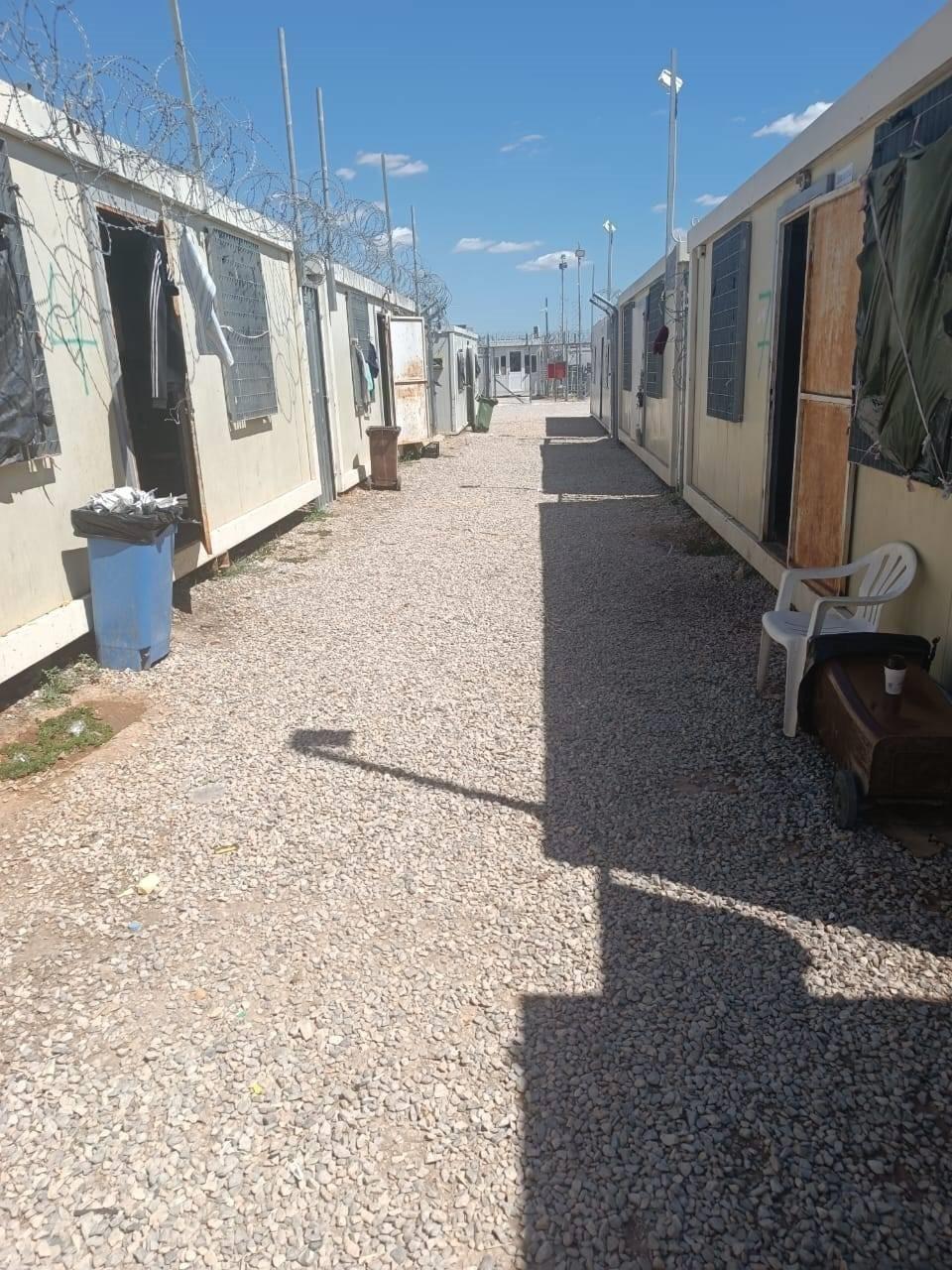
Accommodation containers without windows in Amygdaleza pre-removal detention centre, October 2025
Presence of medical staff does not prevent deaths
Of the deaths documented, 84 occurred in police stations, where there are no medical staff at all, and 27 in pre-removal detention centres, where healthcare is formally provided by the publicly-owned company AEMY, with EU funding. Yet the presence of healthcare professionals does not necessarily mean that detained people can access timely or adequate medical treatment.
Testimonies gathered through our research describe difficulties accessing doctors, requests for medical assistance being ignored or delayed, and police acting as intermediaries between detained people and healthcare services. This role of the police is also embedded in the formal organisation of detention: the EU-funded AMIF 018 project provides salaries for 97 fixed-term border guards at Amygdaleza pre-removal detention centre whose responsibilities include ‘ensuring [...] medical examination [of detained people] and the transfer to hospitals and health centres when such needs arise’. At Amygdaleza, the latest statistics, from April 2026, recorded seven healthcare professionals (two doctors, two nurses, two health visitors and one dentist) for 666 detainees. When we requested information regarding when medical staff positions in pre-removal centres were vacant during the years 2018-2025, the Hellenic Police did not provide any substantial information.
Our interviews with healthcare professionals who have worked for AEMY reveal further problems in the organisation of care, including inadequate supervision, high staff turnover, difficulties obtaining equipment and limited continuity of treatment. Some workers also described police officers obstructing access to the doctors, while others reported a lack of effective mechanisms for raising concerns with management and reported instances in which staff who challenged established practices were marginalised by colleagues or subsequently reassigned to other facilities. AEMY employees have lodged claims totalling over €350,000 against the company, including for overtime and dangerous and hazardous working conditions, according to the company’s financial statements.
These accounts suggest that barriers to healthcare are shaped not only by staffing levels but also by the organisation of detention and the control exercised by police over access to treatment. Interviews with formerly detained people reveal similar patterns. As one man who spent two and a half years in Amygdaleza put it: "[In Amygdaleza], there are doctors, but no care". For several deaths documented in the archive, non-governmental sources have also raised allegations of medical neglect.
Taken together, these accounts point to the need to examine not only whether healthcare is formally available, but whether detained people can access it, particularly given the documented conditions in Greek detention centres and the wider evidence that immigration detention contributes to deteriorating physical and mental health.
Why documenting these deaths matters
The archive is, by nature, incomplete. There are people whose names we have been unable to recover, deaths whose circumstances remain unknown, and others that may have left no publicly accessible trace at all. The 112 deaths documented should therefore be understood as a minimum, rather than a comprehensive account.
This incompleteness is revealing. Our research shows that even basic information about deaths in police custody can be difficult to obtain, that official statistics are not always consistent, and that the circumstances surrounding individual deaths remain obscure. These gaps raise questions not only about how people die in detention, but also about how the Greek state accounts for deaths occurring under its authority.
By bringing together official records, media reports, testimonies and documentation produced by civil society organisations and solidarity groups, the archive seeks to make visible deaths that might otherwise remain isolated or forgotten. It cannot establish the circumstances of every death, but it can provide a basis for further investigation and demands for accountability.
Note: The archive is an ongoing project. We will continue to update and correct entries as new information becomes available and welcome additional documentation that may help establish the circumstances of individual deaths. Please reach out via our contact form: https://detentionlandscapes.uwazi.io/en/page/3nx7gbdjqra/contact-us
Any comments about this post? Get in touch with us! Send us an email, or find us on LinkedIn, Bluesky and Instagram.
How to cite this blog post (Harvard style):
A. Fili, Stergios Magkriotis and A. Troy-Donovan. (2026) Building an archive of deaths in Greek immigration detention centres. Available at:https://blogs.law.ox.ac.uk/border-criminologies-blog/blog-post/2026/11/building-archive-deaths-greek-immigration-detention. Accessed on: 10/11/2026Keywords:
immigration detention; deaths; Greece
Share:
With the support of