The monitors: How the Greek detention system deflects scrutiny
Limited access and resources, as well structural limitations all weaken safeguards against abuse in immigration detention
Posted:
Time to read:
5 Minutes
Post by Andriani Fili. Andriani is a Wellcome Trust Postdoctoral Research Fellow at the Centre for Criminology, University of Oxford, and co-director of Border Criminologies. This post is part of 'Doing harm well', an ongoing thematic series on monitoring and oversight in carceral spaces.
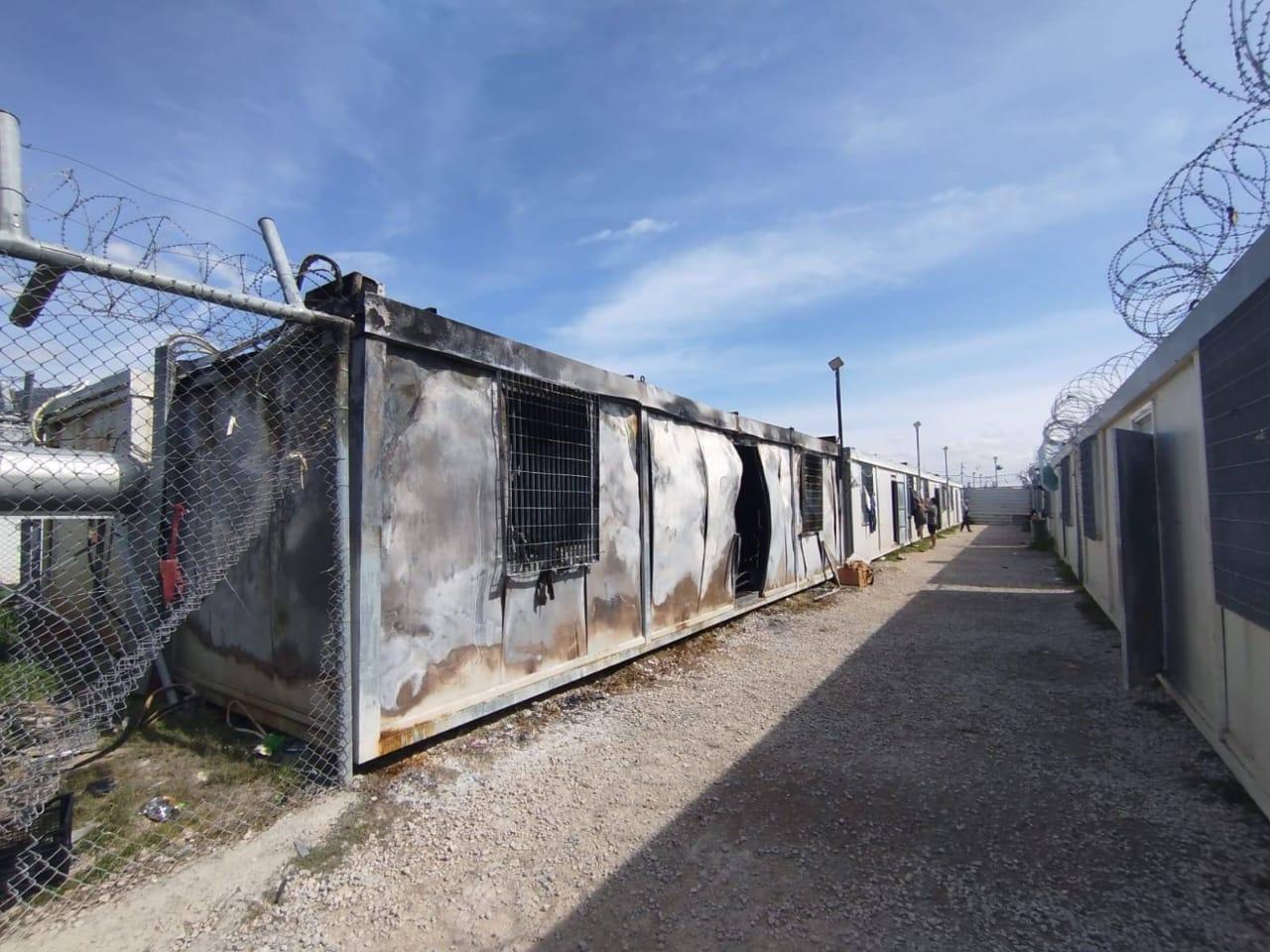
Across Europe, oversight of detention is widely presented as a safeguard against abuse. Under the Optional Protocol to the Convention against Torture and other Cruel, Inhuman or Degrading Treatment or Punishment (OPCAT), states must designate National Preventive Mechanisms (NPMs) to inspect places of detention and prevent torture and ill-treatment. But what happens when the oversight mechanism becomes absorbed into the institutional landscape it is meant to scrutinise? How do states then ensure transparency and legitimacy?
In Greece, immigration detention has long been criticised by international and domestic actors. Amnesty International, the European Committee for the Prevention of Torture (CPT), Human Rights Watch, Médecins Sans Frontières, Pro Asyl, the Greek Council for Refugees, Border Violence Monitoring Network and Mobile Info Team, have documented years of overcrowding, degrading conditions, routine neglect and allegations of violence. The European Court of Human Rights has repeatedly found Greece in violation of Article 3 of the European Convention on Human Rights for inhuman and degrading treatment in detention.
At the domestic level, however, accountability mechanisms often lack traction. Lawyers describe courts that tend to privilege police accounts of events over those of detained people, often treating allegations of ill-treatment with suspicion. Even when individual decisions challenge detention practices, institutional follow-through remains weak. The result is a landscape saturated with documentation but thin in consequence. As a result, despite decades of reports and judgments, harmful detention practices remain entrenched.
Drawing on years of fieldwork on the Greek detention system and a research project that monitored monitors in several countries between 2016 and 2019, this post reflects on the Greek National Preventive Mechanism (NPM) and asks how monitoring operates in a system structurally resistant to accountability.
The Greek NPM and inspections in practice
Greece ratified OPCAT in 2014, designating the Ombudsman as its National Preventive Mechanism. On paper, the NPM has broad powers: it can conduct visits (including unannounced ones), access documentation and issue recommendations. In principle, it is meant to function independently and proactively.
In practice, however, the NPM operates within tight structural constraints. Its budget and staffing have historically been limited. Its staff carry multiple responsibilities beyond preventive monitoring, including handling complaints and investigating arbitrary behaviour by law enforcement. Furthermore, monitoring visits often compete with strict legal deadlines in other areas of work. These constraints matter because they shape not only the frequency of inspections, but also their depth and ambition.
Drawing on several inspections of immigration detention facilities we monitored as part of a three-year research programme, what became apparent was not simply a series of procedural shortcomings, but the structural limits of preventive monitoring itself. Across visits, core safeguards associated with independent inspection, confidential interviews, effective communication through interpreters, systematic examination of conditions, and secure handling of complaints, were inconsistently ensured. Monitors’ engagement with detainees was often brief and constrained, shaped by logistical pressures and limited resources. Tools designed to strengthen evidence-gathering, such as detainee surveys, were unevenly implemented and insufficiently supported by research capacity.
How the police reposition scrutiny
The structural position of the police is central to understanding how scrutiny is managed within the Greek detention system. As the primary managers of detention, they occupy both operational and narrative authority, normalising practices that might otherwise be contested and allowing detention to persist without fundamental disruption. Allegations of ill-treatment can thus be reframed as accidents or fabrications by detained people, and structural neglect is justified through staffing shortages and security concerns. Through repetition, these explanations acquire legitimacy. This narrative dominance does not eliminate scrutiny; it absorbs it and, thus, critique is acknowledged but repositioned within a discourse of inevitability, crisis, and national defence.
This power dynamic also structures the conditions under which external scrutiny takes place. The patterns observed during monitoring visits do not suggest bad faith on the part of individual inspectors. Rather, they reflect a monitoring practice operating with limited institutional backing, and dependence on cooperation from the very authorities it is tasked with scrutinising. As one member of the Greek NPM candidly observed, maintaining access requires not being “too displeasing”. The comment points to a tacit form of reciprocity by which monitors must avoid unduly antagonising the police in order to preserve the cooperation on which access depends. This captures a central tension: legal authority does not automatically translate into practical autonomy. For example, although the Ombudsman’s access to detention facilities is formally guaranteed by law, in practice it is relational and negotiated; it depends on ongoing working relationships with police who control entry to detention facilities. Police officers, as gatekeepers, retain structural control over entry and the conditions under which monitoring occurs.
Eventually, this asymmetry shapes the scope of visits. After each visit, reports are typically consolidated into annual summaries rather than published individually, and recommendations rely largely on the willingness of detention managers to implement them. In this context, preventive monitoring risks becoming entangled with the institutional structures it seeks to regulate. It produces documentation and procedural engagement, but its capacity to unsettle entrenched practices remains limited. In this sense, monitoring may contribute to what this thematic series calls ‘doing harm well’: refining practices, improving surfaces, ensuring procedural compliance while leaving intact the underlying logics of exclusion, racialisation and expulsion.
Visibility without transformation
Despite its limitations, the NPM remains an important actor. For NGOs and lawyers in Greece, it offers an institutional channel for complaints. Ombudsman responses can strengthen litigation strategies and bring formal recognition to bad conditions. Its presence ensures that detention does not operate in complete opacity. At the same time, visibility does not automatically translate into prevention. Where enforcement powers are limited, political will is uneven, and authorities deflect or minimise criticism, monitoring alone cannot guarantee change. Oversight may demonstrate that standards are reviewed and recommendations issued, yet implementation depends on broader institutional dynamics.
The Greek case illustrates a wider tension within contemporary preventive regimes. Monitoring bodies are indispensable to the protection architecture established under OPCAT. However, their effectiveness depends not only on formal mandates, but on the extent to which they are able to exercise independent, critical scrutiny without being constrained by political sensitivities or informal expectations of reciprocity. In its most recent report on Greece, the CPT observed that although the Ombudsman’s integrated structure allows for follow-up on complaints and investigations into arbitrary incidents, the human resources effectively dedicated to the NPM remain limited, a fact reflected in the modest number of visits conducted to places of deprivation of liberty. The Committee underlined that adequate financial and human resources are essential for the effective functioning of any NPM and encouraged the Greek authorities to ensure that sufficient support is provided, particularly if further responsibilities are assigned to the Ombudsman.
Preventive monitoring is not tasked with questioning detention as a policy choice. Its mandate is more specific: to reduce risks of ill-treatment and safeguard fundamental rights within places of confinement. For that mandate to be fully realised, monitoring bodies must be structurally supported in maintaining critical distance, ensuring confidentiality, and articulating findings clearly, even where these findings are uncomfortable. Strengthening that independence is not a critique of monitors themselves, but a necessary condition for preventive oversight to fulfil its protective and preventive purpose.
Any comments about this post? Get in touch with us! Send us an email, or find us on LinkedIn, Bluesky and Instagram.
How to cite this blog post (Harvard style):
A. Fili. (2026) The monitors: How the Greek detention system deflects scrutiny. Available at:https://blogs.law.ox.ac.uk/border-criminologies-blog/blog-post/2026/09/monitors-how-greek-detention-system-deflects-scrutiny. Accessed on: 05/10/2026Keywords:
Doing harm well
Share:
With the support of