Violence in the Central Mediterranean: EU-backed impunity and lawlessness
Attacks, impunity and dangerous conduct of identified and unidentified actors reveal an increasingly lawless environment at sea, with people crossing facing extreme violence
Posted:
Time to read:
6 Minutes
Guest post by Marie Michel and Sofia Bifulco. Marie is a political scientist and advocacy manager at SOS Humanity and has been part of the crew of Humanity 1 as a Human Rights Observer.
Sofia is a communications professional and member of the head of mission team onboard the rescue vessel Humanity 1, operated by SOS Humanity. SOS Humanity is a Berlin-based NGO, operating a humanitarian search and rescue vessel in the Central Mediterranean.
We got kidnapped by gangsters in Libya. They took us somewhere. They had guns with them and asked us for money, but thanks to God, we broke the window and we escaped from that place. I crossed the sea for the first time on a rubber boat, but it capsized. There were 67 of us on board and almost 20 of us died. Some of them were my friends. The rest of us were taken back to Libya by the Libyan coast guard. They arrested us and, as they always do, asked us for money. We paid around 4,000 dinars (£467) for our release. After that I tried two more times to cross the sea. But they intercepted us each time. This was my fourth attempt.
Emmanuelle (a pseudonym) is a student who fled from the Tigray region of Ethiopia. We met him on board Humanity 1 after he was rescued in summer 2025, during a patrol on the deadly Central Mediterranean corridor. The story he told us is one of dozens of accounts about detention, abuse and extortion in Libya that SOS Humanity collects on board its rescue vessel. Very often the so-called Libyan coast guard* plays an integral role in these stories.
We have seen first-hand how lawlessness has become a dominant feature of Europe’s southern sea border. This includes attacks on rescue vessels, impunity for abuse on land and at sea, and dangerous manoeuvres and behaviour by state and unidentified actors. Where lawlessness exists, violence can persist – both are systemic parts of leaving people to die at the EU’s southern border.
Violence on a deadly crossing by EU-funded state actors
Crossing the Mediterranean Sea is lethal: at least 25,629 people were confirmed dead or missing in the Central Mediterranean between 2014 and July 2026, with many more shipwrecks and deaths going unrecorded.
A significant body of research has in part attributed the lethality of this route to the policies of the EU and EU member states, in particular: the absence of safe and legal migration routes, withdrawing from search and rescue in the biggest part of the Central Mediterranean Sea, obstructing non-governmental search and rescue efforts, and outsourcing border control and search and rescue to third country actors who systematically violate international law. According to calculations by SOS Humanity, based on available EU sources, the EU provides over €84m for the period 2017-2028 to establish and support the Libyan rescue coordination centre and the so-called Libyan Coast guard.
The so-called Libyan coast guard is well-known for its indiscriminate use of violence, and for its involvement with trafficking networks and militias. By providing equipment and training, the EU and its member states make themselves complicit in the system of abuse and exploitation at sea and on land in Libya. Systemic violence at sea by multiple actors has been reported by search and rescue organisations, UN experts and witnesses, with over 60 violent incidents committed by Libyan actors from 2016 to 2025.
Violence against humanitarian workers escalated on 24 August 2025 when the rescue ship Ocean Viking was attacked in international waters. Live ammunition was fired from a patrol vessel of the so-called Libyan coast guard, which Italy provided with EU funding. Another rescue ship, Sea-Watch 5, has since been attacked twice by the so-called Libyan coast guard – on 26 September 2025 and on 11 May 2026. The attacks are unprecedented in their ferocity, but form part of a longer pattern of aggression witnessed and experienced by NGO ships in international waters north of Libya.
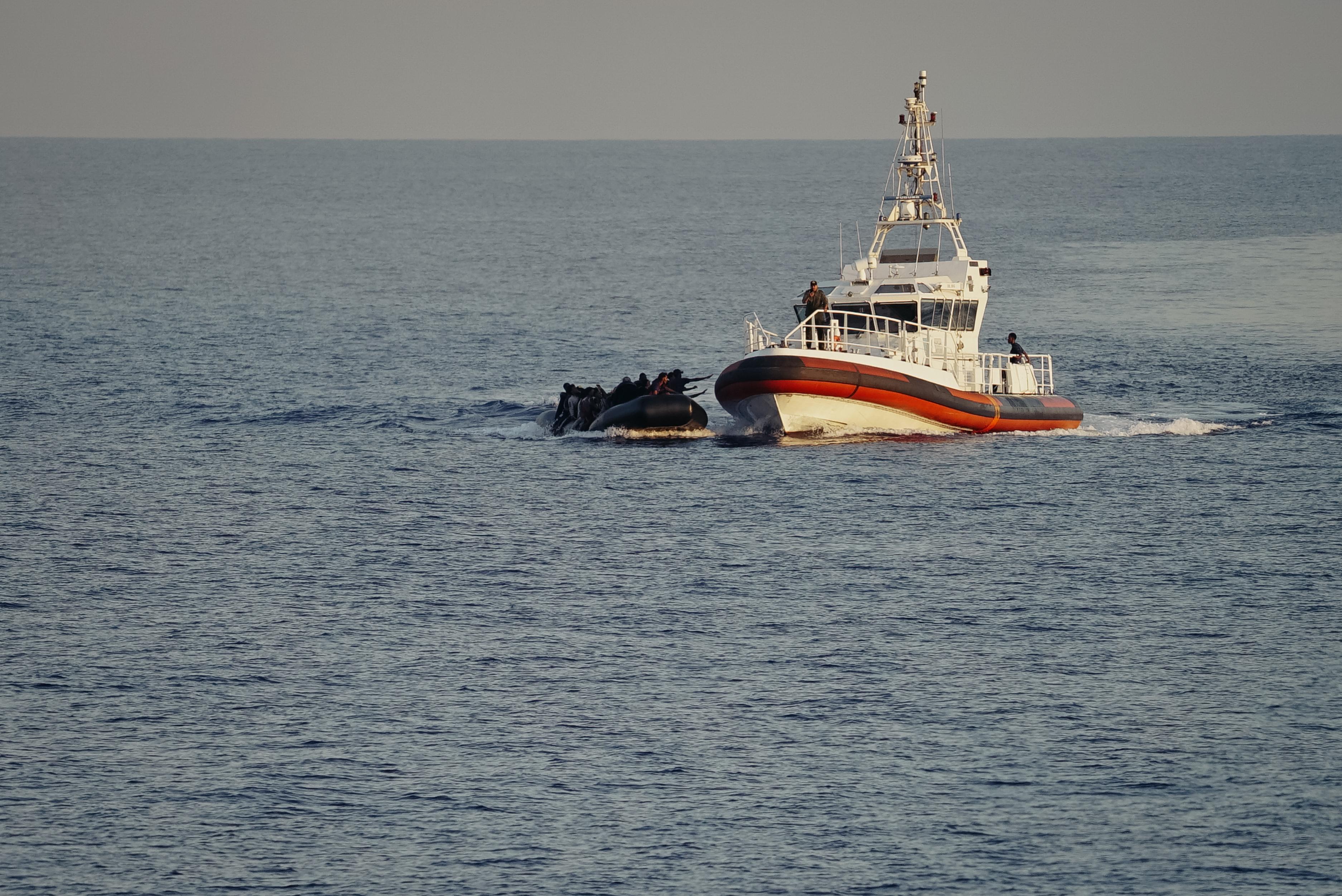
Although aggressive and illegal behaviour toward humanitarian actors is well documented, people on the move bear the brunt of the violence from EU-funded Libyan security forces and unidentified actors. In the period 2016-2025, the so-called Libyan coast guard intercepted and illegally returned 188,742 people from distress at sea in violation of international law. These interceptions often take place with the use of force and violence. According to UN investigations, the so-called coast guard is also responsible for committing grave human rights violations in detention centres which may amount to crimes against humanity.
Violence on a deadly crossing by unidentified actors
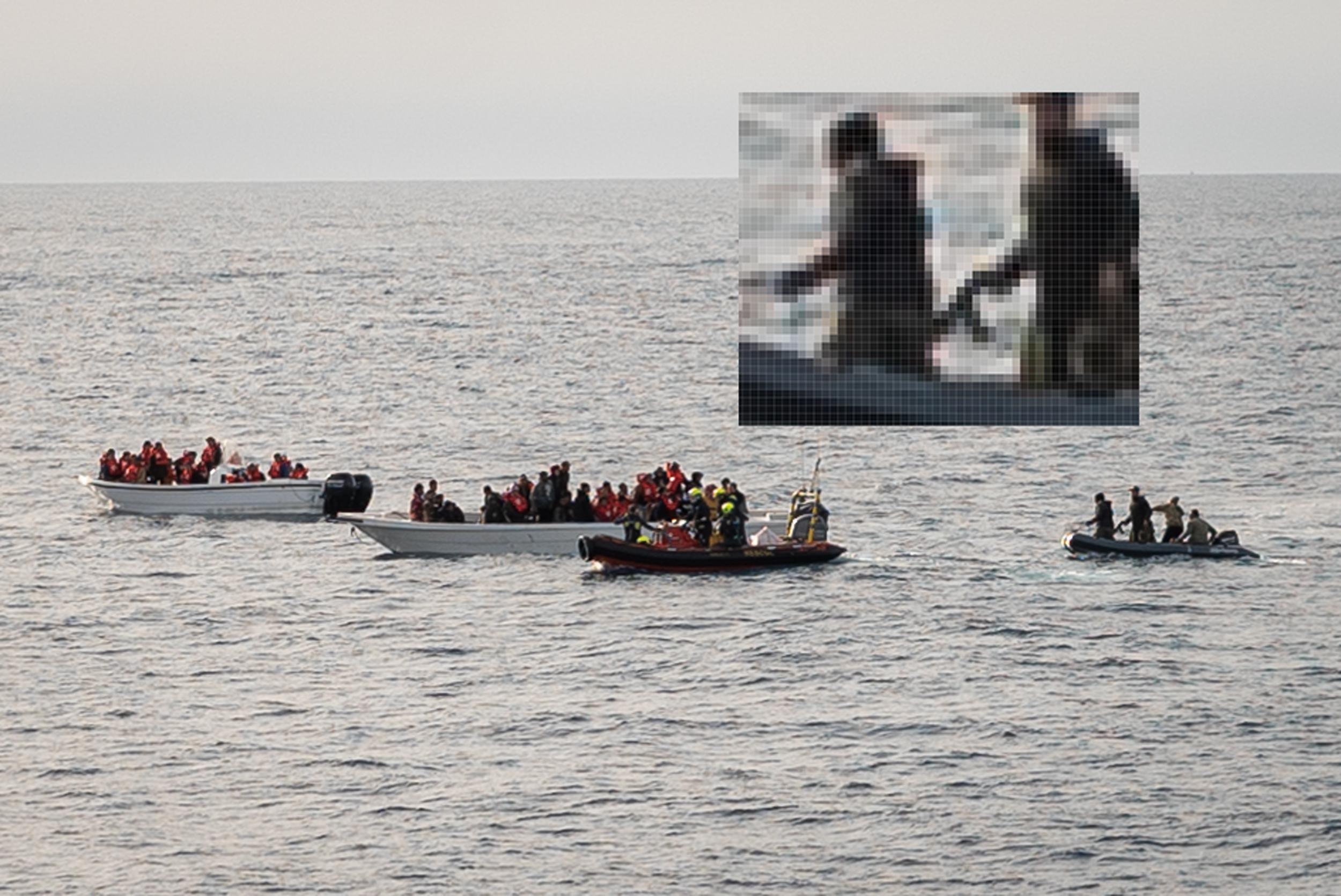
Search and rescue NGOs and other experts have increasingly reported distress cases involving small, fast, unseaworthy boats with powerful engines, carrying people in overcrowded conditions and lacking lifesaving equipment. They generally approach NGOs from the south. In these cases, rescue crews render life-saving assistance to people in distress, while one or more people on board refuse to be rescued and subsequently leave the scene. The incidents mostly occur north of Zuwara and Tripoli, in international waters.
Scenarios differ in character: cases include persons refusing to be rescued who remain on board and leave the scene heading south; small fast boats engaging in hazardous manoeuvres near boats in distress, then collecting empty boats after rescue operations by NGOs; masked individuals forcing people in distress into the water, and direct approaches to rescue scenes by fast boats in distress manoeuvring at speed, aiming to swiftly transfer people to the rescue vessel. All these boats match the factors laid down in European Union Regulation 656 regarding distress cases, as the persons in the boats often ask for help, the boats are often heavily overcrowded, not equipped with appropriate rescue equipment such as life jackets and do not have adequate instruments and supplies for spending days at sea.
During most of these incidents, the people leaving the scene cover their faces. In some cases, individuals have been observed filming the incident, and in others, they were armed and issued threats at gunpoint against people on the move. These incidents pose several risks to protection seekers and search and rescue NGOs. People in distress face serious threats to their life and physical safety, including the danger of falling or being pushed into the water, as well as exposure to violence or being compelled to undertake hazardous embarkation attempts, such as climbing onto large rescue vessels from unstable, moving boats.
In addition to these physical risks, there are profound legal and political challenges: individuals in distress boats are frequently subjected to false accusations of involvement in smuggling, while rescuers carrying out their duty may later face allegations of collusion with those responsible for unsafe transfers, creating a climate of uncertainty and potential criminalisation for both groups.
The system of lawlessness behind violence at sea
According to experts, these manoeuvres by unidentified actors are likely an adaptation to a broadening system of lawlessness. Rebecca Solovej, PhD fellow at the Department of Anthropology, University of Copenhagen explains:
Research on migration across the Mediterranean Sea has well-documented the fact that counter-smuggling initiatives and border enforcement push those who facilitate migrants’ journeys to opt for more dangerous routes and strategies in order to avoid criminalisation. Due to a lack of access to safe and legal pathways into the EU’s asylum system, migrants must rely on smugglers to facilitate their journeys. When unidentified actors perform risky and deadly manoeuvres around rescue vessels, these dangerous strategies are likely a response to such overlapping border enforcement dynamics.
Moreover, unidentified perpetrators responsible for dangerous behaviour at sea are not always separate or opposed to recognised state actors; in Libya, as in other places, they are often interlinked. Multiple reports explain how Libya’s weak central governing institutions enable smuggling and trafficking to thrive, with official coastal authorities cooperating with armed and/ or criminal groups.
Search and rescue NGOs have informed Italian authorities about these cases through reports and advocacy work, highlighting the risks to both people in distress and humanitarian workers. Despite this, EU member states have not acknowledged repeated demands to stop collaborating with Libyan actors. Instead, they have pursued counter-smuggling policies through which protection seekers and humanitarian workers are targeted, while also providing support to Libyan actors who engage in violent behaviour at sea.
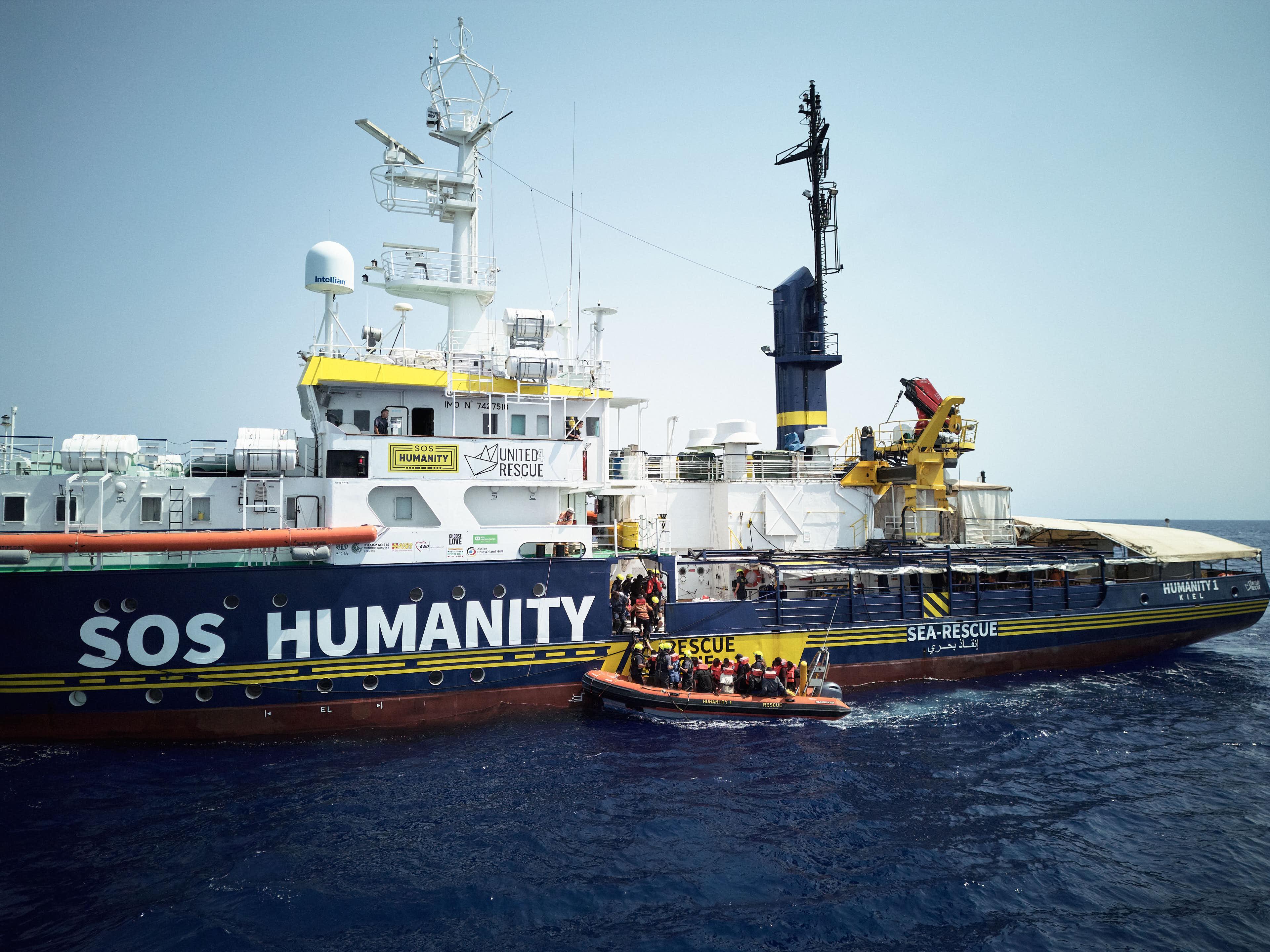
When states criminalise both flight and the facilitation to flee, they create the conditions in which violence and abuses of power become systemic. Policies geared toward preventing people from reaching European shores through coercion and deterrence either ignore international law or selectively invoke it to legitimise EU externalization policies, i.e. by “strengthening Libyan search and rescue capacities” or “fighting human trafficking.” As a result, European states are co-producing an arbitrary regime of profiteering and impunity leading to systematic violence against people on the move.
*Along with all members of the Justice Fleet alliance, SOS Humanity refers to the Libyan coast guard as such because it does not deem them a legitimate actor in search and rescue. This is in line with Italian jurisdiction.
Any comments about this post? Get in touch with us! Send us an email, or find us on LinkedIn, Bluesky and Instagram.
How to cite this blog post (Harvard style):
S. Bifulco and M. Michel. (2026) Violence in the Central Mediterranean: EU-backed impunity and lawlessness. Available at:https://blogs.law.ox.ac.uk/border-criminologies-blog/blog-post/2026/09/violence-central-mediterranean-eu-backed-impunity-and. Accessed on: 23/10/2026Keywords:
Search and rescue
Share:
With the support of