Executive expulsions from Assam: A historical look at citizenship regulation
Recent invocation of a post-partition expulsion law reveals the hollowness of procedural protections in India’s citizenship regime
Posted:
Time to read:
6 Minutes
Guest post by Vibha Swaminathan. Vibha is interested in the political and legal fragilities of citizenship, generated along intersectional axes of identity. She is reading for the Bachelor of Civil Law at Oxford University, on the Rhodes Scholarship.
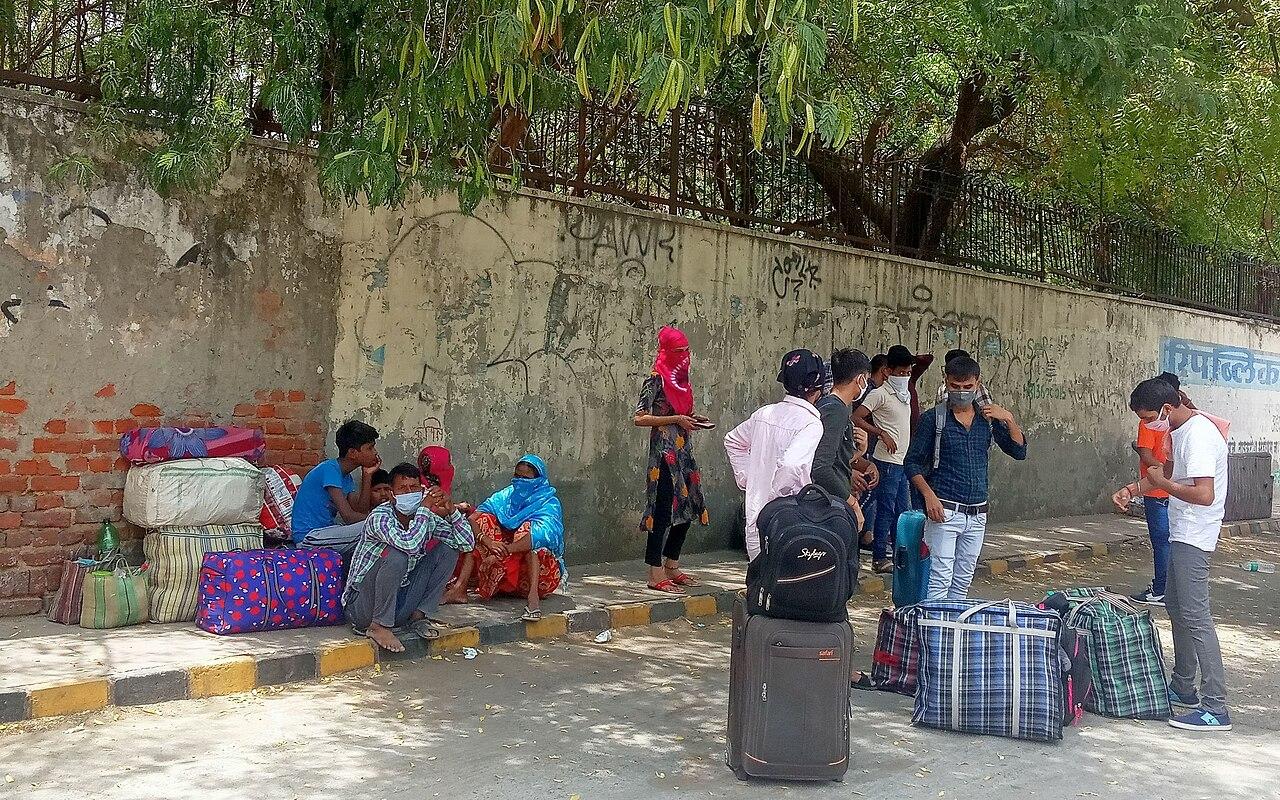
On 9 September 2025, the Assam state cabinet approved a Standard Operating Procedure (SOP) authorising District Commissioners and Senior Superintendents of Police to declare individuals “illegal immigrants” and issue expulsion orders within ten days if they fail to produce proof of citizenship, under the Immigrants (Expulsion from Assam) Act, 1950 (IEAA). Since then, multiple expulsion orders have been passed against those suspected foreigners, with at least 330 persons “pushed back” across the Bangladesh border.
The revival of this 75-year-old statute has generated serious concern. Critics argue that these expulsion orders bypass the Foreigners’ Tribunal (FT) system, thereby undermining due process in citizenship and immigration processes. Yet, to focus only on this unjustifiable exercise of power risks missing a deeper problem: the system of citizenship determination in Assam has long operated with fragile procedural safeguards. The recent expulsions are not an aberration from due process; they are an intensification of a regime in which due process has always been elusive.
This post traces the historical tensions embedded in the IEAA, examines the relationship between expulsion powers and the FT system, and argues that the present moment exposes – rather than creates – the hollowness of procedural protections in Assam’s citizenship regime.
Historical tensions in the IEAA
The IEAA was enacted in the aftermath of partition. At the time, the Foreigners Act 1946 did not extend to people from Pakistan. Significant numbers of people migrated across Assam’s eastern border from East Bengal over the next three decades. The IEAA emerged from political negotiations between two approaches to respond to this migration.
As migrants continued to arrive from East Bengal, Assam’s political leadership expressed concern about over its helplessness with respect to protecting Assam’s land and identity. While acknowledging these anxieties, Jawaharlal Nehru, the country’s first prime minister, highlighted the humanitarian realities of displacement, ostensibly resisting measures such as a permit system that would obstruct the movement and rehabilitation of refugees. Nehru’s correspondence with Gopinath Bardoloi, the first Chief Minister of Assam, on the issues of refugees and rehabilitation, and communal disturbances in Assam, reflects his attempts to negotiate between their positions. Nehru’s position, however, was not universally shared even within his own cabinet: Vallabhbhai Patel, then Home Minister, echoed concerns within Assam about Muslim migration into the state.
The tension between these two approaches is reflected in Section two of the IEAA, which authorises the state to expel certain migrants whose presence is deemed “detrimental to the interests of the general public of India or of any section thereof or of any Scheduled Tribe in Assam.” Yet the same section contains a crucial proviso: it does not apply to persons displaced by civil disturbances, in areas now forming part of Pakistan; ostensibly to protect communities displaced on account of violence following partition, from expulsion into East Bengal.
As historians of Assam have shown, the IEAA was a historically contingent response to a particular political moment (Sanjib Baruah discusses this in an exploration of citizenship in post-partition Assam, as does Haimanti Roy in bureaucratic responses to immigration). It reflected anxieties about land, employment, and demographic change, but it also incorporated bilateral commitments and humanitarian considerations. Its legislative intention was neither stable nor unified; rather, it embodied a negotiation between the impulse to exclude on religious and linguistic lines, and the obligation to rehabilitate. Even after the enactment of the IEAA, Nehru urged the Assam government to not exercise its powers under it.
A clear parallel is visible between the IEAA and the discrimination of Hindu and Muslim migrants from Pakistan, which is implicitly built into the citizenship provisions of the Indian constitution (as raised in Joya Chatterji’s work on minority citizenship in India, and Abhinav Chandrachud’s work on non-secular histories of Indian citizenship). The current invocation of the IEAA is not as clearly a rupture from its original context, as a culmination of its inherent tensions.
Expulsions and the Foreigners’ Tribunal system
The recent expulsions have been justified as an exercise of powers under the IEAA, authorised by the Indian Supreme Court’s decision in In Re: Section 6A, which upheld the constitutionality of Section 6A of the Citizenship Act, 1955, a provision stipulating a distinct cut-off date for entrants from East Bengal into Assam to claim citizenship.
Recent commentary critiques the new SOP as bypassing the Foreigners’ Tribunals established in 1964, which have long been used to determine citizenship claims under Section 6A. According to the human rights group Citizens for Justice and Peace, a “harmonious construction” of the IEAA with Section 6A, consistent with the Supreme Court’s directive, would instead use the IEAA for “identification,” where information gathered by the district administration could then form the basis of a reference to the quasi-judicial FTs. The SOP collapses this distinction between executive and quasi-judicial powers, and vests unchecked discretion in the executive. This critique is important, but rests on two assumptions that deserve scrutiny.
First, it assumes that ‘illegal’ migration of Bengali Muslims into Assam is an undisputed phenomenon, requiring only better identification and expulsion procedures. Yet, scholarship on Assam has shown that perceptions of migration are often shaped by majoritarian rhetoric rather than by reliable demographic data. Migration has long been a feature of this region’s ecology and economy, criminalised by colonial and postcolonial border regimes. Moreover, responses to the perceived threat of migration have fostered communal confrontation and the disenfranchisement of citizens rather than addressing socio-economic realities that build resentment.
Second, it assumes that the FT system itself provides some semblance of meaningful due process. This is far more doubtful. The system of identifying and declaring ‘foreigners’ in Assam has evolved through a sequence of mechanisms: the category of “doubtful voters,” references to quasi-judicial Foreigners’ Tribunals, and the National Register of Citizens process. Extensive documentation by the National Law School of India University and Queen Mary University of London and Amnesty International, as well as Talha Abdul Rahman’s critique of the FT system, has shown that these processes are marked by structural flaws. In front of Foreigners Tribunals, individuals suspected of being ‘illegal migrants’ face severe evidentiary burdens, limited access to legal assistance, inconsistent standards of proof, and significant errors in jurisdiction and reasoning. Proceedings are often conducted ex parte (in the absence of, and without hearing, the concerned person), with limited grounds, and avenues for review and appeal. Members appointed to Foreigners Tribunals are appointed by and serve at the pleasure of the executive – lacking any meaningful independence and facing termination based on ‘performance’ measured by the number of persons declared as foreigners. For the concerned people, the consequences of a negative FT determination are grave: loss of citizenship status, detention, and deportation.
These are not isolated administrative mistakes, but systemic features reflecting the structural and functional design of FTs as institutions of exclusion. The FT regime has long operated with minimal procedural robustness, even as it determines one of the most fundamental questions a legal system can ask: who belongs.
Against this backdrop, expulsions under the IEAA are not simply a ‘worse alternative’ to an otherwise sound system. Rather, they represent a more explicit expression of the same logic that underpins the broader citizenship regime in Assam – one of suspicion, exclusion, and disenfranchisement of minorities – and reflected in one side of the tension within the IEAA itself.
Judicial endorsement
This exclusionary logic of delineating citizenship is reinforced in judicial reasoning. In Sarbananda Sonowal v Union of India, the Supreme Court characterised irregular migration into Assam as “external aggression,” invoking the Union government’s constitutional duty under Article 355 to protect states against such ‘threats’. The language of “silent and invidious demographic invasion” has echoed in subsequent discourse.
More recently, in dismissing habeas corpus petitions challenging arrests and detentions linked to expulsion efforts, the Gauhati High Court has adopted a markedly deferential posture. In some instances, it has suggested that conferring robust constitutional safeguards on declared foreign nationals would amount to giving them a “special premium ” not envisaged by the constitution. The court has also invoked the example of other jurisdictions, including the US, as facing similar pressures from irregular migration – a worrying comparison in light of the US’ violent expansion of immigration detention and deportation operations.
This reasoning is striking. The Indian constitution extends core procedural protections – such as the right to life and personal liberty – to “all persons,” not only citizens. Yet the language of national security and ‘demographic threat’ has narrowed the space within which these guarantees can be meaningfully enforced.
Due process in a system of exclusion
If due process is understood not merely as the existence of procedures, but as meaningful opportunities to be heard before an impartial authority applying consistent standards, then its presence in Assam’s citizenship regime has long been tenuous. The recent turn to executive expulsions under the IEAA exposes, rather than creates, this fragility.
In Assam today, expulsion may be the most visible face of state power. But it rests on deeper foundations, in which ethnonationalist anxieties disguised as ‘security concerns’ have steadily displaced due process as the organising principle of citizenship governance.
These anxieties are playing out across the country in alarmingly interlocking ways – the special intensive revision of electoral roll across 12 states as a “purification” exercise resulting in a tenth of their electorate being deleted, mass raids, detentions and pushback of thousands of Bengali-speaking migrants across the Bangladesh border. Read in this context, the question, then, is not simply whether the new SOP circumvents the Foreigners’ Tribunals. It is whether the citizenship and immigration regime as a whole – identification, quasi-judicial determination, detention, and deportation – has ever provided the level of procedural fairness that the constitution promises to “all persons.”
Any comments about this post? Get in touch with us! Send us an email, or find us on LinkedIn, Bluesky and Instagram.
How to cite this blog post (Harvard style):
V. Swaminathan. (2026) Executive expulsions from Assam: A historical look at citizenship regulation. Available at:https://blogs.law.ox.ac.uk/border-criminologies-blog/blog-post/2026/06/executive-expulsions-assam-historical-look-citizenship. Accessed on: 21/10/2026Keywords:
Citizenship
Share:
With the support of