Documents at the Indian border: Elections, citizenship, and the algorithmically suspect voter
Marginalised communities living on riverine borderlands have been disproportionately impacted by a mass deletion of ‘doubtful’ voters – leaving some vulnerable to deportation
Posted:
Time to read:
6 Minutes
Guest post by Panchali Ray. Panchali is associate professor of anthropology and gender studies at Krea University, India. She is currently researching ecological crisis, border security and citizenship in the chars of Eastern India’s borderlands.
The state assembly elections in West Bengal in April have drawn significant attention, as the Bharatiya Janata Party (BJP) won a landslide victory in the state for the first time in India's history. Their recent win has been attributed to the Election Commission’s Special Intensive Revision (SIR) of the electoral rolls, conducted just prior to the elections, which resulted in a contraction of voter base in constituencies with substantial Muslim electorates and longstanding TMC dominance. SIR is a verification exercise meant to update the electoral roll periodically; however, this time it became a tool of large-scale disenfranchisement, by categorising and subsequently deleting 9.1 million people, or 11.9% of Bengal’s electorate, as ‘ineligible’ or “doubtful” voters, citing “logical discrepancy”.
BJP, a far-right party committed to the ideology of a Hindu nation, has been in power in India since 2014, forming the central government; however, in state elections, its attempts to win West Bengal from the Trinamool Congress (TMC), the party in power from 2011 to 26, had always been thwarted.
Most of those who were affected by the SIR deletions hail from districts along the India–Bangladesh border, with a high minority population, including Muslims and Dalit refugees. Although Muslims account for 34% and Hindus for 63% of the deletions – the latter predominantly from Dalit and Adivasi communities – the proportion of Muslim deletions is disproportionately high relative to their population share, 27.01% of West Bengal's population, compared with 70.54% for Hindus.
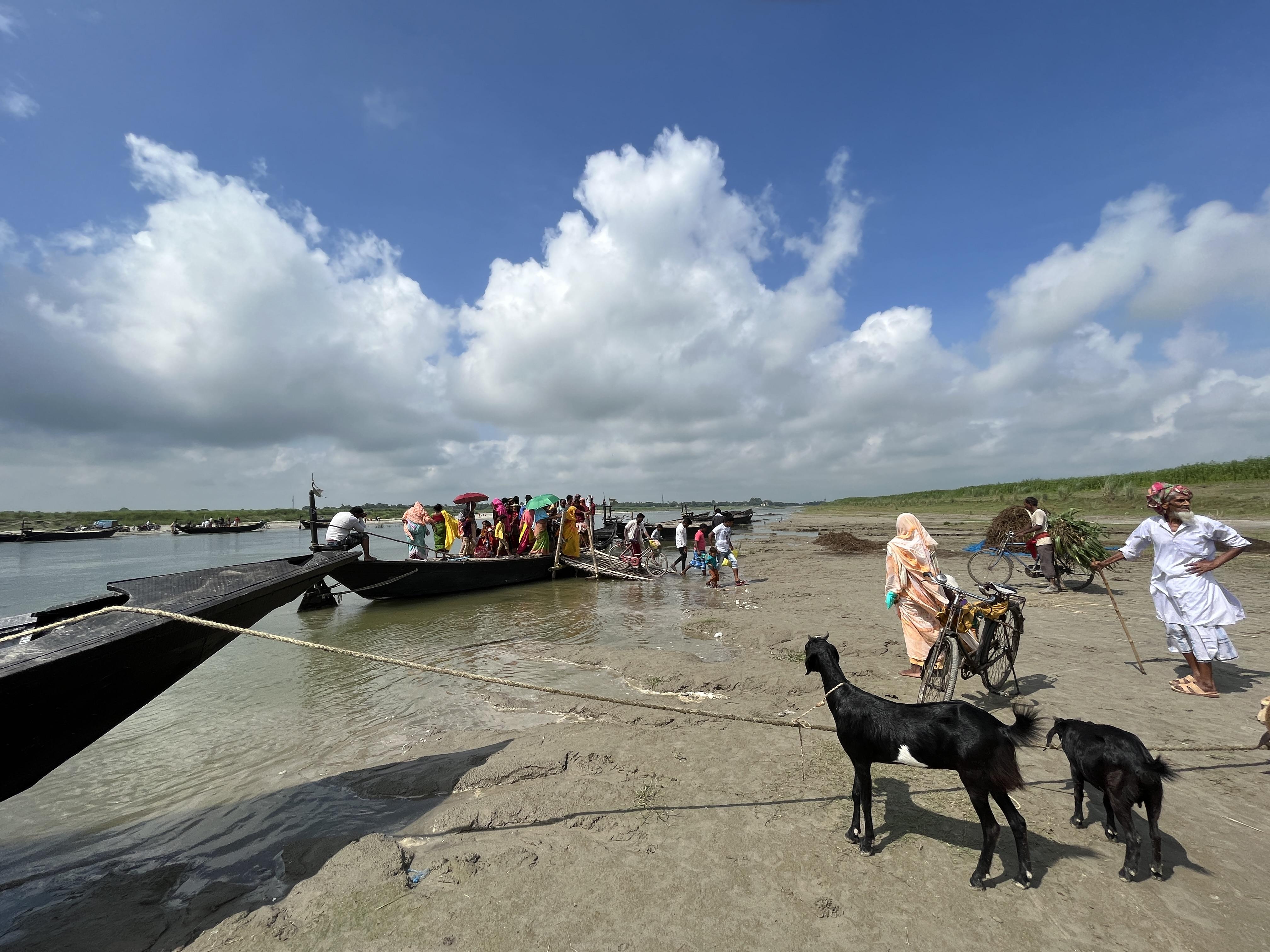
Murshidabad is among the border districts with the state’s highest Muslim concentrations and accounts for 58.65% of the total electorate marked as “under adjudication”, meaning under scrutiny. For the past five years, I have been conducting ethnographic fieldwork in Nirmal Char, in Murshidabad district, adjacent to the India-Bangladesh border. Chars are sandbanks/silt islands that emerge and submerge as the river accretes and erodes, and charuas (char dwellers) move with the river, staking land as it emerges. Nirmal Char, situated along the India-Bangladesh border on the bank of the Padma, is a hardened sand bank that has supported human settlement since 2000. Populated largely by Muslim and Dalit communities, who are burdened by the common stigma faced by borderland populations, their claims of belonging and loyalties are persistently subjected to scrutiny and doubt. Beyond that, charuas are also perceived as those who live beyond the reach of law; their nomadic lives and peripatetic movement make them difficult to classify by nation-states as much as the fluvial lands they inhabit.
A growing body of literature has examined the relationship between documents and citizenship, particularly in Indian borderlands. In India, Assam has become the laboratory where unconstitutional means of deporting suspected foreigners, bypassing due process and denying legal representation, are being experimented with. In West Bengal, one of the BJP’s electoral promises was to rid the state of “illegal” Bangladeshi migrants. The SIR escalated this logic from an electoral promise to a strategy. Under the guise of detecting “illegal” migrants, the Election Commission of India (ECI) reactivated an AI tool that was declared flawed in 2023 to identify “logical discrepancies” in voter data. The Supreme Court noted that the algorithm failed to account for West Bengal's socio-economic realities. What the software flagged as doubtful – misspelt names, purportedly suspicious age differences between parents and children, name changes after marriage, multiple addresses over time – is the quotidian of the rural agrarian population.
Electoral marginalisation
Unlike in the last state assembly election in 2021, when tensions crystallised around the Citizenship Amendment Act and the National Register of Citizens, the 2026 elections raised a more foundational question: who is a citizen? The SIR exercise, layered over by persistent narratives of “infiltration”, did something qualitatively different from ordinary electoral polarisation — it reimagined the body of the nation-state as purged of the ‘alien’ or the Muslim. The consequences were most tangible in the border area. Of the 44 assembly constituencies directly along the Bangladesh border, the BJP won 28. These districts have simultaneously been shaped by large-scale migration, majoritarian political mobilisation, and anxieties over demographic transformation. Against this backdrop, they have become important arenas of electoral polarisation, with political narratives increasingly positioning Dalit Hindus as “refugees” and Muslims as “infiltrators” over the past few decades.
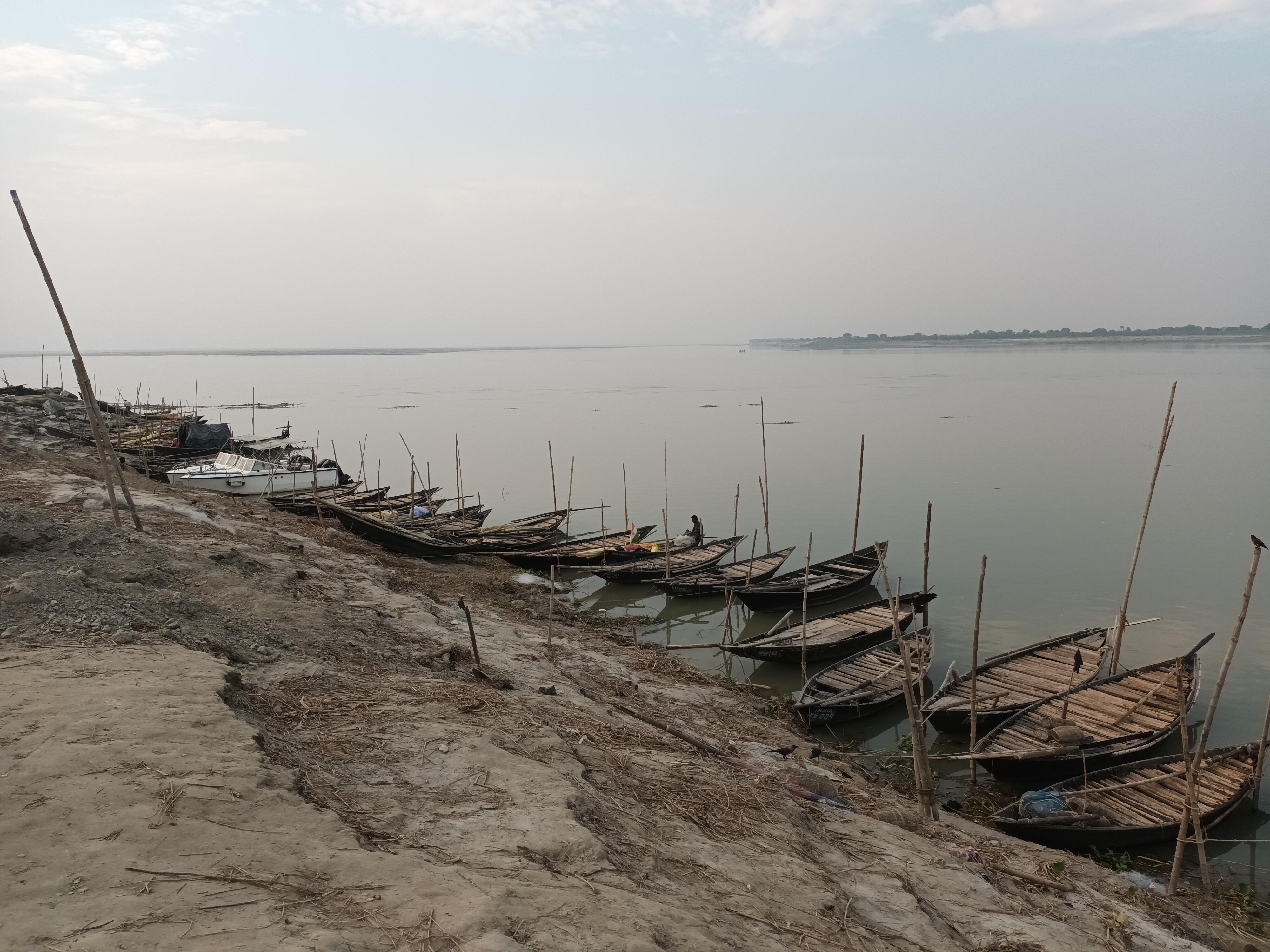
Rashid, my interlocutor and host in Nirmal Char, whose two out of five children had their names deleted from the electoral roll, tells me that approximately 5.5% of voters, mostly Muslims, were disenfranchised in the char. Char dwellers build and rebuild their homes as the river moves. Women marry across chars and change their names. Children are born during floods and erosions, far from hospitals, in the homes of relatives on other islands, sometimes across the border in Bangladesh. It is this quotidian of the charua that makes them vulnerable when the state demands a continuous paper trail linking a person to a fixed address, a stable family tree, and a name that matches across all documents. Charuas, whose hydrosocial existence defies a sedentary, fixed identity, are rendered illegible to a bureaucratic state that demands verifiable, bounded documentary subjects. In Nirmal Char, as I have argued elsewhere, with increasing border security, permit regimes regulating mobility – including access to agricultural land, rivers, and grazing fields – have disrupted autochthonous life, producing despair, precarity, and alienation amongst charuas.
Rashid received a notice from the Election Commission of India (ECI) in November 2025 stating that the algorithm had flagged him as having more than five children, thereby creating a “logical discrepancy” in the officially constituted genealogical record. In March 2026, he submitted documents for all five of his children at a hearing held by the ECI, but two of his sons were nevertheless deleted from the electoral roll. Those who live in disturbance-based ecologies such as Nirmal Char, landscapes that are equally politically sensitive given their location, become vulnerable to such documentary regimes of citizenship, which have become the principal legal mechanism for enacting citizenship deprivation. In Bengal’s chars, adjacent to the border, exercises like the SIR become the state’s mechanism for tightening bureaucratic control over populations whose fluid lifeworlds constitutively defy the fixed categories required for governance.
From a citizen to a demographic category
Soon after the elections, Suvendhu Adhikari, the newly sworn-in chief minister, declared that those deleted from the electoral rolls by the SIR would no longer be beneficiaries of any welfare schemes. The transformation of populations into citizens is mediated by the claims marginalised communities make on the state. This, as many commentators have highlighted, hinges largely on the links between welfare schemes and the practice of substantive citizenship. The 11.9% of Bengal’s population who have been disenfranchised are often already marginalised by caste, religion, gender (over 61 % of deleted voters are women) and region. For them, this deletion is not just a disenfranchisement but also an eviction from the power-patronage relation between the state and its citizens. The stripping away of the exercise of substantive citizenship remains one step away from losing formal citizenship.
The Home Minister Amit Shah announced in the lower house of the parliament that for the BJP, the exercise of SIR is to "detect, delete and deport” infiltrators, specifically Bangladeshis and Rohingyas. This rallying cry was further taken up by Adhikari, the leader of BJP in Bengal, in support of the SIR. The connection between SIR and deportation is not overstretched. Political commentary has drawn attention to the meticulous manner in which three distinct yet interrelated bureaucratic mechanisms – the doubtful-voter system, Foreigners Tribunals, and the National Register of Citizens – have led to mass-scale incarceration. The newly-minted Immigration and Foreigners Order, 2025 (rules 16–20), allows the central government to constitute Foreigners Tribunals (FT) in any state or Union territory, which can, in effect, detain any ‘foreigner’ within reasonable suspicion.
Following the BJP's victory, the West Bengal government directed all district administrators to build ‘holding centres’ for apprehended foreigners awaiting deportation or repatriation, specifically for Bangladeshi nationals and Rohingyas. Bypassing all legal procedures, it has been declared that accused people will not be allowed to appear before any Foreigners Tribunal but can be deported directly. As well as raising concerns more broadly, rights groups are apprehensive that Indian citizens, particularly Muslims detained and deported without any representation, may be caught up in the expulsions. This is no longer a conjecture but a reality, as recent media reports indicate that at least twelve people have been detained in holding centres in Malda and Murshidabad without any representation, waiting to be handed over to border security forces for “push back” into Bangladesh. What the slogan "detect, delete, deport" makes plain is that the SIR was never about electoral integrity – it was about deciding, once and for all, which bodies belong to the nation and which must be expelled from it.
Any comments about this post? Get in touch with us! Send us an email, or find us on LinkedIn, Bluesky and Instagram.
How to cite this blog post (Harvard style):
P. Ray. (2026) Documents at the Indian border: Elections, citizenship, and the algorithmically suspect voter. Available at:https://blogs.law.ox.ac.uk/border-criminologies-blog/blog-post/2026/06/documents-indian-border-elections-citizenship-and. Accessed on: 21/10/2026Share:
With the support of