Paperless, Stateless: How India’s Aadhaar Infrastructure Rewrites Citizenship
Posted:
Time to read:
4 Minutes
Guest post by Varalika Singh. Varalika is a first-year Bachelor of Laws (LLB Hons.) student at the National Law School University of India, Bangalore, who completed their undergraduate studies in a Bachelor of Arts, Sociology (BA. Hons) from Lady Shri Ram College, University of Delhi.
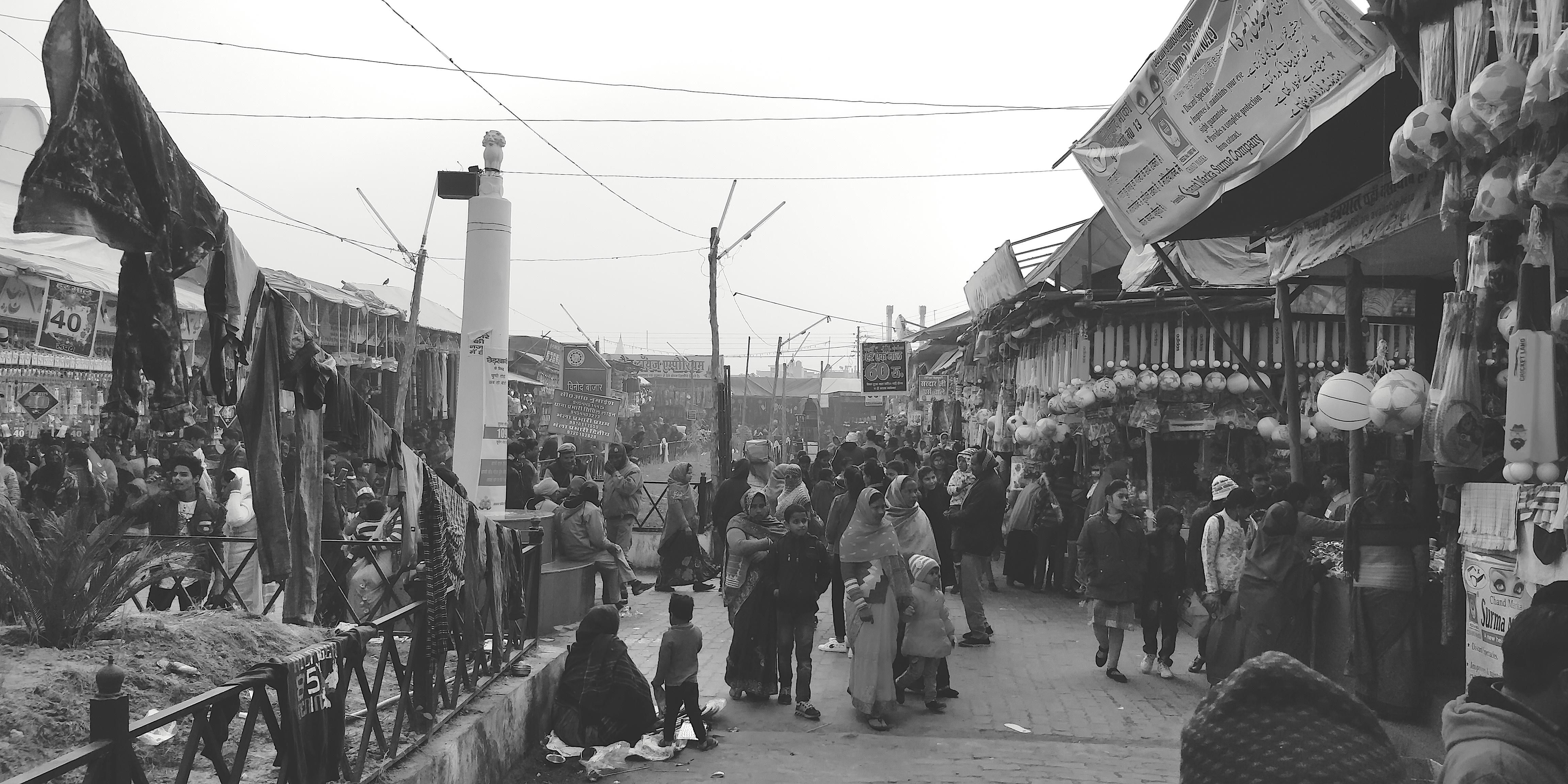
“Yee Seshanwa chunaav karwa raha hai ki kumbh?” (“Is this Seshan conducting an election or a pilgrimage?”)
So quipped the Chief Minister of the Indian state of Bihar, Lalu Prasad Yadav, during the 1995 State Assembly Elections, frustrated by the assertiveness of T.N. Seshan, India’s then Chief Election Commissioner. Empowered by Article 324 of the Indian Constitution, the Election Commission (EC) transformed from a passive facilitator of representative democracy to an authority overseeing free and fair elections under Seshan. His insistence on photo ID cards and control over law enforcement disrupted decades of electoral malpractice. This shift marked an early moment in India’s growing reliance on documentary identity for democratic participation, one that ‘Aadhaar’ would later transform into a digital imperative, with far-reaching consequences.
Aadhaar, India’s largest biometric identification system, was introduced by the Unique Identification Authority of India in 2009. It assigns a unique number to individuals based on personal data, and has since become one of the most widely used documents to access government services, welfare and identity verification. It has become the customary proof of residence, and by extension, citizenship. Moreover, the Digital India policy has placed Aadhaar at the heart of developing a national digital infrastructure. Originally envisioned to address the absence of formal IDs for nearly 400 million Indians, today, 94% of the population has been enrolled in what is termed “the most reliable authentication system.”
Despite this widespread reliance, in 2025, the EC declared that Aadhaar would no longer be sufficient to prove citizenship to register as voters for legislative assembly elections in Bihar. The move to disqualify Aadhaar as a valid proof undermines its de facto role and exposes the fragility of digital identity as a basis for democratic participation. This change has been criticised across the spectrum of civil society, from the Supreme Court of India to civil society groups such as the Association for Democratic Rights.
The Bihar Issue: Citizenship on Trial
The Bihar Special Intensive Revision (SIR) exercise aims to review ‘eligible’ citizens on the voter list. The EC declared that several documents, including Aadhaar and voter ID cards published by the Commission itself, are no longer sufficient documents for proof of citizenship due to their susceptibility to falsification. While Aadhaar has remained central to the state’s imagination of a legal citizen, here it is deemed insufficient to prove one’s citizenship. There are questions about the timing and procedural fairness of the revision, pointing to how these additional requirements push out those least likely to possess them, such as migrant workers and landless rural populations. It raises the fundamental concern: eligible citizens should not be wrongfully excluded due to a lack of valid documents. Till now, the Commission has relied on Aadhaar and self-declaration - an implicitly mandatory exercise - for registering new voters.
In a state already struggling with socioeconomic upliftment, with over 90% of Bihar’s population enrolled in Aadhaar, this sudden dismissal has the effect, if not intention, of redrawing the boundary of ‘belonging.’ When a proof of existence is suspended, where does a citizen stand? It is no longer anchored in universal suffrage as given in the preamble to the Indian Constitution, but in the ability to show papers. In other states, such as Assam, Aadhaar is linked to the National Register for Citizens (NRC) as a move to weed out non-citizens. In April 2025, over 0.9 million individuals in Assam received Aadhaar cards after a 5-year delay, while 1.8 million remain stuck in a limbo, without Aadhaar and legal recognition. The result ultimately has been a troubling overlap. Aadhaar has become the informal guard against, and not for, citizenship.
Yet, Aadhaar itself is no neutral identifier. It is riddled with its own issues of surveillance and privacy. Acquiring an Aadhaar card poses hurdles, including a lack of public awareness about the indispensability of this plastic card. From being barred from admission to schools, to reports of hunger-deaths due to authentication failures, the project reveals deep structural inequalities in its design, disproportionately affecting those already at the margins of society - historically oppressed castes such as dalits, adivasis or indigenous tribal groups, migrant workers, women and the elderly. “The computer has killed me. I request you to please make me alive again,” says a widow whose pension was abruptly disrupted. Accessing, let alone updating, biometric data is extremely challenging today, especially given disparities in literacy, digital skills and disability, such as changes in skin due to age or physical labour.
A system long relied upon should not be discarded outright, but nor should it be uncritically valorised. What is needed is a more equitable approach to verifying one’s citizenship. This could include alternative documents and local attestations of long-standing residence. Additionally, it necessitates sensitivity to barriers like poverty and the digital divide, as merely 24% of rural India has access to the internet.
Democracy, Borders and Algorithms
When access to citizenship begins to depend on documentation that is hard to obtain, inconsistent in acceptance, or arbitrarily changed, the definition of who is a citizen fractures. What happens when documentation, not rights, determines citizenship? When democracy depends on data, exclusion becomes a technical glitch with human costs. The Bihar SIR exercise brings this crisis into sharp focus. When India votes, the spirit of democracy gleams in hope. At large, South Asian has a scarred legacy of making and breaking what constitutes their identity. As the largest democracy in the world, the legacy of the ‘liminal’ status of citizenship from the days of Partition, as Anupama Roy argues, cannot be the norm today. Urvashi Butalia reminds us that those days may have made citizens and non-citizens overnight, and that legacy continues to haunt the present. This development signals an internalisation of borders with a shift from territorial to digital borders of citizenship. Overlapping layers of algorithmic bordering have meant that a citizen’s identity is constantly reverified, and that legitimacy is never fully granted. It criminalises not individuals, but the very nature of existence they have been deemed to follow - being undocumented, being mobile, and poor. As Anderson once famously described, nations are ‘imagined communities’, held by a shared sense of identity. But when this dream excludes more than it includes, and when rituals of technology take precedence at the cost of democracy, what is left of that community?
Any comments about this post? Get in touch with us! Send us an email, or find us on LinkedIn and BlueSky.
How to cite this blog post (Harvard style):
V. Singh. (2025) Paperless, Stateless: How India’s Aadhaar Infrastructure Rewrites Citizenship. Available at:https://blogs.law.ox.ac.uk/border-criminologies-blog/blog-post/2025/09/paperless-stateless-how-indias-aadhaar-infrastructure. Accessed on: 16/10/2026Share:
With the support of