From the Field: At the Border of Language and Law. Translating Indian Journeys to the U.S. Asylum System
Posted:
Time to read:
3 Minutes
Madiha Ansari holds an MA in Translation and Adaptation Studies from Queen Mary University of London and is a translator and researcher exploring how mis/translations (human and AI) shape (in)justice, resistance, and representation in legal, literary and political contexts. Working across Hindi, Urdu, English, and Spanish, her research spans legal and activist translation while critically examining translation, governance and witnessing.
When Ramesh Singh walked into the police station, his face was still swollen from the blows. The men who had dragged him off his motorcycle the day before had accused him of “betraying” Hinduism after he was baptised as a Christian. “We can’t take a case against BJP workers,” the Station House Officer told him, before shoving him and his brother out into the street.
(These are composite narratives based on multiple asylum testimonies I have translated. Names have been changed, and some details condensed for clarity. It does not represent a single individual and is used to illustrate broader experiences.)
India has one of South Asia’s largest refugee populations, with UNHCR registering over 237,000 refugees and asylum seekers by the end of 2024, and NGOs estimating as many as 400,000 refugees in 2022, including Sri Lankan Tamils, Tibetans, Rohingya, and Afghan minorities.
And yet, India lacks a national asylum law. It has not signed the 1951 UN Refugee Convention. Protection for refugees remains ad hoc and discretionary and is handled on a case-by-case basis. Without this, protection remains arbitrary and political, leaving many persecuted individuals, including Indian citizens, vulnerable and forced to seek asylum overseas. This disconnect underscores the broader system of discretionary protection that I witness firsthand through my translation of asylum testimonies. This means that despite rhetoric casting India as a refuge for persecuted Hindus worldwide, state protection is often denied to Indian Hindus who dissent, convert, or oppose the ruling ideology.
My work as a translator reveals how that same discretionary logic shapes everyday policing and the experiences of Indians forced to flee to the United States to seek asylum. Protection, whether for foreigners or its own citizens, rests on political discretion, not legal obligation. The same government that promises sanctuary to persecuted Hindus, Christians, Buddhists, Jains, Parsis and Sikhs abroad through the Citizenship (Amendment) Act (CAA), routinely denies protection to Indian Hindus who dissent from its ideology or convert to another religion. The contrast is stark: Bangladeshi Hindus fleeing persecution are embraced as a cause célèbre, while inside India, Hindu converts, political opponents, and others face violence and state repression. Commentators have pointed out this dissonance, noting that India claims the mantle of “natural home of persecuted Hindus,” yet refuses to grant sanctuary to Hindus fleeing persecution in Bangladesh, even under the terms of its own CAA policy. In my work of translating asylum testimonies, I see this logic at play not only at the border but also in the everyday denial of safety to those who dissent.
I’ve translated multiple testimonies from Indian nationals who, after converting from Hinduism to Christianity, were physically assaulted by workers of the ruling party, ostracised by their neighbours and denied protection by police authorities. In one case, a man was attacked twice: once after leaving church, and again months later in a market. Both times by individuals affiliated with the ruling party. When he attempted to file a police complaint, he was threatened with arrest. In another case, a man was beaten inside his home in front of his family, and later attacked again near his church, sustaining injuries so severe that he lost a tooth.
Political opposition is treated with similar hostility. In testimonies I translated, Indian National Lok Dal party workers were assaulted after rallies, stopped on roads by workers of the ruling Bhartiya Janta Party (BJP). The BJP-flagged vehicles and told to switch allegiance or face death. Multiple survivors describe police refusing to register complaints, threatening to jail them instead. One individual was beaten unconscious outside his party office; another was attacked twice within five months and eventually forced to flee the country.
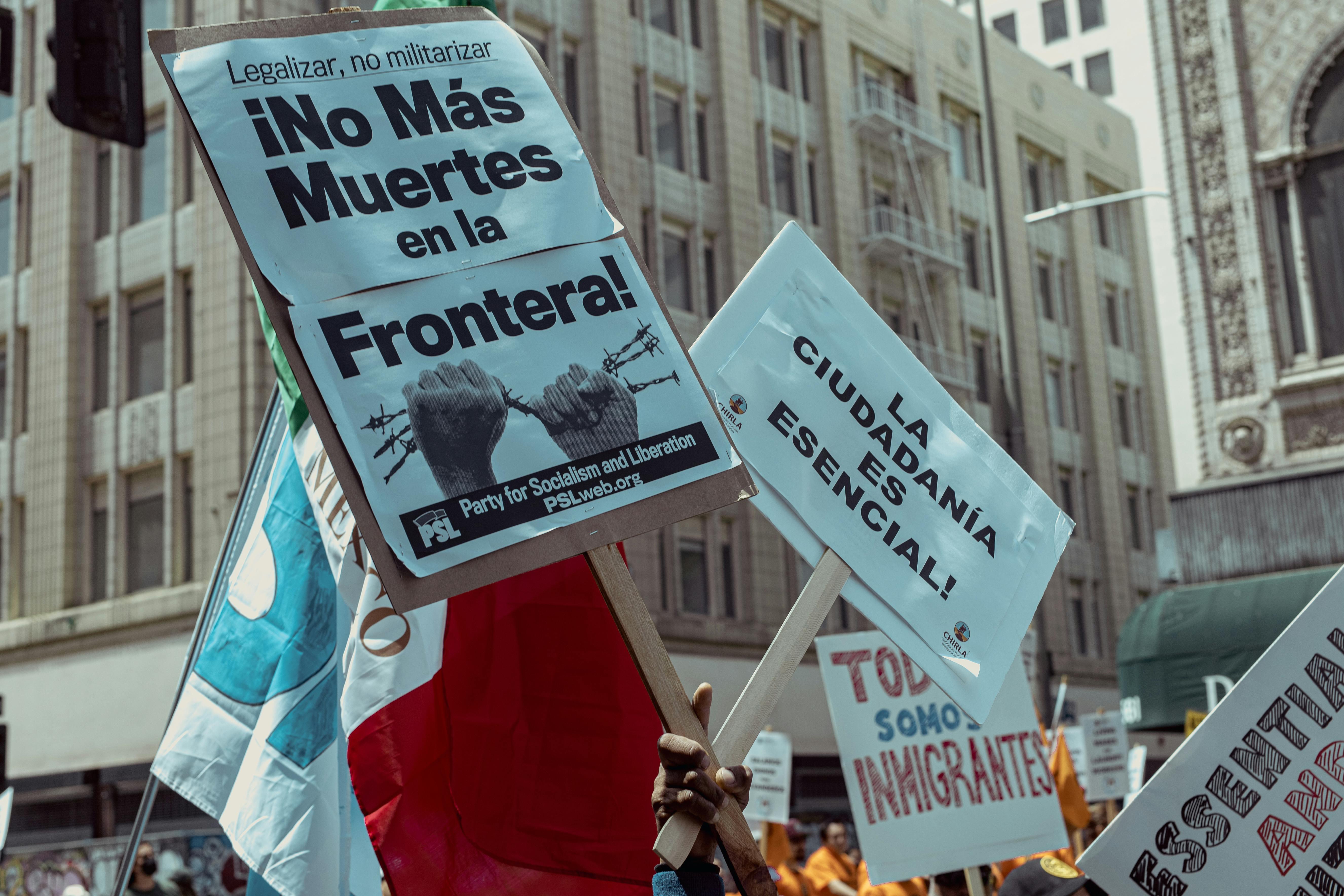
Vurma, a young man from Haryana (name and identifying details changed), was an active worker for the INLD party. Twice, BJP supporters rammed his cycle and beat him with hockey sticks for refusing to join their party. Police refused to take his complaint, threatening instead to jail him. After months in hiding, his family hired agents to get him out of India. His journey wound through several countries, including Azerbaijan, Thailand, and Central America, before he waded across the river from Mexico into the United States. At one point, armed smugglers in Mexico robbed him and kicked him in the stomach, leaving him with nothing but the clothes on his back.
Across these cases, a pattern emerges: attacks are public, often in daylight, and police refusal is near-automatic when perpetrators are linked to the ruling party. Protection becomes not a right, but a privilege reserved for political and religious conformity. For dissenters, whether religious or political, flight becomes the only option.
As a translator, I sit at the threshold between trauma and the bureaucracy tasked with evaluating it. I receive these testimonies in Hindi that are full of pain and urgency, then reshape them into the legal English expected by U.S. immigration courts. I often worry about what gets lost: that a judge may not know what it means to be Dalit, or why a Hindu might be unsafe in a Hindu-majority country. My job is not just to translate words, but to explain the very possibility of persecution where many assume none exists.
Any comments about this post? Get in touch with us! Send us an email, or find us on LinkedIn and BlueSky.
How to cite this blog post (Harvard style):
M. Ansari. (2025) From the Field: At the Border of Language and Law. Translating Indian Journeys to the U.S. Asylum System . Available at:https://blogs.law.ox.ac.uk/border-criminologies-blog/blog-post/2025/10/field-border-language-and-law-translating-indian. Accessed on: 21/10/2026Keywords:
From the Field
Share:
With the support of