What do images obscure? The rise and fall of ICE’s Shadow Wolves and the Tohono O’odham borderscape
A little-viewed Flickr album showcases Indigenous partnership in service of US border security, but a counter-narrative of colonisation and resistance lies beneath
Posted:
Time to read:
6 Minutes
Guest post by Martin Rogard and Karine Côté-Boucher. Martin is a Doctoral Candidate in Political Theory at the University of Bristol. His research asks how memory-making artefacts constitute and unsettle (b)ordering practices across various North American Borderscapes. He was a research fellow at Université de Montréal’s CERIUM during the autumn of 2025. Karine is an Associate Professor at the School of Criminology at the Université de Montréal.
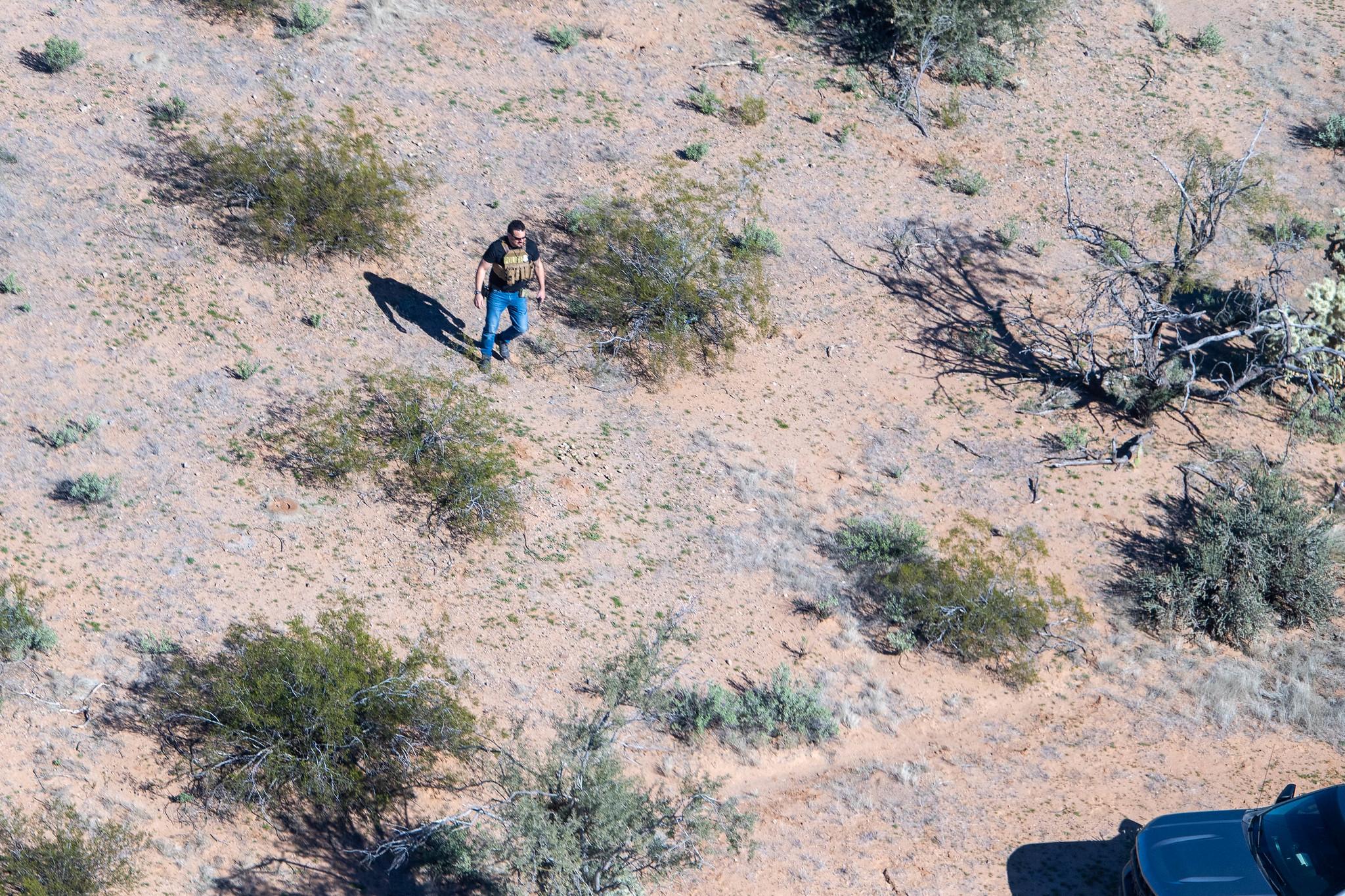
ICE is active on the image hosting site Flickr. Among its posts is a small, fascinating digital photo album: HSI Shadow Wolves (2023), celebrating “the Department of Homeland Security's only Native American tracking unit.” The album never mentions the Nation where the photos were taken, nor its historical relationship to the expansion of the US-Mexico border. That silence about the Tohono O'odham’s peculiar relationship to the border is our starting point.
By closely examining the album’s visuals and metadata – and cross-referencing with the US’ congressional archive, satellite imagery and the existing literature on the Nation – we situate its images within the Tohono O’odham borderscape: the second largest federally recognised reservation in the US, whose people became summarily split across the southern Arizona, US and northern Sonora, Mexico, as part of the Gadsden Purchase of 1854.
As ICE live-streams its border enforcement operations, we counter-archive the silenced past of the Homeland Security Investigations (HSI) Shadow Wolves to show how visual transparency can function as erasure, obscuring the colonial arrangements on which US bordering still depends. Behind the album’s curated images lies a history of alliances brokered and broken with Indigenous border communities in North America. Our analysis contributes to ongoing discussions on Border Criminologies about visuality and settler memory, while poking holes in the US fantasy of orderly border security.
The broader Shadow Wolves imaginary
Though ICE’s reasons for publishing the Flickr album are not explicit, its terms of use state it “may be used for educational and informational purposes.” The album has had limited reach, with around 400 views on Flickr and just one image republished in a 2024 RAND opinion piece and a 2025 news article. Nevertheless, the album’s subject speaks to a larger popular fascination with the Shadow Wolves, who periodically resurface in the public imaginary. They were the namesake for an 2019 action thriller, featured in a 2017 conspiracy novel by Steven Segal, and the subject of a 2003 article for Smithsonian Magazine about the real-life deployment of Shadow Wolves to Latvia, Lithuania, Estonia, Kazakhstan and Uzbekistan to train border guards in tracking.
The digital album as a counter-archive
Setting aside these recurring imperial delusions, we read the 2023 photo-series as a public visual archive which raises questions about US Federal Law Enforcement presence on Tohono O’odham lands. Here, our careful examination of the album’s staging, sequencing and metadata reveals a deliberate and curated institutional narrative.
The 2023 HSI Shadow Wolves album comprises 12 photographs depicting Indigenous border agents in tactical gear. The sequence follows the agents as they scan desert terrain for illicit activity and coordinate with a Department of Homeland Security (DHS) helicopter squad, before descending together on a staged scene of abandoned vehicles – ostensibly used for smuggling people and narcotics into the US.
As Daniel Chandler explains, HSI Shadow Wolves’ photorealist images seek to imitate so closely what they depict that they may be experienced as unmediated, or transparent. ICE’s carefully curated visual scenes operate in precisely this register, presenting the Shadow Wolves as a seamless extension of the federal border security apparatus: skilled, operational, effective.
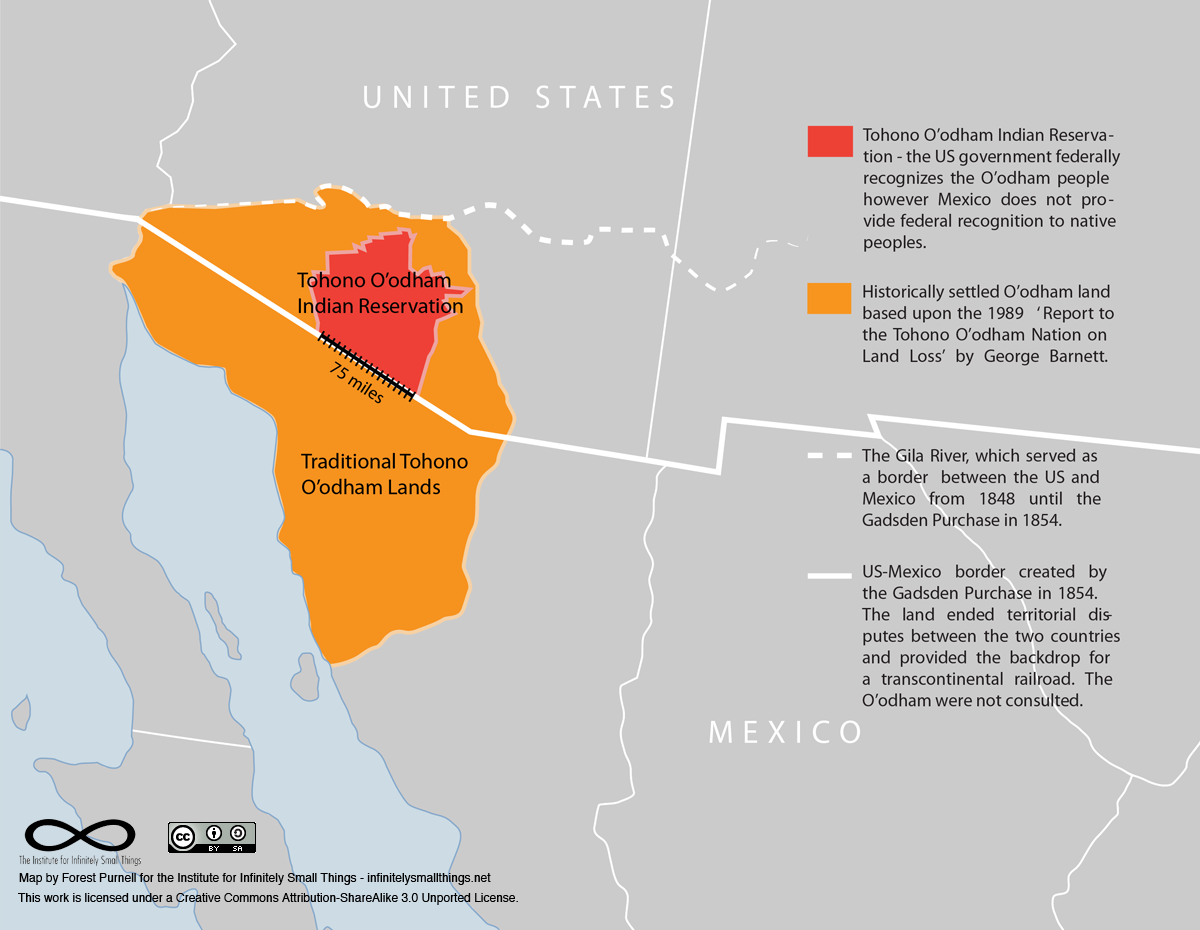
What the album does not show is equally telling, however. We find no reference to the Tohono O'odham Nation, on whose reservation the unit exclusively operates. We find no mention of the government-to-government agreements that made the federal-Indigenous partnership possible, nor of the Indigenous sovereignty that authorises — or resists — federal law enforcement presence on these lands. Perhaps most significantly, there is no indication that the programme has fallen into a severe hiring and retention crisis for over two decades –dropping from 22 officers in 2004 to just six by 2024 – despite not one but two acts of Congress legislated to maintain and expand the Shadow Wolves programme.
The album, in other words, narrates operational success on sovereign land it refuses to name, through a partnership it will not acknowledge is unravelling. To understand what this carefully curated transparency keeps obscure, we decided to ‘counter-archive’ its omissions.
Brokered origins
According to ICE's official website, the Shadow Wolves programme was created in the 1970s “in response to rampant smuggling” on the reservation. Like all myths, this one draws on just enough history to make its omissions imperceptible. The longer version is buried in a 1974 transcript from the US congressional archive.
So-called “Papago Indians hired off the Papago police force” first appear in the context of what the record calls a “bitter quarrel over the narcotics control programme” between the then Immigration and Naturalisation Service (INS) and the Customs Service. ‘Papago’ is an archaic colonial designation for the Tohono O'odham. And this was no simple bureaucratic disagreement, but a violent antagonism that involved reported shoot-outs between federal agents on US soil.
At the heart of the conflict was a reallocation of resources and personnel between the then autonomous INS and Customs Service following the creation of the Drug Enforcement Agency. During this re-organisation, it came to light that the Customs Service had unilaterally recreated an officially disbanded force – the Customs Patrol Officers (CPO) – without notifying or seeking approval from Washington. The newly staffed CPOs were effectively a direct competitor of the INS border patrol, albeit focused on drug interdiction rather than migrant interception. It was this unofficially reinstated CPO force which first recruited Tohono O’odham officers from the Nation’s police force. Not as fetishised bearers of ancestral knowledge about the Southwest borderlands, but as competitive assets in a federal turf war over policing resources and responsibilities.
The congressional record helps to contextualise how ICE portrays the Shadow Wolves today. On its official website, the unit's name is said to refer to “the way the unit hunts, like a wolf pack.” Its agents are described as blending modern technology with a “traditional Native American tracking technique” known as “cutting for sign,” and the page catalogues their operational output: “over 117,000 pounds of drugs seized between 2010 and 2020, along with 45 weapons, 251 vehicles, and nearly $850,000 in currency.”
The resonance with 1974 is striking. In the congressional transcript, the Customs Service boasted that its recruits, “Mexican Americans and Papago Indians,” had been “specially recruited for CPO duty” and that “their language skills and their extensive knowledge of the local populations, terrain, and society make their special skills largely irreplaceable.” To drive the point home, the testimony recounted how “Indian CPOs seized more than 600 pounds of marihuana [sic] during an exciting Jeep and horse-back chase through the gulleys of the Arizona desert.”
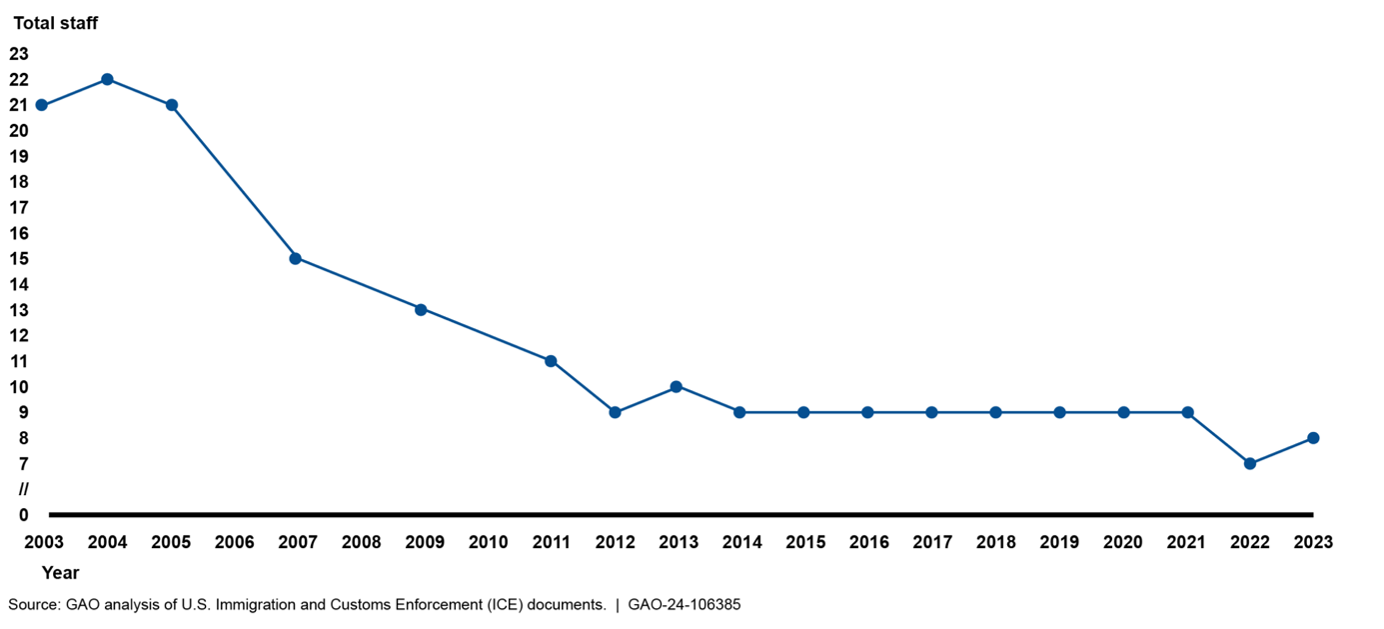
The archive also makes the programme's subsequent unravelling predictable. In 2003, the creation of the Department of Homeland Security was meant to resolve these inter-agency rivalries, absorbing both the Customs Service and the INS into a single apparatus through two new subsidiaries: Customs and Border Protection (CBP) and Immigration and Customs Enforcement (ICE). In doing so, this subsequent reorganisation (reminiscent of the one following the DEA's creation) institutionally conflated immigration and drug policing, merging functions that the agencies themselves, and the Shadow Wolves in particular, had long understood as distinct. Consequentially, the DHS reassigned the Shadow Wolves without consulting the Tohono O'odham council, the body that ultimately must vet any new recruits to the force. The sovereign relationship on which the programme depended was treated as an institutional detail to be transferred, not a political arrangement to be honoured.
Broken agreements and the militarisation of the Tohono O’odham borderscape
The Shadow Wolves themselves understood what this reorganisation meant. In a 2003 interview, one officer drew the line plainly: “the border patrol and what the Shadow Wolves do are two entirely different jobs. We focus on narcotics interdiction... The border patrol catches the people. We're investigators, not border patrolmen.” The distinction mattered. It was the basis on which the Tohono O'odham council had agreed to the partnership in the first place.
Since the programme's decline over the last 23 years, the Tohono O'odham Reservation has experienced rampant federal militarisation, numerous waivers of environmental and religious protections, violent policing, and deeply invasive surveillance infrastructure, including the Israeli manufacturer Elbit Systems' Integrated Fixed Towers. Partnership has increasingly been replaced with occupation, justified through a rhetoric of national security.
Bordering strategies now deliberately funnel irregularised migration onto the reservation while exposing migrantised people to what Jason De León calls “the land of open graves”, that is, “extreme, life-threatening environmental conditions with minimised opportunities for rescue or relief.”
The Flickr album captures none of this. Its images offer a curated vision of Indigenous partnership in service of border security at the very moment that the partnership collapsed and was replaced by something far more hostile. What ICE’s images keep obscure, in the end, is not only the colonial origins of the programme but the ongoing violence that followed its unravelling.
Any comments about this post? Get in touch with us! Send us an email, or find us on LinkedIn and Bluesky.
How to cite this blog post (Harvard style):
M. Rogard and K. Côté-Boucher. (2026) What do images obscure? The rise and fall of ICE’s Shadow Wolves and the Tohono O’odham borderscape. Available at:https://blogs.law.ox.ac.uk/border-criminologies-blog/blog-post/2026/04/what-do-images-obscure-rise-and-fall-ices-shadow-wolves. Accessed on: 07/10/2026Keywords:
Border policing
Share:
With the support of