Reengineering detention: Why ICE’s shift from prison to warehouse calls for a new analysis
As ICE vastly expands its detention portfolio, analytical responses must consider the history of failed crimmigration, so as to reorient towards a different future
Posted:
Time to read:
6 Minutes
Guest post by Hallam Tuck. Hallam is a Lecturer in Criminology in the Department for Sociology and Criminology at City St. George’s, University of London. Within the field of Border Criminology, his research examines political economy and race at the intersections of punishment and migration control in the United States and the United Kingdom.
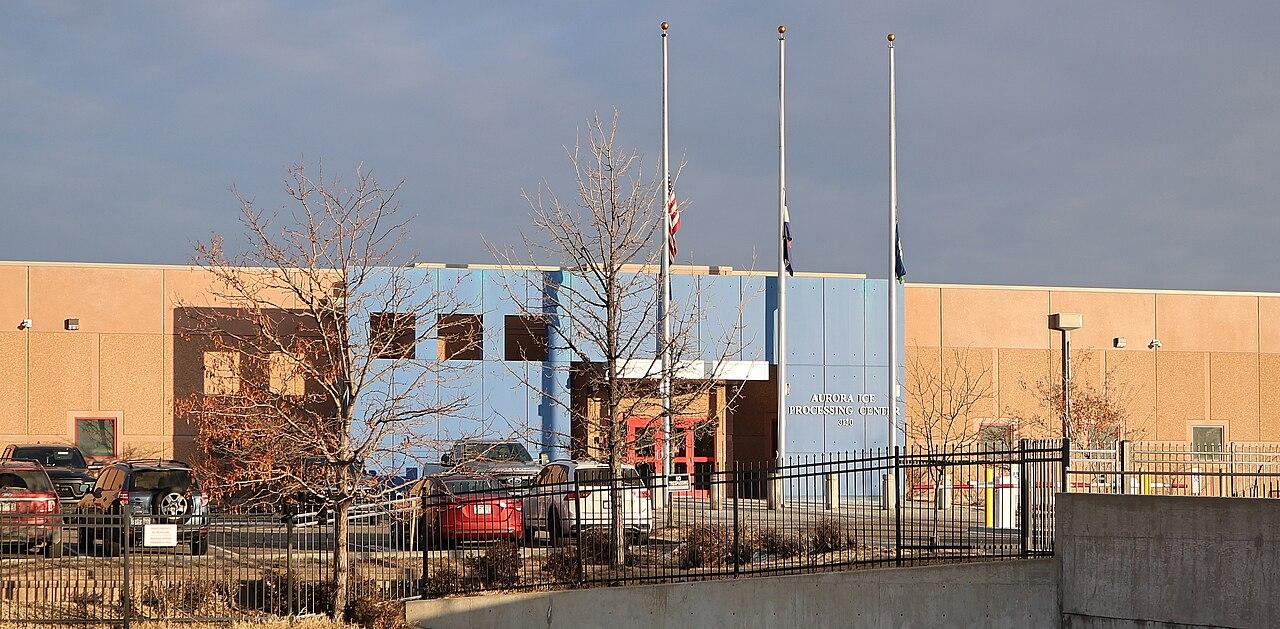
On 8 February, US Immigration and Customs Enforcement (ICE) completed the purchase of a one-million-square-foot warehouse in Social Circle, Georgia. According to plans published by the City of Social Circle, ICE expects this warehouse to have the capacity to detain up to 9,000 people. Nearly twice the size of ICE’s current largest detention centre, East Montana Camp in El Paso, the Social Circle warehouse could easily accommodate the entire population of the New York City jail system, with thousands of beds to spare.
The Social Circle facility is part of an unprecedented expansion that ICE calls the “Detention Reengineering Initiative”. As part of the One Big Beautiful Act passed last July, ICE received $45 billion in funding. According to planning documents, ICE intends to use nearly all this funding to “meet the growing demand for bedspace and streamline the detention and removal process.” Specifically, ICE plans to purchase eight larger “hub” sites with capacity to hold 7,000 – 10,000 people, 16 smaller “processing centres” with capacity to hold 1,000 – 1,500 people, and 10 “turnkey” facilities, which are existing jails or prisons currently under ICE contracts. According to Project Saltbox, ICE has already spent nearly $1 billion to purchase 10 warehouses that would add 40,000 beds to a detention system that currently incarcerates roughly 68,000 people on a daily basis.
We are finding out what it means to live in a society in which there are few meaningful limits on the resources afforded to the detention and deportation of our neighbours. Yet, the authoritarian turn taken by the Trump administration over the past year has produced a strange analytical paralysis. As Felipe De La Hoz has pointed out, many liberal observers and Democratic politicians refuse to reject the law-and-order politics of border control, or to countenance the possibility that our present conjuncture is the product of the failed enforcement-based approaches to immigration of the past. The result of this paralysis is a failure to properly understand how we got here, or how to move towards a different future.
Four decades of detention expansion
The Detention Reengineering Initiative represents a radical expansion of a system of incarceration that has already grown relentlessly since the early 1980s. Effectively all of this growth has come through outsourced incarceration, contracted out either to private firms like CoreCivic or the GEO Group, or to local jails and prisons. Successive presidential administrations have portrayed this system of outsourcing as cheaper and more flexible. While there is little evidence that outsourcing makes detention cheaper, it has certainly proved profitable.
Although President Clinton famously declared the “era of big government” to be over in 1996, his administration passed a series of immigration bills that substantially increased the number of people subject to mandatory detention. The average daily population in detention nearly tripled from 6,785 in 1994 to 19,458 in 2000. By 2019, roughly 80% of people in ICE custody were held in privately operated facilities. After the Bureau of Prisons’ decision to phase out the use of contracted facilities in 2016, the Homeland Security Advisory Council justified ICE’s continued use of “private for-profit” detention because there was no other way to guarantee sufficient carceral capacity within the agency’s fiscal constraints.
The US immigration detention system has also historically relied on contractors because ICE is not interested in or expert at administering and operating sites of custody. As Dora Schriro, the ICE Special Advisor who led a national review of detention said in 2009,
ICE operates the largest detention and community-release programs in the country – larger than the US Federal Bureau of Prisons or any of the biggest states’ correction systems… [but] it was also the most ill-equipped of any agency to assume these responsibilities.
Predominantly comprised of enforcement personnel, ICE’s disinterest in actually operating custodial facilities, coupled with an increased use of detention before removal, has dramatically exacerbated the agency’s reliance on contractors. White House Border Czar Tom Homan put it bluntly last year: “Let the badge and guns do the badge and gun stuff, everything else, let’s contract out.”
Investment in human misery
While the Detention Reengineering Initiative will continue the agency’s reliance on private contractors, the plans abandon any shred of financial restraint. It is difficult to grasp the amount of money that has been devoted to the task of confining people for deportation purposes. ICE’s current detention budget is equivalent to 13 times the agency’s previous annual budget, and $10 billion more than the funding allocated to the Federal Bureau of Investigations. Indeed, the detention budget is larger than the Gross Domestic Product of Iceland, Estonia, or Paraguay. In a country that already has by far the highest number of incarcerated people in the world, the sheer size of this investment in human misery beggars belief.
ICE claims that operating a smaller number of larger facilities will make detention more efficient, “increasing total bed capacity, enhancing custody management, and streamlining removal operations.” ICE Director Todd Lyons put it more bluntly at the 2025 Border Security Expo, telling attendees from tech and security firms, “we need to get better at treating this like a business,” by treating deportation “like [Amazon] Prime, but with human beings.” Lyons’ remarks recall what Mary Bosworth has called “supply chain justice.” Political pressure to increase deportations, compounded by the state’s reliance on contractors, means that border control is increasingly treated like logistics.
Yet, people are not packages. The former industrial site where ICE plans to operate a 600-bed facility in Merrimack, New Hampshire poses grave health risks. The concentration of toxic chemicals at the site is over 27 times the limit imposed by the Environmental Protection Agency, caused by runoff from a nearby plastics manufacturing plant. Another proposed detention facility in Tremont, PA would immediately become the second-largest city in Schuykill County. Because the Federal Government does not pay property tax, the County would be unable to provide emergency services to detained people at the site.
The basic disregard for the wellbeing of detained people is not new. With the exception of the COVID-19 pandemic, more people died in ICE custody in 2025 than ever before. Thirteen people have already died in ICE custody this year, including Emmanuel Damas, a 56-year-old asylum seeker in the CoreCivic-run Florence Correctional Centre in Arizona. Christine Ellis, Councilwoman for Chandler City, Arizona, notified the press of Damas’ death because ICE refused to disclose any details, indicating that Damas had died from an infected tooth which he had been complaining about for weeks. As Ellis put it, “nobody should die from a toothache.”
As scholars of border control and criminal justice, we urgently need to develop a better understanding of how we got here. As Michael Blake has observed, the fact that borders require violence raises basic problems for liberalism’s principles of equality and distributive justice. This difficulty has often been portrayed as an external issue, a problem at the edges of the law, caused by the intrusion of migration into the domestic sphere in an increasingly globalised world. Yet, a growing body of research has demonstrated how border violence is at the core of liberal governance. Richard Seymour has argued that the crisis of democratic action experienced across the Global North is a product of the loss of the social institutions that previously mitigated the impacts of economic crisis. Drawing on Sarah Engler and David Weisstanner’s analysis of inequality and social decline, Seymour argues that nationalist leaders have turned towards increasingly punitive border controls to manage the consequences of downward mobility and class dysphoria.
Seymour’s argument should feel familiar to border criminologists. Although not explicitly grounded in an analysis of class, both Juliet Stumpf and Vanessa Barker’s accounts of the convergence of criminal justice and border control argue that the state has turned to the communicative capacity of penal power because it has lost the ability to cohere political order and define the benefits of citizenship through other means. To understand the Detention Reengineering Initiative, we must understand how our authoritarian present is a product of failed attempts to manage political crises through crimmigration in the past.
The expansion of detention is not inevitable. After the resignation of former DHS Secretary Kirsti Noem, ICE announced a temporary pause to warehouse purchases. Opposition from local communities across the country had already forced ICE to pause or cancel the sale of thirteen warehouses. Our analysis must build the capacity of local organising against detention which is already happening across the country. The task of abolition, as Ruth Wilson Gilmore reminds us, requires first and foremost a nuanced analysis of the tensions and contradictions produced by the carceral state. To do this we must develop a clearer explanation of how the present expansion of immigrant incarceration inters upon the longer history of mass incarceration and border violence in the US.
Any comments about this post? Get in touch with us! Send us an email, or find us on LinkedIn and Bluesky.
How to cite this blog post (Harvard style):
H. Tuck. (2026) Reengineering detention: Why ICE’s shift from prison to warehouse calls for a new analysis. Available at:https://blogs.law.ox.ac.uk/border-criminologies-blog/blog-post/2026/04/reengineering-detention-why-ices-shift-prison-warehouse. Accessed on: 04/10/2026Keywords:
Detention and Deportation
Share:
With the support of