(In)access to legal advice in detention: UK research shows systemic failures
Research from JRS UK reveals that most people held in immigration detention in the UK cannot access meaningful legal advice and representation, putting them at risk of wrongful removal
Posted:
Time to read:
6 Minutes
Guest post by Sophie Cartwright. Sophie is the Senior Policy Officer at the Jesuit Refugee Service UK (JRS UK) and a Research Associate at the Centre for Criminology. Her research focuses on immigration detention and asylum.
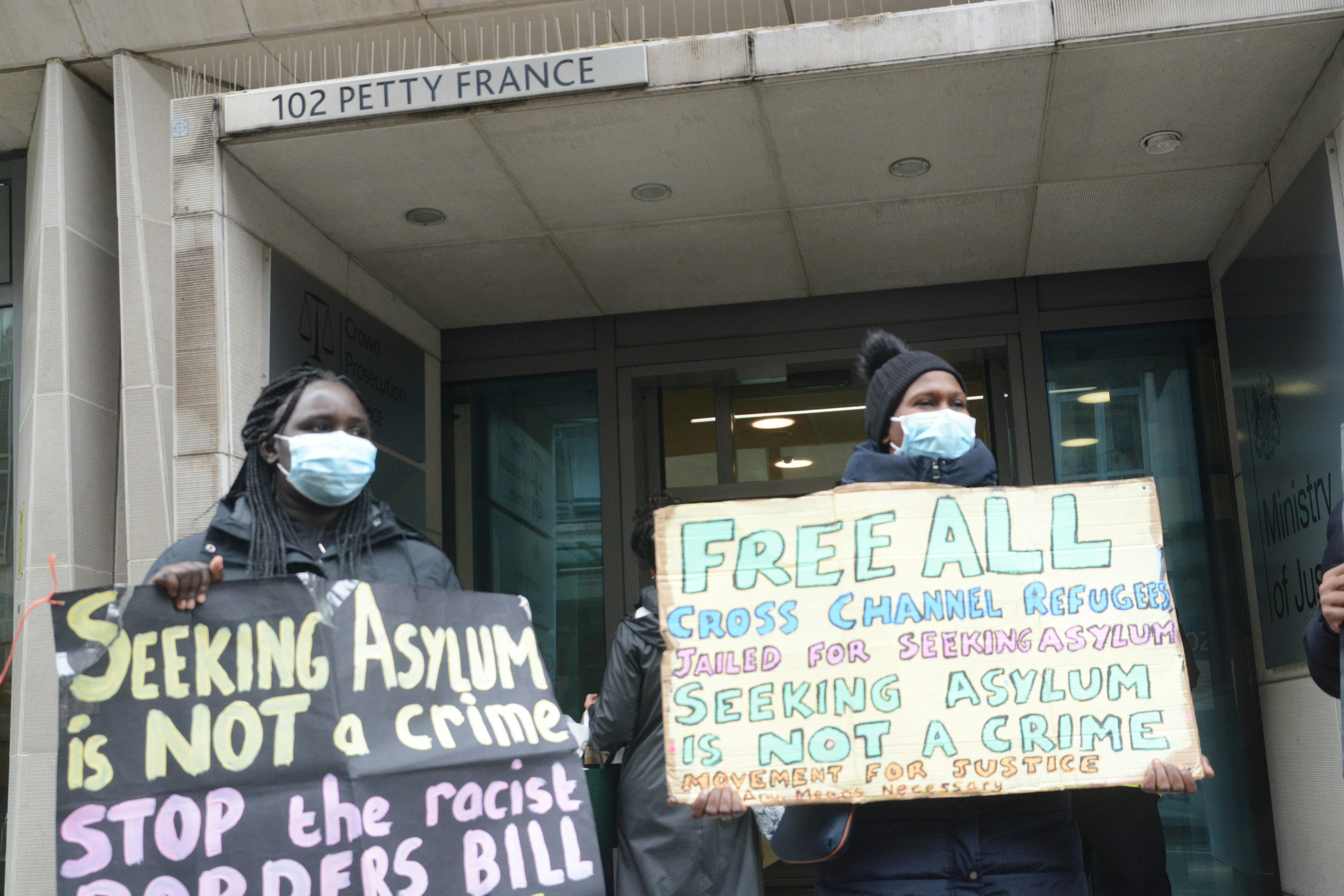
People in immigration detention are routinely seeking to navigate complex immigration processes with life defining implications whilst facing forced removal from the UK. For example, many are seeking asylum, having fled danger in their home country, whilst many others have family in the UK, or have lived here most of their lives, and are seeking to remain in the UK on the basis of their family and private life. The immigration and asylum processes by which cases are decided are simply impossible to understand without professional legal support. However, most people incarcerated in immigration detention in the UK cannot access meaningful legal advice and representation.
This was highlighted last year in research conducted by the Jesuit Refugee Service UK (JRS UK), based on surveys with 47 people held in Harmondsworth Immigration Removal Centre (IRC) in summer 2025 and casework analysis from people held across Harmondsworth and Colnbrook IRCs, supplemented with two semi-structured interviews with people recently released from those centres.
In theory, everyone in detention is entitled to 30 minutes of free legal advice via the Detained Duty Advice Scheme (DDAS), a government-run scheme on which specific legal advice providers are contracted to work. Subsequent work, should they take on a case, is paid in line with wider legal aid rules. Legal advisors on the scheme are supposed to have capacity to represent the people they meet with, so the DDAS should be a good route to then securing legal representation. However, JRS UK’s research found that it was often impossible for people in detention to access even the 30 minutes of legal advice, much less a lawyer who would take on their cases and meaningfully represent them. Consequently, they are disempowered, often unable to access the protections they need and are legally entitled to, and ultimately at risk of being removed to a country where they may be in danger.
A black hole of access to legal advice
Some people we spoke to for the research were unaware of the scheme to facilitate access to legal advice in detention. And even among those who were aware of it, many had no idea about how it operates, having received no explanation. Further to this, 23% of survey respondents (11 out of 47) had signed up to the DDAS but never received any communication from a lawyer. Many had been in detention for weeks or months and had signed up for DDAS appointments multiple times.
Even if people secured an appointment with a legal advisor on the DDAS, many advisors simply refused to take their case, often citing a lack of capacity. Furthermore, legal advisors on the DDAS often refused to take on cases requiring ‘Exceptional Case Funding’ – that is, funding available for cases not routinely covered by legal aid if lack of legal advice would result in someone’s human rights being breached. In England and Wales, immigration cases (excluding asylum cases) don’t qualify for legal aid automatically, so routinely need Exceptional Case Funding. Consequently, refusing cases requiring Exceptional Case Funding means refusing nearly all non-asylum cases of people in detention. Exceptional Case Funding for immigration cases is typically granted, but applying for it is an additional piece of work for already overstretched providers.
Notably, there was no indication that legal advisors were regularly turning down cases because they were thought to lack merit or be unlikely to result in a positive outcome for the person detained. Overall, only 38% (18 out of 47) of survey respondents had legal representation at all at the time of the survey, and only 30% (14 out of 47) had secured it via the DDAS.
Many people also reported not understanding what had happened at their DDAS consultation, whether their case had been taken on, or the name of the advisor or firm they spoke with. This issue is exacerbated by the endemic lack of interpreters available during legal consultations, and because most advice is provided remotely via phone call, so most people have never seen their advisors, making miscommunication much more common.
Another systemic issue is the limited way in which legal advisors represent the cases they take on. It is common for advisors to only take on bail applications – a relatively quick and simple application for their client to get out of detention - without addressing the substantive aspects of a client’s case such as helping them prove their need for asylum, or demonstrate that they have a family life in the UK. In our survey, 36% of those with a legal representative via the DDAS said their representative would only do bail work for them, leaving the underlying asylum or immigration case untouched. But people are normally detained because of their immigration status, so not resolving this often makes bail applications themselves less likely to be effective.
Even where a legal advisor takes on the immigration or asylum issues a client is facing, advice is frequently of a very poor quality. For example, our review of casework found examples where lawyers had misrepresented information from someone’s case file.
Deep systemic causes and profound human consequences
This situation is widely attested and has deep roots. For years, immigration and asylum legal aid across the UK has been systematically reduced, so that even outside of detention there is a crisis of non-availability. There have also been distinctive structural problems with the DDAS. Since the scheme was expanded in 2018-2019, many providers on it appear to have very little expertise in immigration and asylum – an issue that previously led to operation of the scheme being legally challenged. When JRS UK has contacted lawyers urging them to act for their client in a particular way – for example, to appeal against a refusal decision – some have responded that the caseworker assigned to the case is not sufficiently qualified for that task. Further, JRS UK observes that contracts are sometimes given to firms with only one advisor, who then takes on more DDAS appointments than they could conceivably represent as clients.
All this occurs alongside and exacerbates wider problems with immigration and asylum processes in detention. For example, we interviewed a victim of trafficking who had to complete his National Referral Mechanism (NRM) interview (designed to identify survivors of trafficking and modern slavery) four times whilst in detention, because each time it was not logged on the system. He then had to complete it a fifth time after release from detention. Each interview exposed him to further trauma. Practical and technological barriers to lodging appeal are also a problem for many people. For example, during spring and summer 2025, people receiving immigration and asylum refusals in Harmondsworth IRC were routinely served with appeal forms that could not be submitted by email, but only by post – which would take too long – or fax. There is no operational fax machine in Harmondsworth IRC.
The resulting lack of access to justice is hugely destructive for people’s lives. As the research highlights, and as JRS UK continues to see in its work with people in detention, it means that people routinely miss appeal deadlines, spend extended periods in detention, and are at risk of wrongful removal or deportation. For some people, it can mean being torn from their families. For people who came to the UK to seek asylum, only to be detained, lack of legal advice in detention often means they are at greater risk of being removed to a place where they will be in danger. Meanwhile, abuse and safeguarding failures are systemic in immigration detention, as recently highlighted in reports written by people in detention.
Many of the report authors had recently arrived in the UK seeking asylum and were detained under the recently commenced ‘one-in-one-out’ UK-France deal. Having undergone a dangerous and disorienting journey, they were rapidly detained and threatened with return to France, where they face uncertain futures and potential danger, both from exploitative actors and police brutality in Northern France, and because of the possibility of being ultimately sent back to the situations they fled. Lack of legal advice leaves them trapped, with no meaningful way to challenge their removal and often very little way of working out what is happening to them.
Approximately 23,000 people entered immigration detention at some point in the year ending September 2025. As the government doubles down on plans to expand detention and increase removals – having just reopened Campsfield IRC in Oxfordshire, and planning to reopen Haslar in Hampshire – this problem will continue to grow. Nor is it confined to the UK: access to justice in detention is a problem across much of Europe, in varying ways. In a global context of increasing securitisation of borders and the erosion of refugee rights, this is all the more troubling.
Any comments about this post? Get in touch with us! Send us an email, or find us on LinkedIn and Bluesky.
How to cite this blog post (Harvard style):
S. Cartwright. (2026) (In)access to legal advice in detention: UK research shows systemic failures . Available at:https://blogs.law.ox.ac.uk/border-criminologies-blog/blog-post/2026/03/inaccess-legal-advice-detention-uk-research-shows. Accessed on: 25/10/2026Share:
With the support of