Architecture of containment: How the EU Pact entrenches harms in Bosnia detention centre
Balkan countries like Bosnia face increasing EU pressure to expand detention, overlooking the human cost so long as they stay useful to the EU's wider migration strategy
Posted:
Time to read:
5 Minutes
Guest post by Georgia Wells. Georgia is a remote research officer at Collective Aid, currently undertaking fieldwork in Bosnia and Herzegovina for her MSc thesis at SOAS, investigating deaths and disappearences of people on the move at the Croatia-Bosnia border.
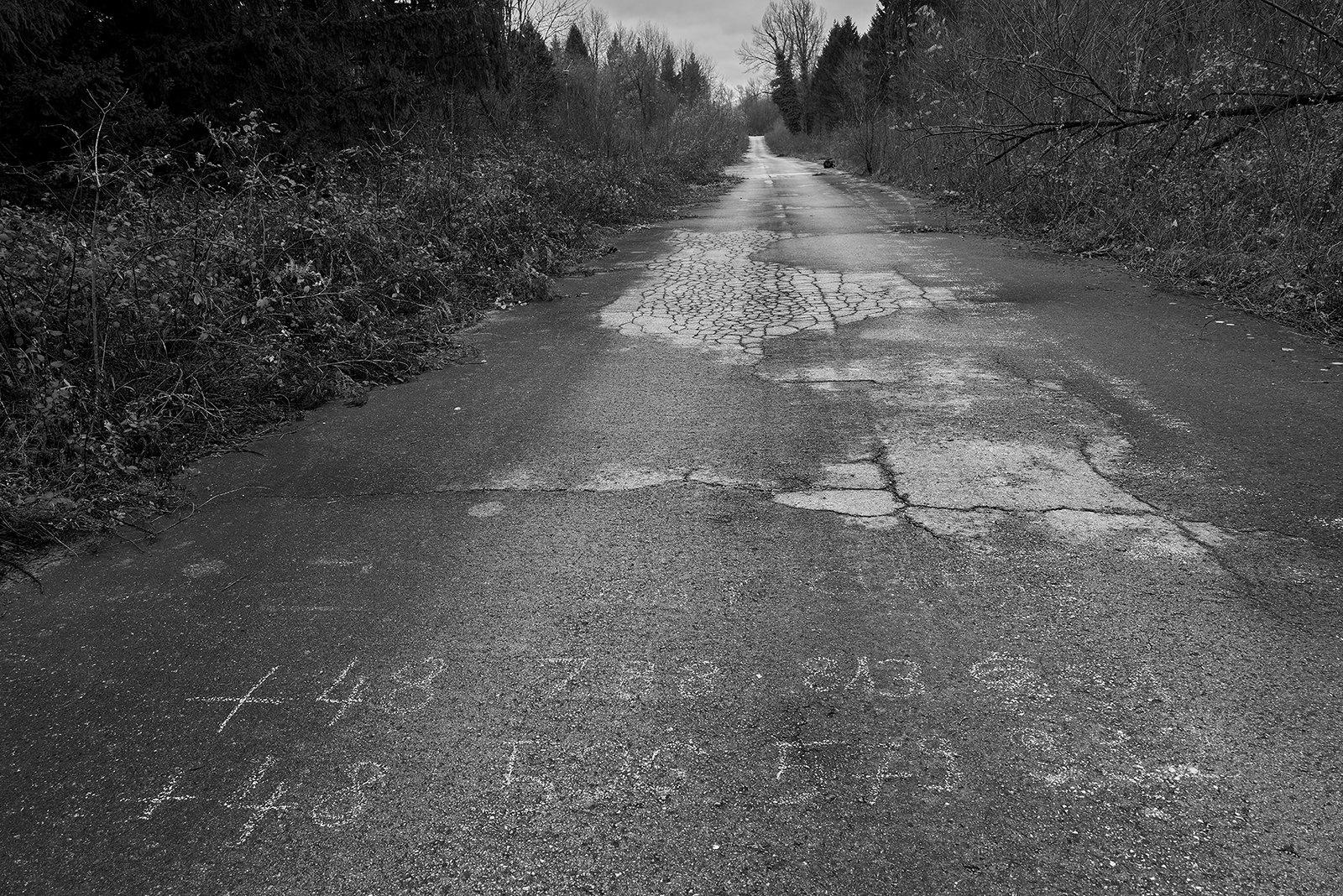
"You don't feel like you are a human there… This place is worse than prison… I want you to help people inside. This is why I tell you."
This testimony was recorded by Collective Aid, an NGO supporting people on the move in Europe, from a person who was detained in Lukavica, Bosnia's only official immigration detention centre. Between 2018 and 2024, 4,631 people were detained there, including 115 children and 263 women. Official narratives describe the facility as legally compliant, with adequate healthcare and free legal aid. But Collective Aid's 2026 investigative report tells a different story. Despite 17 years of documented human rights violations, conditions have not improved.
Lukavica is not an isolated failure, but one node in a much larger system of detention and removal across the Global North. Its existence stems not only from Bosnia's domestic legal framework, but from international pressure and the EU's broader push to manage migration beyond its own borders.
Inside Lukavica detention centre
Located on the edge of East Sarajevo, the facility is deliberately isolated - removed from everyday life, transport links and public view. This isolation is reinforced by invisibility, since only three photographs of Lukavica exist publicly, and all depict its remote, carceral character. Even those granted access are constrained: Collective Aid notes that observers are not allowed to take photographs, leaving almost no independent oversight.
With so little public information on Lukavica, no single source can support a claim about the system as a whole; this is exactly how the facility operates with such impunity. Collective Aid’s Total Incident Ecology (TIE) methodology challenges this by cross-referencing different sources to turn fragmented, low-visibility data into verified, pattern-based findings. While a single testimony from a detainee can be dismissed, the same account corroborated across multiple independent sources is much harder to deny.
Why do so many people end up at Lukavica?
Bosnia's legal framework for immigration detention casts a wide net. The 2015 Law on Aliens allows detention on four broad, overlapping grounds: being considered a threat to public order or national security; being subject to a bilateral readmission agreement, most commonly with Croatia; having received an expulsion order; or failing to establish identity within six hours of arrival at a border crossing.
The 2025 Border Control Law goes even further, treating irregular migration as equivalent to a serious crime. It makes the act of crossing the border without documentation sufficient grounds for detention, with little scrutiny of individual circumstances or protection needs.
Alarmingly, children are detained under the same legal framework, with no additional safeguards. As one lawyer told researchers, “there is no procedure for age assessment.”
The human cost
The Global Detention Project rated Lukavica "deficient or at risk" consistently across 2019, 2024 and 2025, condemning the ongoing inadequate conditions and systemic human rights concerns in Lukavica. Since 2009, Human Rights Watch and the UN Special Rapporteur documented the same failures: no meaningful legal aid access, inhumane conditions, detention of minors, and a severe lack of accountability. Earlier this year, the Council of Europe's Committee for the Prevention of Torture (CPT) urged Bosnian authorities to enforce a zero-tolerance policy against abuse in detention. This demand followed an official investigation which uncovered widespread physical beatings of detainees and severe ill-treatment of a foreign national with a serious mental health condition while in solitary confinement at Lukavica.
As reported by Collective Aid, detainees described the food inside as inedible and water access as restricted. Accounts also detail detainees going months without outdoor access despite domestic regulations requiring two hours per day. One detainee reported being administered tranquilisers to suppress rebellion. Vasa Prava, the only NGO permitted inside, has had its capacity severely cut following UNHCR funding reductions.
Who is accountable for inhumane conditions in Lukavica?
Lukavica operates in a shrinking civic space. According to Vasa Prava, the Service for Foreign Affairs (SFA) and other authorities can "get away with anything" due to the lack of monitoring and oversight.
The management of the facility further fragments accountability. Responsibility for detention diffuses across a web of institutional actors, including the police, Service for Foreigner Affairs (SFA), the Ministry of Security and IOM. Each holds only a portion of responsibility, leaving each with room to deflect accountability to another agency.
The opacity of IOM and EU involvement in Bosnia's migration governance is particularly important to highlight. While the IOM publicly presents its work in Bosnia through the language of humanitarian assistance and "migration management", Collective Aid’s report found that IOM representatives admitted to having 24/7 access to Lukavica and contributed to its EU-funded expansion, despite initially claiming limited involvement in detention. Between 2018 and 2021, IOM spent over a million euros in EU funds on private security contracts across Bosnia's reception centres. Crucially, systemic guard violence is widely documented in these facilities, leading to the death of a migrant at an IOM-run centre in 2020.
Lukavica was built with €1.2 million in EU funding, and its ongoing expansion is EU-financed too. This is part of a longer pattern: EU support to Bosnia has gone mainly towards border control and detention since 2015, rather than reception or integration. This shift is reinforced by a 60% increase in EU funding to the Western Balkans, specifically targeting border security, management, and deportations. With EU accession conditionality treating migration securitisation as a benchmark for membership, detention at Lukavica is not a governance failure to be corrected – it is a performance indicator being rewarded.
The EU Pact and the intensification of containment
The EU Pact on Migration and Asylum came into effect on 12 June 2026, and human rights NGOs have already raised serious concerns. Framed as ‘set of rules for managing migration’, the Pact’s operational effect is to intensify and systematise what has been happening in Bosnia for over a decade: more detention and less accountability.
Three mechanisms point to a significant expansion of detention after the pact takes effect. First, the European Commission’s Provisional Political Agreement on Safe Third Countries automatically grants Bosnia safe third country status, meaning asylum claims can be declared inadmissible on grounds of transit alone, regardless of any meaningful connection to the country. As Human Rights Watch has documented, serious human rights violations exist in every country on the EU's ‘safe’ list – Bosnia included.
Second, the Pact's border procedure allows detention for up to 12 weeks during asylum examination, extendable to 18 months where removal has no viable legal route. This will extend detention for people from countries with no readmission agreement with Bosnia, such as Afghanistan, Algeria, Pakistan and Syria.
Third, the EU and UK have both proposed return hubs in the Western Balkans, positioning Bosnia alongside Serbia and Albania as holding sites for people rejected elsewhere in Europe. Collective Aid's reporting on UK externalisation in the Balkans shows a convergent agenda: Brussels and Westminster pursuing parallel strategies to offshore responsibility onto a country with 17 years of documented detention failure.
Bosnia's value to the EU lies in compliance, not rights protection – so there is little incentive for authorities to challenge what happens inside detention or Temporary Reception Centres. As Collective Aid warns, many Balkan countries like Bosnia face EU pressure to expand detention and restrict asylum access, overlooking the human cost so long as it keeps them useful within the EU's wider migration strategy. Therefore, externalisation policies not only intensify, but politically entrench the harms that already exist in countries like Bosnia.
‘The walls are literally being raised higher’
As the Mixed Migration Centre's recent analysis makes clear, the Pact's restrictive policies have little effect on whether people move, but significantly increase the risks they face along the way. For example, over half of smugglers surveyed reported raising their fees in response to new controls; 40% reported higher profits.
Lukavica has already received new procurement notices for reconstruction and expanded surveillance. With the walls of Lukavica literally being raised higher, so will the walls to accountability. Rather than treating the Western Balkans as a “warehouse” for people Europe does not want, the EU and UK could invest in functioning asylum systems and alternatives to detention.
Collective Aid urges that Bosnia, the EU and IOM abandon their securitised model of impunity in favour of rights-based transparency, halting Lukavica's expansion before more harm is done. Ultimately, documenting and challenging externalisation, human rights abuses and unlawful detention remains the only path to accountability.
Any comments about this post? Get in touch with us! Send us an email, or find us on LinkedIn, Bluesky and Instagram.
How to cite this blog post (Harvard style):
G. Wells. (2026) Architecture of containment: How the EU Pact entrenches harms in Bosnia detention centre. Available at:https://blogs.law.ox.ac.uk/border-criminologies-blog/blog-post/2026/10/architecture-containment-how-eu-pact-entrenches-harms. Accessed on: 13/10/2026Share:
With the support of