The threatening text: Criminalising detention resistance through zines
Pamphlets played a significant role in the sentencing of the Prairieland Detention Centre protestors – it’s a telling case of the power of radical social expression
Posted:
Time to read:
5 Minutes
Guest post by Erin Routon. Erin is an assistant professor of anthropology at the University of Houston in Houston, Texas. Her research focuses on immigrant incarceration and resistance movements. Her forthcoming book, entitled Legal Care: Advocacy and Friction in Family Detention, will be published in September 2026 with the University of Arizona Press.
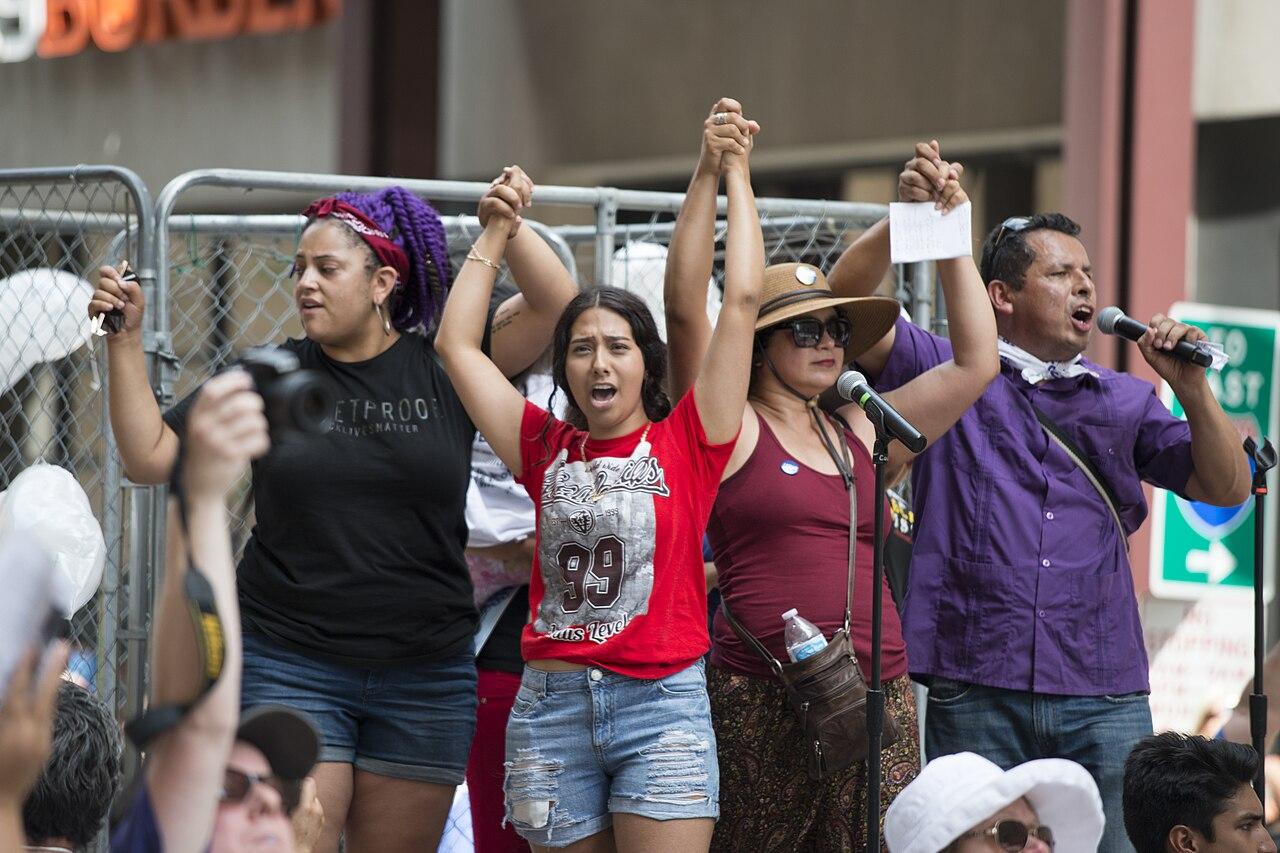
In July 2025, a group of activists gathered outside the Prairieland Detention Centre in Alvarado, Texas, where they staged a protest known as a “noise demonstration,” in a sign of solidarity and support for the detainees incarcerated inside. During this event, a violent exchange between a police officer and protestors occurred, leaving one in the group accused of wounding the officer after a protestor fired their gun. This led to significant federal criminal charges, claims of domestic terrorism and conspiracy, and what is now being described as the current administration’s “first major victory in its crackdown against left-wing activism.” Part of this case hinges, curiously, on pamphlets, and the threat (both real and imagined) they pose to US society.
In June, US District Judges Mark Pittman and Reed O’Connor sentenced eight of the convicted defendants to a notably extreme range of 30-100 years in prison. One of the defendants received a 30-year sentence – despite not even attending the Prairieland demonstration. He was convicted of “concealing a document or record” after his wife, an attendee, allegedly asked him to move a box of political zines (informational pamphlets) while she was detained.
Zines played a significant role in the sentencing of many defendants in this case. The Department of Justice identified the defendants’ possession, production, and distribution of mainly anti-fascist zines, among other things, as evidence of their connection with ‘Antifa’. Contrary to the government’s repeated assertion, Antifa (short for ‘anti-fascist’) is not a single organisation but a conceptual term used to refer to decentralised, left-leaning, antifascist movements.
As noted by current FBI director Kash Patel, this case was the first sentencing of individuals believed to be associated with Antifa after President Trump designated it a domestic terrorist organisation via the signing of his NSPM-7 executive memorandum in late 2025. The landmark case has a potentially chilling effect on the ways dissent can be safely expressed and shared in the US. It poses a significant challenge to First Amendment rights that serve to protect creative expression through political art by, in part, relying on a kind of constitutional loophole that uses contact with such material as a means for abrogation of those rights.
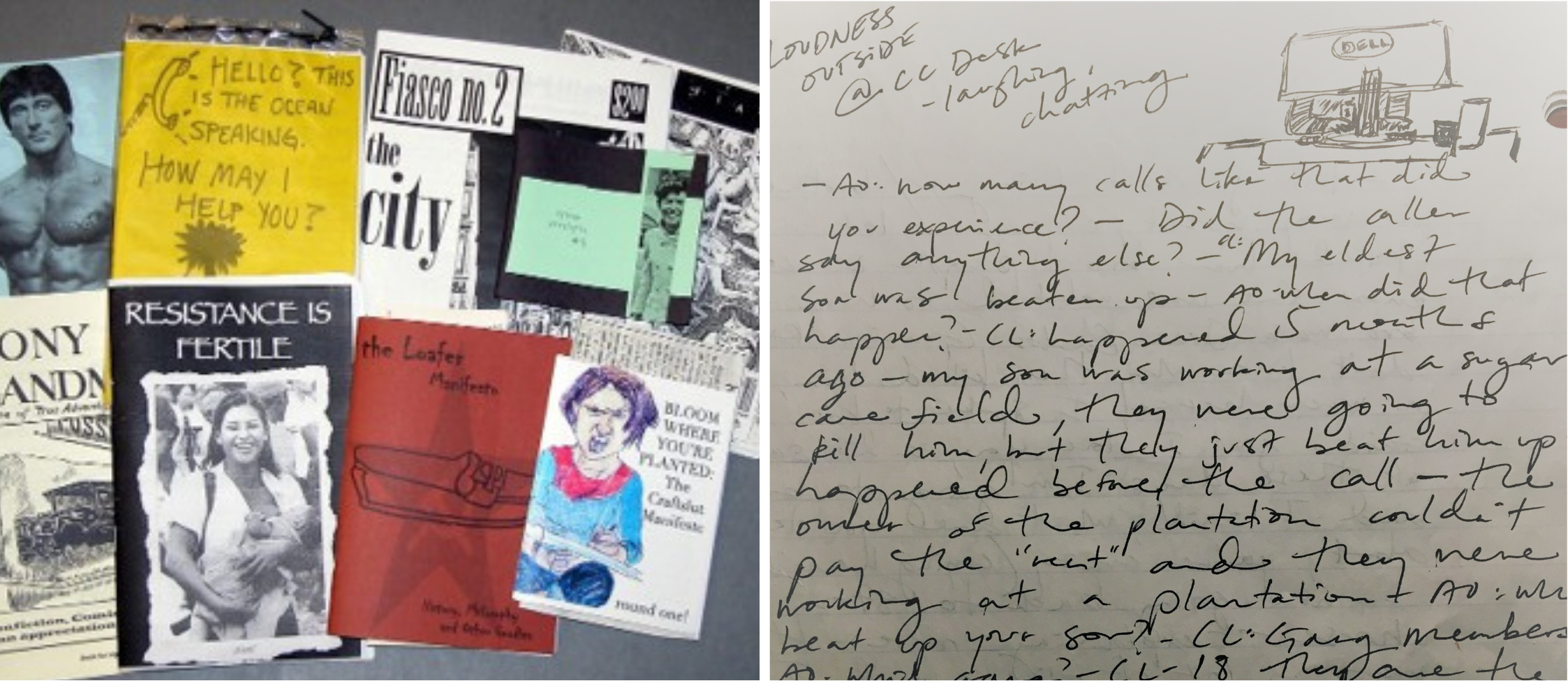
A zine, short for magazine or fanzine, is inherently a form of alternative storytelling media. It’s often defined by its DIY or homemade character, and is traditionally self-published, non-commercial, and brief in length. Many zines include visual elements and follow a sequential art format found in other alternative media, such as comics. Zines can include poetry, collage, photos, and drawings, or mainly text. The multiple zines used as evidence in this case covered various topics, with titles like “Against Prisons,” “The Gaza Ghetto Uprising,” and “Plant Propagation for the People," illustrating the wide-ranging content found across this medium.
Working with activist-advocates in detention facilities
Almost exactly a decade before these sentences were handed down, I began my doctoral ethnographic research project with a group of activists and legal advocates in two other immigrant detention facilities in South Texas. While also opposed to detention, these were activists of another sort: advocates who organised in coalition to offer pro bono legal assistance to the detained asylum-seeking parents and children held in newly constructed “family detention centers.”
These facilities were operated by private prison corporations and performed an uncommon function across the landscape of detention. Detaining only one parent and their minor-age children, these asylum-seeking families were placed in “expedited removal” proceedings, requiring detention while undergoing their asylum interview. The outcome of this interview determined whether they would be released from detention, continuing their legal case, or be deported directly.
These legal advocates concentrated their efforts on ensuring case assistance, particularly in interview preparation and accompaniment, through a universal representation model. They relied heavily on volunteers who travelled across the country to offer these essential services, and their work extended for years until the ultimately temporary conclusion of family detention practices in 2021. While the advocates’ practical opposition to migrant incarceration and solidarity with detainees was different from those at the Prairieland center in 2025, it was certainly no less significant for the lives of those held inside. Advocates similarly spoke out about harmful and degrading conditions inside detention facilities, calling for greater public and official scrutiny around the incarceration of migrant families and participating in other forms of protest alongside their work inside.
Drawing as an ethnographic research tool
Throughout my research, I found myself drawn to drawings to visualise what I observed. Facility administrators strictly prohibited photo or video recordings, and while I communicate my research primarily through text, something important gets lost when we can’t access such spaces through visual means. Understanding how these spaces operate – namely, the ways they cause harm – is more closely approximated through engaging multiple senses. As a result, I created my own simple drawings inside and collected the drawings of other more skilled artist-advocates. This allowed me to better communicate not just what detention is, but how it feels.
Drawn or graphic representations are just one form of alternative storytelling media; zines are another. In my subsequent writing and teaching on migrant detention, I’ve used both comics and zines, particularly as they’ve taken up more discursive space in higher education (taking from Andrew Causey’s exploration of drawing as an ethnographic method). Many students in my visual anthropology class gravitate towards zines in their final projects as an effective way to speak to experiences and issues meaningful to them. While the Prairieland case is exceptional – in both the gravity of the sentencing and its use of terrorism charges for protestors – the characterisation of such alternative media as “threatening” is not exactly new (or even inherently wrong). Scholars have documented storied histories of political and protest media inspiring anxieties about upending social norms. For instance, in the 1950s, congressional hearings were held to determine the extent to which comics encouraged youth delinquency and violence (explored in work by David Hajdu). Throughout history, zines and their creators have been similarly targeted as threatening and subject to censorship, for instance in their use in organising labour movements.
Threatening the status quo
Alternative media like zines and comics are indeed threatening, but often not in the way that authorities depict. Zines have been used over the past several decades to propel a wide variety of social activist causes, from feminism to civil rights and ethnic representation. In my work, I explore how drawings and comics can be used to challenge the invisibilising conditions of detention, so characteristic that these spaces are often described as “shadow prisons.”
Alternative media are in fact threatening in their ability to unsettle the status quo, to build community across borders, and to tell (and retell) marginalised histories. Zines are especially threatening in their non-commercial quality, making the creation and dissemination of information highly flexible and seriously limiting the influence of corporate or state control on their messages. Their accessibility and imaginative potential help explain their ongoing place amongst other forms of radical social expression and resistance to oppressive conditions. These texts also help us identify paths beyond such conditions, and point to why, despite the alarming outcome of the Prairieland case, alternative storytelling media will continue to flourish.
On 6 July 2026, the last of the Prairieland case defendants facing federal charges received their prison sentences. The sentences are now being appealed, but the potential success of any appeals remains unclear. As some have noted, federal administrators may be using this as a kind of test of future expressive or organisational subjugation.
Regardless of what comes next in this case and related cases, we are likely to continue to witness similarly aggressive measures across the expanding landscape of rising authoritarianism in the US. How individual communities choose to build resistance to this is still unmapped, but it will nevertheless be documented.
Any comments about this post? Get in touch with us! Send us an email, or find us on LinkedIn, Bluesky and Instagram.
How to cite this blog post (Harvard style):
E. Routon. (2026) The threatening text: Criminalising detention resistance through zines. Available at:https://blogs.law.ox.ac.uk/border-criminologies-blog/blog-post/2026/09/threatening-text-criminalising-detention-resistance. Accessed on: 15/10/2026Keywords:
Detention
Share:
With the support of