From physical documents to eVisas: Everyday digital bordering and migrants’ lives in the UK
The last UK prime minister promised new digital immigration checks – but digital systems already exist, and they’re impacting migrants’ ability to exercise their rights
Posted:
Time to read:
6 Minutes
Guest post by Marie Godin and Derya Ozkul. Marie is a Lecturer in Human Geography at the University of Leicester and research affiliate at COMPAS-University of Oxford. Derya is an Associate Professor in the Department of Sociology at the University of Warwick.
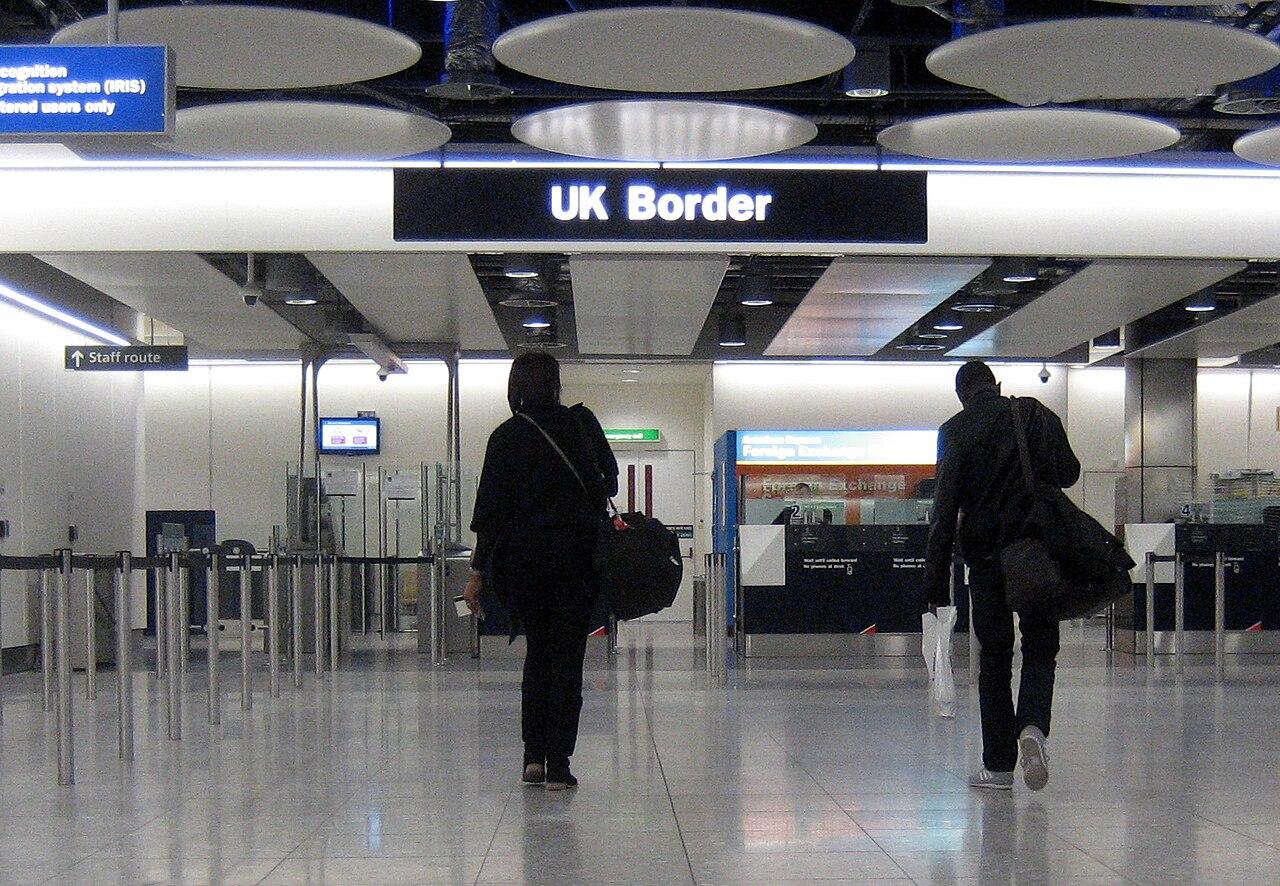
In September 2025, the then UK Prime Minister Keir Starmer announced plans for a new digital ID system, also known as the ‘Britcard’. The idea of a national identity scheme has long been unpopular in the UK, with concerns expressed about privacy and surveillance. In a press release, Starmer described digital ID as “an enormous opportunity,” which will “make it tougher to work illegally in this country, making our borders more secure.” Yet he failed to mention that migrants in the UK were already being checked to verify their right to work before starting employment, and throughout their employment. Recently, these checks have also been digitalised.
Although the digital ID system for UK citizens has not yet been introduced, a digital version of immigration status, known as an eVisa, is already in use for migrants. This digital-only immigration status began with the EU Settlement Scheme (EUSS) in 2018 and was gradually extended after 2024 to include most migrants in the country. Since June 2025, nearly all migrants entering or residing in the UK have been required to obtain an eVisa to prove their legal status. Without it, many are unable to travel to the UK or access their rights.
Under the UK’s hostile immigration policies, migrants are surveilled in many aspects of their lives: the wider public, institutions and individuals are tasked with acting as quasi border guards, performing ‘border work’ for the state. Employers verify migrants’ right to work; landlords check their right to rent; border officials check their right to travel; and educational institutions check their right to study. All these checks are now done using a ‘share code’ (a 9-digit, alphanumeric code generated online, valid for 90 days). The Home Office emphasises that the eVisa system is “secure” and “cannot be lost”, enabling “quicker and easier” proof of status. However, the actual impacts of this system on migrants’ lives have not been studied in detail.
To understand migrants’ experiences with this new system, we conducted a qualitative study with 40 migrants from various nationalities, legal statuses, family situations, and migration trajectories across the UK. The way participants described their interactions with what we conceptualise as a ‘digital identity platform’ reveals three key findings. Firstly, when dealing with this digital system, migrants report feeling stressed, fearful, and exhausted. Secondly, design flaws create access barriers, which are often exacerbated by individuals’ personal circumstances and limited resources. And lastly, everyday bordering practices are intensified by the digital system, shaping migrants’ ability to exercise their rights to work, rent, and travel.
Governing through exhaustion: Affective logics of internal bordering
Most participants in our study reported feeling stress, fear, and exhaustion while trying to digitalise their immigration status under tight deadlines. These feelings were closely linked to practical problems, such as unclear instructions, system errors, difficulties accessing accounts, and managing multiple profiles within families. Concerns about being unable to prove legal status were common in an environment that was increasingly enforcement-focused and hostile to migrants. Even small mistakes in the digital system were seen by participants as potentially jeopardising their status, creating a persistent sense of vulnerability. Many participants subsequently expressed a deep sense of exhaustion and mistrust toward the Home Office, shaped by the cumulative demands of navigating the system, resolving technical issues, and using digital status across everyday contexts. Our findings therefore show that migrants are subjected to a ‘politics of exhaustion’ that is hidden but routine – and now enacted through the digital immigration platform.
Reinforcing inequalities, producing new vulnerabilities
Many of the issues reported to us were directly related to the system’s design. These included overly complex and unintuitive processes, technical glitches, and problems caused by incorrect or entangled data. For example, one interviewee who was on a work visa described her experience of trying to log into the system: “The first time I tried it, it didn’t work. When I tried, I clicked on it, but it was frozen. I clicked on it again… It [was still] frozen.”
Others also had difficulties generating ‘share codes’ and faced device-specific limitations that restricted access. Communication with the Home Office, especially through their helpline, was often described as unhelpful, unclear, or inconsistent. Some were not even aware they could contact the Home Office for support. One participant with a master’s degree struggled to digitalise her children’s status, despite many attempts. She noted that while trying to complete the process, she found a link on the Home Office’s website to report problems. She submitted a report through this link but never received a response. She told us: “I am not aware of any helpline. I couldn’t see any contactable information on the website.” In some cases, ‘information precarity’ can also lead to exploitation, where individuals may be charged large sums of money by others to help them obtain their eVisas.
A few participants also faced website crashes, login failures, ‘merged identities’ or ‘data entanglements’ and issues with share codes, with The Guardian reporting that over 76,000 people were affected by the errors. We found that these problems affected even those who described themselves as comfortable with technology. These glitches increased migrants’ precarity and the risk of being unable to prove their legal status, especially for those with limited resources or difficult personal circumstances. Key factors shaping these experiences included varying levels of digital and English literacy, limited access to the latest devices and reliable internet, caring responsibilities and time pressures, disabilities or age-related limitations, and complex migration trajectories in the UK. These conditions significantly influenced participants’ ability to use the system. As one participant noted, the process feels contingent and unpredictable, likened to a ‘stroke of luck.’ They told us: “you never know if it’s going right or if it’s going wrong… it’s like winning the lottery… there’s no way to check if it’s done the right way. I think that’s the biggest issue.”
Everyday digital bordering and casual forms of surveillance
Building on what Nira Yuval Davis and her colleagues describe as ‘everyday bordering’ in the UK, where third-party actors, such as employers, landlords and education providers are required to act as quasi-borders for the state, we argue that the introduction of eVisas has created ‘everyday digital bordering’. As such, these third-party actors are now not only required to check migrants’ immigration status, but also to navigate this new digital platform. According to some of our interviewees, many small businesses and individual landlords had a limited understanding of the new ‘share code’ system. In such cases, we found that migrants were compelled to explain the process themselves, adding an extra and often uncertain burden to those already facing challenges in a hostile environment. In practice, migrants often relied on the goodwill of these actors to trust the system and to navigate and resolve technical issues. This dependence creates asymmetrical relations and increases the risk of discrimination against migrants.
We also found examples of unlawful and unintended uses of the system by third party actors, which could be described as forms of casual surveillance. One interviewee reported supermarket staff asking for a share code as proof of identity when buying alcohol – a practice well beyond the Home Office’s intended purposes. This instance shows how digital bordering can extend into everyday settings, potentially exposing migrants to racism and social exclusion, and limiting access to essential goods and services. These practices show that the risks of digital status verification can go far beyond formal enforcement and can impact everyday life more broadly.
The eVisa system and the hierarchies of deservingness
The digital-only status reinforces an already hierarchical regime of belonging, in which migrants are kept in a prolonged state of probation and are assessed according to standards that are not applied to British nationals. By not ensuring fairness, the UK’s digital immigration system effectively creates different practices of inclusion and exclusion. In its current configuration, the digital-only status is designed to exclude: it privileges migrants considered to have ‘desirable’ qualities, such as digital skills, educational qualifications, age, and English-language proficiency. As it stands, it also introduces new vulnerabilities, dependencies, and risks.
Paradoxically, those most constrained by the system are also required to engage with it most frequently, repeatedly needing to prove eligibility for work, housing, and social benefits. The system, therefore, disproportionately burdens the most vulnerable, and hierarchies of deservingness become embedded in the platform’s architecture. Overall, our findings show that when the system fails, it has serious consequences for individuals. This should serve as a warning for broader debates on digital ID, not only for migrants, but for everyone in the UK and beyond.
Any comments about this post? Get in touch with us! Send us an email, or find us on LinkedIn, Bluesky and Instagram.
How to cite this blog post (Harvard style):
M. Godin and D. Ozkul. (2026) From physical documents to eVisas: Everyday digital bordering and migrants’ lives in the UK. Available at:https://blogs.law.ox.ac.uk/border-criminologies-blog/blog-post/2026/09/physical-documents-evisas-everyday-digital-bordering. Accessed on: 22/10/2026Share:
With the support of