Restricted leave and new government powers to curtail the liberty of non-nationals in the UK
Posted:
Time to read:
5 Minutes
Guest post by Sarah Singer. Sarah is Professor of Refugee Law at the Refugee Law Initiative, School of Advanced Study, University of London. She is Joint Editor-in-Chief of the International Journal of Refugee Law (OUP) and inaugural Programme Director of the University of London's Master's programme in Refugee Protection and Forced Migration Studies.
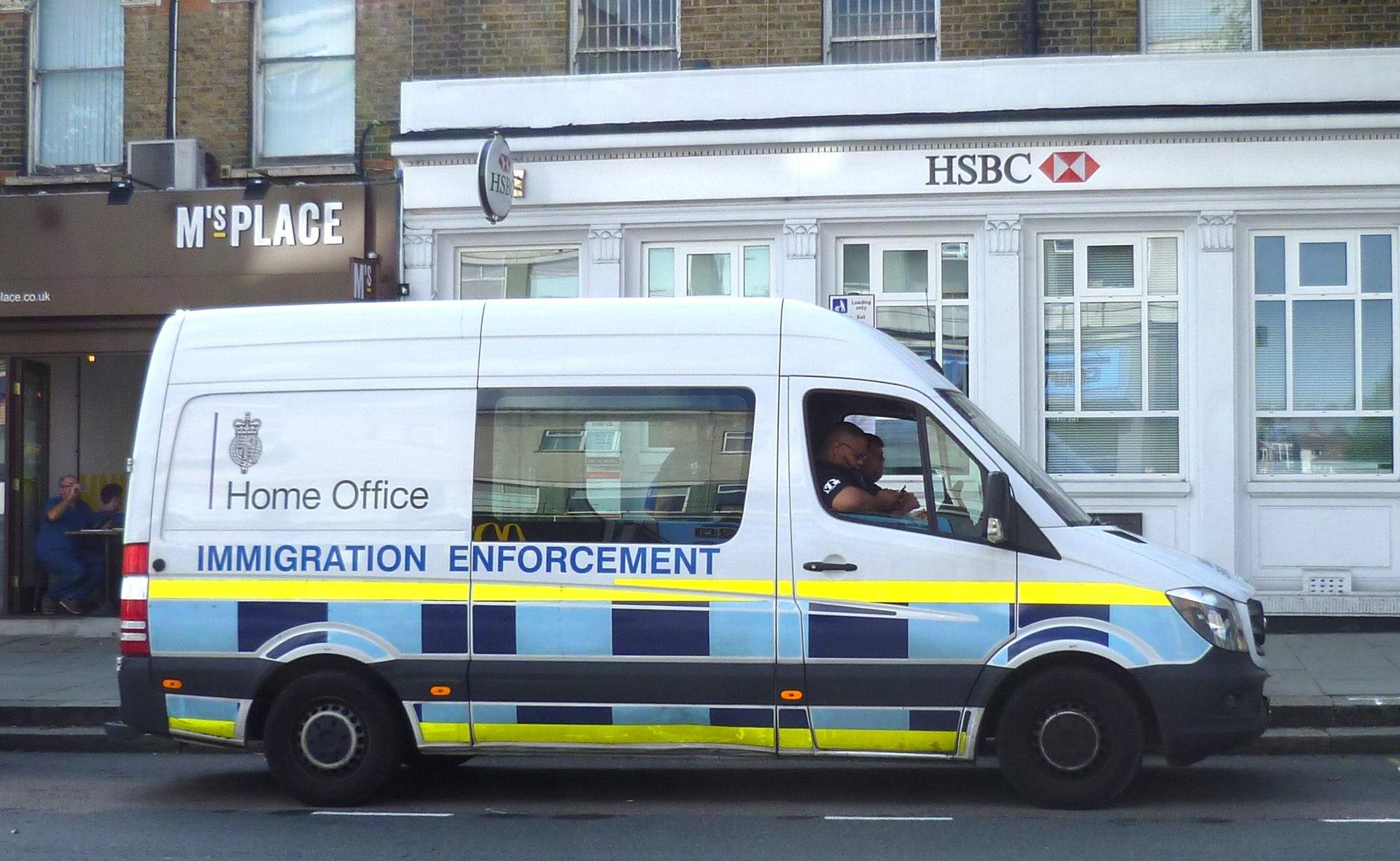
During the passage of the recently adopted Border Security, Asylum and Immigration Bill (now the 2025 Act) through parliament, a little-noticed clause was introduced during committee stage that has far-reaching implications for all persons subject to immigration control in the UK. Section 46 of the Act grants the Secretary of State the power to impose a range of counter-terror-style ‘conditions’ on those with limited leave to remain, including electronic monitoring, curfews, inclusion and exclusion zones, or “other conditions as the Secretary of State thinks fit.” It also significantly expands the range of persons to whom such conditions can be applied.
This is a development of the ‘Restricted Leave policy’, which previously applied only to those excluded from refugee protection on the basis of serious criminality, but can now be applied to anyone who does not have British citizenship or settlement, on the basis of potentially very low-level criminality or at the discretion of the Home Secretary. The lack of procedural safeguards and the wide-ranging nature of these new powers raise significant concerns regarding the rights of all non-nationals in the UK.
Restricted leave: imposing conditions on excluded asylum seekers
The power to impose conditions on a grant of limited leave to enter or remain in the UK is set out in section 3(1)(c) of the Immigration Act 1971. This serves as the basis for the UK’s ‘Restricted leave’ policy, which since 2011 has granted individuals who are excluded from refugee protection on the basis of serious criminality, but who are non-removable, a limited form of leave to remain in the UK for six months at a time. Several conditions could be attached to this form of leave, including restrictions on employment, residence, education, and a requirement that the individual report to an immigration officer at regular intervals. Failure to abide by any of the conditions is a criminal offence and may lead to prosecution and imprisonment.
This form of leave is extremely precarious, and is frequently reviewed with an eye to removing the individual from the UK at the earliest possibility. It is intended to “give a clear signal that the person is not welcome and should not become established in the UK”. Individuals remain in a precarious ‘limbo’ situation, barred from permanent settlement or any longer-term approach to addressing their situation, for what can be years and years. The intention is to prevent any route to potential regularisation or settlement and keep the focus on the potential for removal.
Expanding the scope of the Restricted leave policy
Section 46 of the Border Security Act has expanded the power and scope of this policy significantly. It can now be applied in a range of circumstances outside the asylum context, to anyone who does not have British citizenship or settlement, and to a range of offences or acts which would not necessarily meet the serious criminality threshold. This includes: if the Secretary of State determines that the person poses a threat to national security, or poses a risk to public safety, a section of the public, or specific individuals – terms which are all undefined and therefore largely rest within the discretion of the Home Secretary. One could imagine, for instance, that support for a proscribed group, or public demonstration which disrupts public infrastructure, could be considered to pose a risk to security or sections of the public.
Other offences which may bring an individual within the scope of the policy are those listed in Schedule 1 to the Serious Crime Act 2007. This includes offences at the lower end of the criminality scale such as assisting unlawful immigration under section 25 or 25A of the Immigration Act 1971, copyright offences under the Copyright, Designs and Patents Act 1988 and offences under certain sections of the Trade Marks Act 1994. An individual may therefore be placed on this Restricted Leave policy if, for example, they were convicted of steering a small boat across the English Channel, even if they are subsequently recognised as a refugee. Similarly, it would appear that anyone convicted of infringing copyright, or the unauthorised use of a trademark, may also be subject to this policy.
When introducing this clause at committee stage, the Minister for Border Security and Asylum Dame Angela Eagle MP stated, “[t]he powers will be used only in cases involving conduct such as war crimes, crimes against humanity, extremism or serious crime, or where the person poses a threat to national security or public safety. That is a pretty high bar.” However, the power as set out in legislation is clearly much broader than this. Coupled with changes introduced in the Nationality and Borders Act 2022, which lowered the threshold for exclusion from refugee protection to those subject to a minimum 12-month criminal sentence, this power can potentially be applied to a very broad range of persons on the basis of fairly low-level criminal activity, or indeed at the discretion of the Secretary of State. This includes recognised refugees and non-refugee stateless persons, or indeed anyone who is subject to immigration control. Those with indefinite leave to remain, EU Settled Status, or other forms of leave to enter or remain in the UK can have their leave curtailed or revoked. The only limit in scope for these powers is they cannot be used in relation to a British citizen or settled person.
The power to impose counter-terror style restrictions on liberty
As the range of persons who may be subject to this policy has expanded significantly, so too has the scope of conditions that can now be applied. In addition to the above-mentioned restrictions on employment, residence, and education, section 46 of the Border Security Act grants the Secretary of State the power to impose a range of far-reaching counter-terrorism-style conditions, including:
- electronic monitoring;
- curfews (requiring a person to be at a specific place between specific times);
- inclusion zones (requiring the person to remain within a specific area);
- exclusion zones (prohibiting the person from being in a specific area);
- and the very broadly drawn “other conditions as the Secretary of State thinks fit”.
The House of Lords Constitution Committee recommended the “broad and subjective” power in section 46 be narrowed and safeguards included. However, these recommendations were not implemented. There is no maximum time limit and individuals may remain on this form of leave indefinitely. They will be denied the prospect of ever gaining settled status and must continue to seek renewal of their leave every six months. The policy to grant leave for six months at a time is deliberately framed to exclude a right to appeal (which is only available in the case of revocation of EU Settled Status). Given the proposals to significantly restrict routes for non-nationals to obtain settlement and citizenship, the range of persons these measures may be applied to is likely to continue to grow in the future.
Lack of procedural safeguards risk undermining core rights
The use of such powers to potentially significantly curtail the liberty of such a broad contingent of the UK population is anathema to the long-held protection of such liberties in the UK. As was highlighted during the passage of the Bill through parliament, these broadly framed powers are reminiscent of TPIMs (Terrorism Prevention and Investigation Measures) but lack the procedural safeguards attached to those measures. Those include being time-limited, subject to automatic judicial oversight and, crucially, automatic review of the requirement that the measures be necessary to prevent the prohibited activity. There is no such requirement under the Restricted Leave policy, the rationale of which is not so much to protect the public as to make life as difficult as possible for the individuals subject to such control. In the absence of publicly available data on the use of such powers, or regular scrutiny such as is provided by the Independent Reviewer of Terrorism Legislation in the case of TPIMs, this is yet another significant expansion of the growing arsenal of executive power the Home Secretary is amassing to restrict the rights of non-nationals in the UK.
Any comments about this post? Get in touch with us! Send us an email, or find us on LinkedIn and Bluesky.
How to cite this blog post (Harvard style):
S. Singer. (2026) Restricted leave and new government powers to curtail the liberty of non-nationals in the UK. Available at:https://blogs.law.ox.ac.uk/border-criminologies-blog/blog-post/2026/04/restricted-leave-and-new-government-powers-curtail. Accessed on: 22/10/2026Share:
With the support of