
Book Review: The Shape of Belonging for Unaccompanied Young Migrants
Posted:
Time to read:
4 Minutes
Guest post by Isabel Jess. Isabel Jess is a socio-legal PhD researcher at the Max Planck Institute for Social Anthropology in Halle. With an interdisciplinary background in history, law, and policy, her current work examines credibility assessments in asylum appeals, focusing on applications for protection from religious persecution by religious converts. At the core of the project is an interest in the conversion trajectories of migrants and bridging the perspectives of asylum claimants and judges through anthropological and legal lenses. Her other interests focus on access to asylum, border management and externalization, and alternatives to detention.
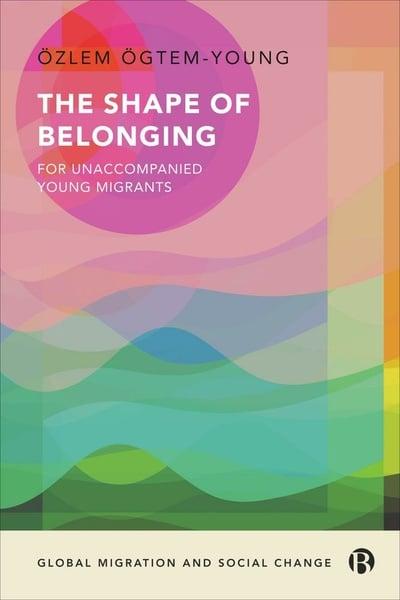
Review of: The Shape of Belonging for Unaccompanied Young Migrants by Özlem Ögtem-Young (Bristol University Press, 2024)
In 2016, the UK Parliament introduced the Dubs Amendment – formally known as section 67 of the 2016 Immigration Act – that aimed to bring unaccompanied minors from the camps of Pas-de-Calais safely into the UK. Despite its humanitarian promise and the legal battles in the High Courts of Justice that followed, many of these unaccompanied minors were still left behind and forced to seek more dangerous routes across the UK border.
Sites of border externalization, such as Pas-de-Calais, dramatically demonstrate the violence and exclusion inherent to modern migration management systems. Yet, for unaccompanied minors - after crossing the border, after experiencing detention, and after their initial asylum interview - what comes next? How do these exclusionary politics persist, and in what ways do they shape the contours of belonging for young people seeking refuge?
These are precisely the questions that lingered for Özlem Ögtem-Young during her work as a translator in asylum interviews with unaccompanied minors. In her recent book, The Shape of Belonging, that experience informs her research as she articulates a vital intervention into the complexity of identity, belonging, and displacement for unaccompanied minors seeking protection in the UK. Drawing upon a robust theoretical framework and in-depth interviews with unaccompanied minors as a source of empirical data, Ögtem-Young delivers both an engaging conceptual and empirical contribution to the migration field.
The strength of Ögtem-Young’s contribution lies in her selection of, arguably, the defining theme of migration politics: belonging. Belonging is central to the human experience. Yet, in a migration context, it is often imposed and enforced through binary, rigid, and violent mechanisms that don’t necessarily reflect the complex realities of people’s lives. This tension is particularly heightened in the case of unaccompanied minors seeking protection, who are subject to such systems, yet rarely empowered to define their own place in them.
Ögtem-Young builds her analysis upon a compelling and nuanced theoretical architecture that envisions a non-linear, contradictory, and dynamic nature of belonging. Drawing on Deleuze and Guattari’s assemblage theory, she organizes the core of the book through three key strands: molar forces, molecular lines, and nomadic lines.
Molar forces represent the rigid, binary structures imposed by the state that seek to enforce political, social, and economic categories of belonging. They act through legal and bureaucratic mechanisms and manifest in the forms of temporal uncertainty, categorization, and systemic distrust directed at unaccompanied minors seeking protection.
For example, while some unaccompanied minors may receive temporary protection in the UK upon initial assessment, that protection faces an expiration date. At 17 and a half years old, those with temporary protection status may, unless having received another form of relief, be rendered both stateless and homeless. This example is one of many forms of slow violence that Ögtem-Young illustrates as deliberately enacted against unaccompanied minors seeking protection in the UK. Within the text, it exemplifies the effect of molar forces in shaping their sense of belonging.
In contrast to molar forces, molecular lines represent interruptions to state power through acts of community and everyday resistance. Ögtem-Young illustrates how relationships between unaccompanied minors, adult caretakers, and informal networks serve as micropolitical resistance to the state’s attempts to define and enforce identity and belonging. Just as many of these young people recall relying on social ties – from other unaccompanied minors to adult migrants or even smugglers – to navigate irregular journeys to the UK, so too do they rely on community bonds after their arrival to resist isolation through connection.
Nomadic lines, the third conceptual category, similarly interrupts a hierarchical perspective of belonging that views identity as a fixed category. Rather, nomadic lines reflect the fluidity and constant movement of identity and belonging. This ultimately builds into Ögtem-Young’s overarching argument of belonging as an assemblage – always in the making. Drawing on Deleuze and Guattari’s rhizomatic thinking, she presents a vision of belonging that is unrooted in rigid borders and instead is non-hierarchical, non-linear, and networked. This framework, evocative of a sprawling root system, resists the state’s desire for permanence and fixed categorization.
Woven through these three theoretical devices are the lived experiences of unaccompanied minors themselves. Through in-depth interviews, these stories offer the central evidence through which Ögtem-Young builds her argument of belonging as an assemblage. As a result, Ögtem-Young demonstrates through narrative, the non-linear ways that young people are particularly affected by the UK’s hostile environment and contributes a piece to the conceptual puzzle of belonging that underpins migration politics.
Ultimately, what distinguishes The Shape of Belonging is its conceptual contributions to belonging in the context of migration. By choosing to focus on the slow, everyday processes that shape the lives of unaccompanied minors seeking protection, Ögtem-Young offers a more holistic understanding of their experiences that represents them as members of communities, recipients of care, and as active participants in building and shaping their futures. By using her selected theoretical framework, she delivers an engaging and dynamic conceptualization that at times mimics the engaging experience of interpreting abstract art.
Also to be admired is the work’s passionate conclusion in support of micropolitical gestures that interrupt the molar forces of state violence. In a subtle move of self-reflection, Ögtem-Young briefly and modestly places her own work within this category. By framing the text itself as a micropolitical act, she underscores the politics of knowledge production and the capacity of scholarship to resist dominant narratives.
As both a theoretically rich and empirically grounded exploration of belonging, this self-reflection is one additional reason why, for scholars, practitioners, and anyone interested in the lived experiences of displaced youth alike, the Shape of Belonging is an essential read.
How to cite this blog post (Harvard style):
I. Jess. (2025) Book Review: The Shape of Belonging for Unaccompanied Young Migrants. Available at:https://blogs.law.ox.ac.uk/border-criminologies-blog/blog-post/2025/11/book-review-shape-belonging-unaccompanied-young. Accessed on: 05/12/2025Share:
With the support of


