Selling the route: How smugglers narrate migration on TikTok
Videos advertising smuggling services present migration not as a spectacle of suffering, but as a difficult journey that can nonetheless be made. Their appeal emerges from a political environment in which mobility is heavily restricted
Posted:
Time to read:
4 Minutes
Guest post by Luigi Achilli and Alice Massari. Luigi is Associate Professor of Political Anthropology at the Sant’Anna School of Advanced Studies. His research focuses on human mobility, migrant smuggling, crime and migration governance. Alice is a Research Affiliate at Toronto Metropolitan University’s Global Migration Institute and a humanitarian and migration specialist. Her research examines visuality, migration governance and humanitarian action.
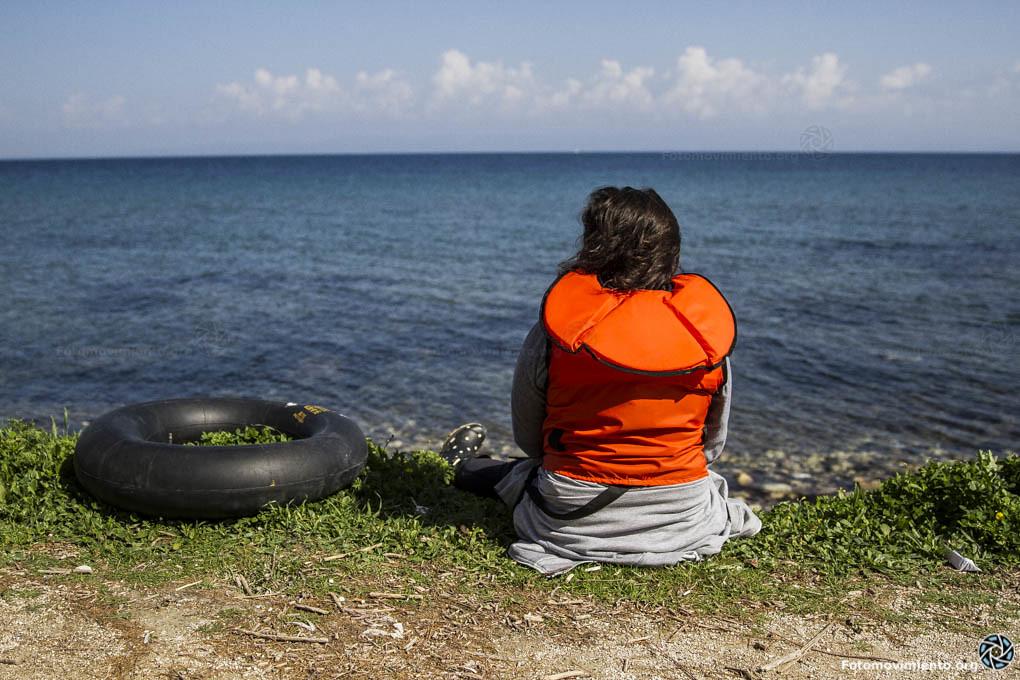
Scroll through images of European border control in the news and a familiar repertoire appears: overcrowded boats, rescue operations, thermal images, surveillance footage, uniforms, fences. Irregular migration is made visible through danger, emergency, vulnerability and control. But what do the same journeys look like when they are marketed through a TikTok feed?
In our recent journal article, TikTok Trails: Decoding Human Smugglers’ Narratives in Migration Advertising, we examined 117 publicly available TikTok videos posted between January 2023 and April 2024 by accounts advertising smuggling services. Much of the material concerned routes through the Eastern Mediterranean and the Balkans. We use “smugglers” as shorthand for accounts plausibly involved in facilitating crossings for payment; a study of TikTok videos alone cannot establish the precise offline role of every person filming, posting or advertising.
What struck us was not simply that smugglers use social media. That is hardly new. It was how different their videos were from the images of irregular migration we usually see in the news.
Selling safety, not danger
Many videos resemble travel advertisements. Prices and destinations are placed prominently on screen. Routes are presented as available services. Captions promise a limited numbers of places per trip, “guaranteed” arrival, or payment for the journey only after reaching the destination. One video shows the inside of a ferry cabin, complete with beds and bathroom, while its caption explains who can travel, how payment works and why prospective clients should avoid fraudulent intermediaries.

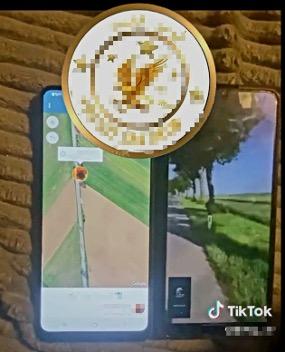
Others build credibility through logos, branding, references to community ties, and evidence of previous successful journeys. A recurring visual language of professionalism emerges: contact details, branded emblems, testimonials, live locations, video calls and footage of vehicles or boats. In one clip, two phones appear side by side. One displays a location on Google Maps; the other shows a WhatsApp video call with a person apparently at that location. There is little drama. The point is to show how the service can be trusted.
The camera angles matter too. Much institutional imagery of irregular migration looks at migrants from a distance or from above: from aircraft, patrol vessels, surveillance technologies or the decks of rescue ships. Research on visual securitisation has shown how these perspectives can reproduce migrants as objects of management, threat or humanitarian concern. By contrast, the TikTok videos we analysed frequently use handheld, eye-level footage. They look informal and immediate. The viewer is positioned alongside those making the journey rather than outside it. Research on migrant-produced smartphone videos has similarly shown how such images can unsettle the dominant visual order of the border.
This does not make these videos neutral records. Smugglers’ videos on TikTok serve many purposes, and advertising is certainly one of them: risks may be minimised and successful crossings foregrounded. But that is precisely what makes them revealing. They present migration not as an exceptional spectacle of suffering, but as a difficult journey that can nonetheless be organised, purchased and completed.
Defiance, and sometimes even fun
A second theme was less expected. Some videos recast the crossing itself as an act of defiance, presenting migrants not only as subject to border control but as actively resisting it.
One widely viewed clip, posted by a profile with more than 147,000 followers and 563,000 likes, had been viewed over 204,000 times and received more than 19,000 likes. It records an encounter between a migrant boat and the Greek coastguard. As the patrol vessel approaches, cries of “No, no!” and a woman’s plea are audible over the motor. One passenger says that the phone recording the encounter is what made the coastguard stop. An upbeat Turkish song plays over the footage, and the clip ends by announcing the group’s arrival on the Greek island of Symi. The crossing is framed not simply as survival, but as achievement. Filming becomes part of the encounter itself: documentation, possible protection, and a way of narrating arrival as victory over the forces seeking to prevent it.
This defiance sometimes takes a playful turn. In one video, the camera lingers on coastguard and police officers waiting onshore for an approaching migrant boat. The smuggler’s logo appears alongside a warning straight out of an extreme sports video: “Do not attempt.” We never learn whether the boat makes it ashore. But the scene has an unmistakably playful twist: the border guards, usually the ones watching and policing the crossing, have become unwitting characters in the smuggler’s own adventure video.
Other clips use triumphant music, playful hashtags and the language of adventure to celebrate successful crossings. None of this makes the journey less dangerous. But it shows that fear and danger are not the whole story. Migrants appear not simply as victims to be rescued or threats to be controlled, but as people acting, improvising, joking and sometimes celebrating.
Complicating the moral meaning of smuggling
Several accounts in our dataset had tens of thousands of followers, while individual clips attracted tens of thousands of likes – often more than highly visible content posted by institutions such as the EU borders and coastguard agency, Frontex or the UN refugee agency, UNHCR. These figures do not tell us that a video prompted someone to migrate. They do show that such representations circulate widely, attract attention and resonate within particular digital publics.
The overwhelmingly positive comments on the posts in our dataset reinforce this point. So does the way some account holders present themselves less as clandestine figures hiding from view than as influencers: mixing route advertisements with cooking videos, family scenes, jokes, or unrelated businesses. TikTok becomes a space for producing familiarity and credibility as much as for transmitting logistical information.
To understand why these narratives may appear credible, however, we need to look beyond TikTok. Earlier ethnographic research on the moral economy of smuggling shows that migrants do not necessarily understand smugglers through the dominant image of the predatory criminal. Where legal routes are closed, facilitators may instead be seen as providing access to mobility that states have made unavailable. This does not erase exploitation, violence or deception within smuggling economies. It does mean that the moral meaning of smuggling cannot be separated from the border regime in which it operates.
For the same reason, treating these videos simply as dangerous misinformation misses the larger point. Their appeal is not produced by clever editing alone. It emerges from a political environment in which mobility is heavily restricted and official narratives can feel remote from migrants’ own aspirations and experiences. Smugglers enter that gap with a visual language of feasibility, trust, defiance and agency.
Migration governance, then, is shaped not only through laws, patrols and institutions, but also through representations that make mobility appear dangerous or possible, illegitimate or justified, hopeless or achievable. TikTok has become one of the spaces where those meanings are contested. On the platform, the border is not only crossed: it is visualised, marketed and reimagined.
Any comments about this post? Get in touch with us! Send us an email, or find us on LinkedIn, Bluesky and Instagram.
How to cite this blog post (Harvard style):
L. Achilli and A. Massari. (2026) Selling the route: How smugglers narrate migration on TikTok. Available at:https://blogs.law.ox.ac.uk/border-criminologies-blog/blog-post/2026/11/selling-route-how-smugglers-narrate-migration-tiktok. Accessed on: 20/11/2026Keywords:
Human smuggling
Share:
With the support of