Myanmar’s genocide confirmed by ICJ: but it’s a long road to justice for the Rohingya
The court’s verdict raised hopes. But as aid shrinks and Dhaka presses for repatriations to a Rakhine run by the Arakan Army, more Rohingya will look to make the deadly sea crossing
Posted:
Time to read:
5 Minutes
Guest post by Antje Missbach and Gerhard Hoffstaedter. Antje is Professor of Sociology at Bielefeld University and Gerhard is Associate Professor of Anthropology at the University of Queensland. They co-lead the Maritime Refugee Lab, funded by the Volkswagen Foundation.
On 19 November 2026, the International Court of Justice (ICJ) in The Hague found Myanmar responsible for genocide against the Rohingya, a predominantly Muslim minority from Myanmar’s Rakhine State. This landmark ruling was announced seven years after The Gambia submitted its application to the ICJ. It is the first time in the court’s 80-year history that it has found a state responsible for genocide. The judgment will matter well beyond Myanmar and will be read closely in the cases still pending before the court. The first and foremost of these is South Africa’s case against Israel, as well as Nicaragua’s case against Germany, which accuses Berlin of facilitating and failing to prevent genocide in Gaza.
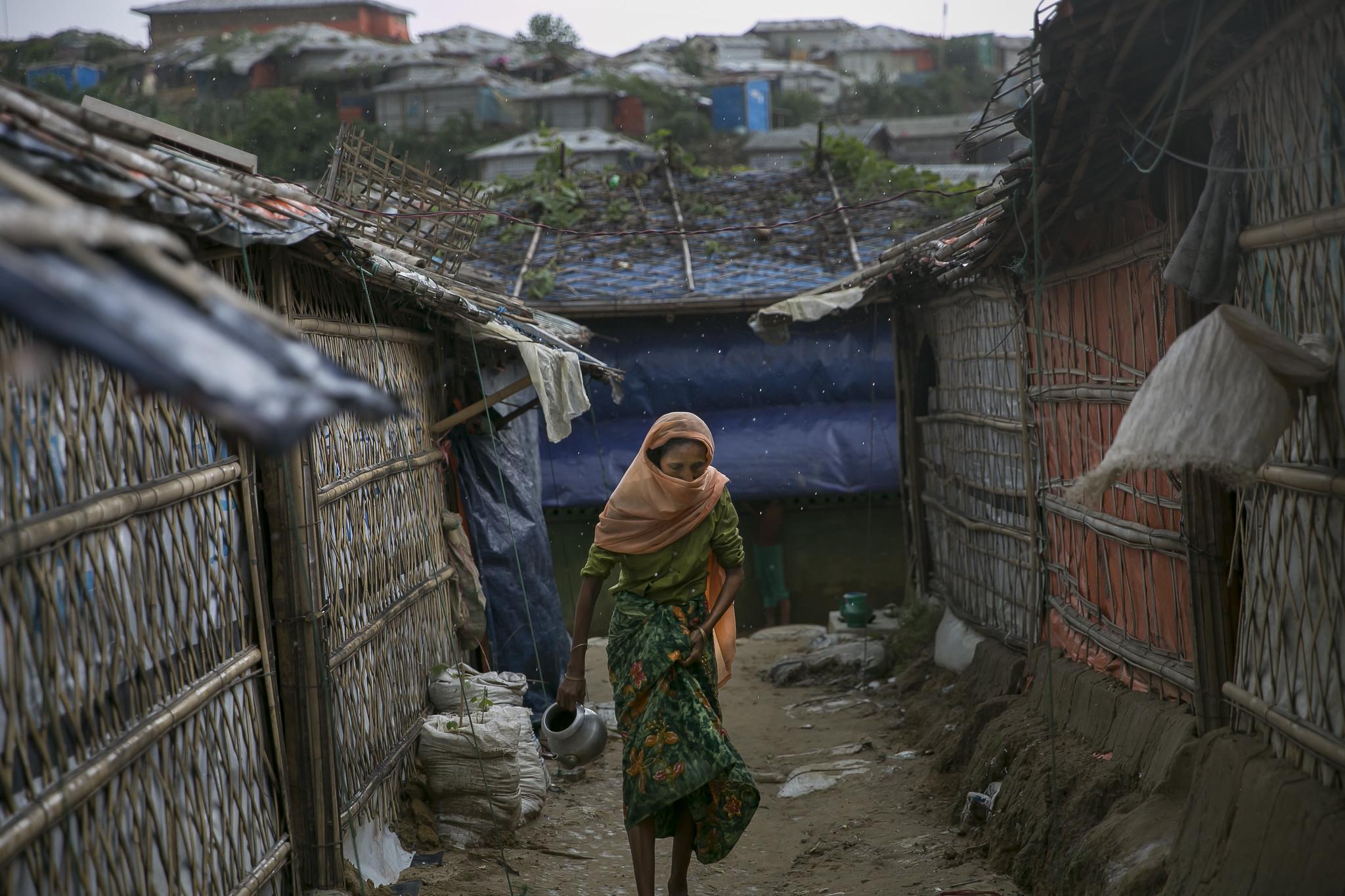
The majority ruling of nine against six judges of the ICJ has been applauded as long-overdue justice for the Rohingya. In 2017, the Myanmar military burned Rohingya villages, killed some 10,000 men, women and children and drove more than 700,000 people across the border into Bangladesh. The widespread use of targeted and systematic sexual violence against women and girls was seen by the court as a deliberate strategy to impede the reproduction of a people. Agnès Callamard, Amnesty International’s Secretary General, called the ruling “a rare moment of justice for survivors, victims and their families”. But what can a genocide finding actually do for the Rohingya, most of whom no longer live in Myanmar but in camps, detention centres and in exile across the region, having fled by boat across the Andaman Sea?
Potential barriers to enforcement
The ICJ ordered Myanmar to investigate and prosecute those responsible for the military’s 2016–2017 “clearance operations”. Myanmar must facilitate a safe, voluntary and dignified return of the Rohingya and protect them from any further persecution or discrimination. They must also pay reparations: restoring or replacing lost property, compensating losses that cannot be restored, and providing physical and psychological rehabilitation. The ICJ cannot enforce its rulings. But its judgments are final and binding, and they carry diplomatic weight that can shape decisions, including on sanctions.
Enforcement now rests with the UN Security Council. There, Myanmar can rely on its key allies, China and Russia, to veto any such decision. While the ICJ prosecutes states and not individuals, the prosecutor of the International Criminal Court (ICC) applied for an arrest warrant in November 2024 against Min Aung Hlaing, president of Myanmar. Hlaing has held office since April 2026, and commanded the 2017 assault on the Rohingya. Whether he will be arrested and put on trial remains highly uncertain.
Bangladesh, which currently hosts more than 1.2 million Rohingya refugees in the world’s largest refugee settlement, has welcomed the ICJ ruling and reiterated that the return of the Rohingya to Myanmar is the only viable solution for the current host country. Bangladesh urged Myanmar to implement a safe, voluntary and dignified repatriation of the Rohingya without any further delay.
Dhaka’s response is unsurprising: it has pushed for repatriations for years. Bangladesh’s minister for foreign affairs, Shama Obaed Islam, has urged the international community to press both Myanmar’s government and the Arakan Army to begin repatriation. Yet it is the Arakan Army, not the government, that now controls most of Rakhine State. The court has ordered a government to facilitate return to land it no longer holds.
What is ‘return’ when the only route is a deadly sea crossing?
Inside the refugee camps in Bangladesh, the ruling was welcomed with great enthusiasm. Khalilur Rahman, the president of the UN General Assembly and formerly Bangladesh’s High Representative for Rohingya Affairs, received a warm welcome in the camps in Cox’s Bazar a day after the announcement of the verdict. Yet on the same day, 28 people were detained near Laboni Point in Cox’s Bazar after their smugglers abandoned the boat that was meant to take them to Malaysia.
Recent trends show that departures from the refugee camps in Bangladesh and Myanmar continue unabated, especially now that the monsoon is over and the sailing season has begun. More than 2,800 Rohingya took to the sea in the first three and a half months of 2026 alone, most heading for Malaysia and Indonesia. In late June and early July, two boats carrying more than 500 people, mostly Rohingya, are feared to have sunk off Rakhine State. In 2025, UNHCR recorded nearly 900 Rohingya dead or missing at sea: one in seven of those who attempted the crossing, the highest mortality rate of any major sea route for refugees and migrants in the world.
This is the verdict’s blind spot. The judgment imagines a single way out of genocide: return. But for the Rohingya, who are a stateless people without passports or safe land routes, the sea is the only exit from the camps and from Rakhine, which is currently controlled by ARSA militants and not even by the Myanmar military. The Andaman Sea and Bay of Bengal have become an “unmarked graveyard” for many seeking a safer future in the only place they can imagine it – abroad. In our work at the Maritime Refugee Lab, we have followed how states around these waters govern the crossings through absence: delayed rescues, boats turned back or left adrift, and disembarkation negotiated while passengers die of thirst. Their actions cannot be disconnected from the genocide. Rather, they reveal its afterlife, the slow violence that continues after the killing stops, once survivors have been recast as “illegal migrants”.
Will the ruling change the calculus on what happens in the Andaman Sea? There is reason to fear it will push more people onto boats, not fewer. The verdict raised hopes in the camps that the court alone cannot meet. If the road home stays closed while aid shrinks and Dhaka presses for repatriations to a Rakhine run by the Arakan Army, more young Rohingya will conclude that their only future lies across the sea. And smuggling networks are adept at facilitating and profiting from such moments. At the same time, the judgment also hands every coastal state a new fact. The people in these boats are now, in the eyes of the world’s highest court, survivors of a genocide. Malaysia and Bangladesh are both parties to the Genocide Convention, under which every party owes a duty to prevent genocide and its continuation. Pushing back a boat of genocide survivors, or deporting them to the state found responsible, becomes much harder to defend.
No signs of justice yet
A day after the ICJ ruling on the state-sponsored genocide, Malaysia, which currently hosts a growing Rohingya diaspora, announced a Cabinet plan to resettle 10,000 Rohingya in Türkiye as part of a skill training programme. The post was later removed from his Facebook page without explanation, and Türkiye’s presidential counter-disinformation centre dismissed the claim as “unfounded”.
Malaysia, meanwhile, continues to arrest and arbitrarily detain Rohingya. As of 31 October, 11,208 Myanmar nationals, including 6,294 Rohingya, were held in immigration depots. Malaysia is also ramping up its deportations returning 12,176 Myanmar nationals back to Myanmar in the first ten months of 2026. The Home Ministry says it records nationality, not ethnicity, so it cannot say how many were Rohingya. Yet, not counting this elementary date point is itself a choice – as instead of condemning the junta in Myanmar, Anwar Ibrahim, the Malaysian prime minister, rolled out the red carpet for Min Aung Hlaing in October. Hlaing is Myanmar’s military leader-turned-president, who pledged to do “whatever possible” to bring Myanmar back into ASEAN.
The Hague has spoken and now the region must decide whether it treats the Rohingya as survivors of genocide, or as a problem to be shipped elsewhere – to Türkiye, back to Rakhine, or out to sea. What will justice look like across the Andaman Sea for Rohingya? At the very least, it should include: coordinated search and rescue in the Andaman Sea; an end to deportations to the state found responsible for genocide; legal status and the right to work for Rohingya in Malaysia; and pressure on social media platforms to act before online hate turns into offline violence. Without these, the most likely legacy of 19 November will be another sailing season of overcrowded boats.
Any comments about this post? Get in touch with us! Send us an email, or find us on LinkedIn, Bluesky and Instagram.
How to cite this blog post (Harvard style):
A. Missbach and G. Hoffstaedter. (2026) Myanmar’s genocide confirmed by ICJ: but it’s a long road to justice for the Rohingya . Available at:https://blogs.law.ox.ac.uk/border-criminologies-blog/blog-post/2026/11/myanmars-genocide-confirmed-icj-its-long-road-justice. Accessed on: 24/11/2026Keywords:
Rohingyas
Share:
With the support of