Digital passing as an alternative to identity fraud: forging for survival
States treat identity fraud as a criminal offence, but in the context of migration and mobility control it is often motivated by attempts to survive and avoid detention or violence
Posted:
Time to read:
7 Minutes
Guest post by Beata Paragi. Beata is Associate Professor at the Institute of Global Studies at Corvinus University of Budapest. She earned her PhD in Political Science (Multidisciplinary International Relations) in 2008, and additionally holds a MA-degree in ICT Law from the University of Oslo. Her research interests and teaching concern, among others, the digital transformation of International Relations, focusing on the context of aid and migration.
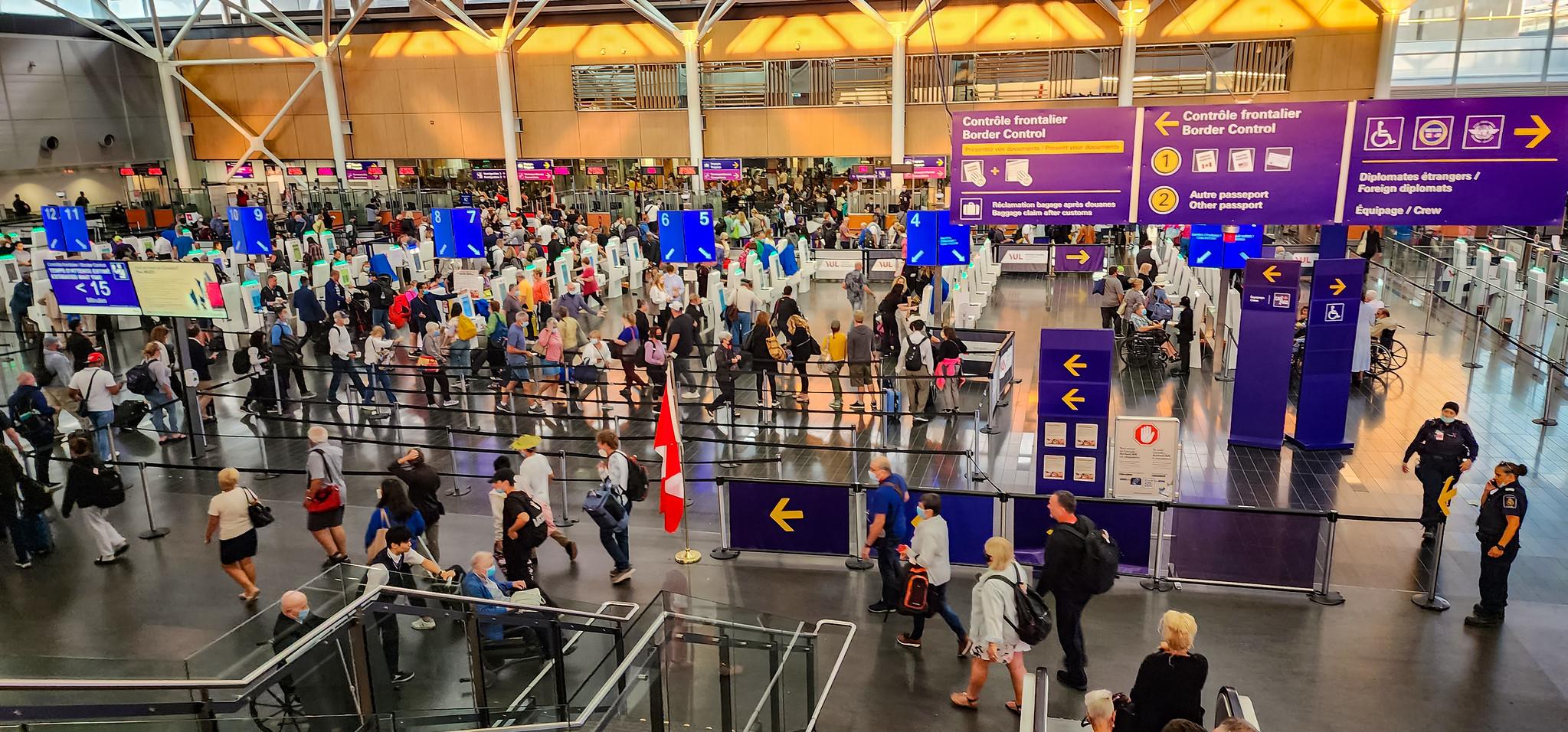
Migration and border management operates on a grand promise: the delivery of secure, fraud-proof, and cost-effective governance over populations and human mobility. In pursuit of this promise, digitalised and increasingly biometrics-based identification technologies collapsed the analytical distinction between identity and identification within IT systems long ago.
Today, technologies offering identification services function as a double-edged sword in the context of migration management. While they facilitate seamless entry for the majority, they also enable the systematic exclusion of those whose authentic identity or legal status is deemed problematic according to the simultaneously securitised,criminalised, commercialised and datafied logic of bioborders. Under this state-centric paradigm (which includes the EU as a political entity) actions that challenge legally established borders, such as crossing with fraudulent identities, have long been conceptualised as a criminal offence. The proliferation of biometric technologies deployed both by political entities, such as the EU (Eurodac, EES), the UK (the biometric component of ETA) or humanitarian organisations, like the UNHCR (BIMS), have never been able to totally eliminate identity fraud. After all, even if ID documents and fingerprints get harder to forge or alter, people facing desperate circumstances will always adapt or change who they are just to survive.
Beyond identity fraud: agency, violence, and digital passing
Digital passages make up the spaces or routes comprised not only of physical borders, but networked technologies, mobile devices, platforms, apps and settings that enable movement from one place to another. These complex infrastructural assemblages are equally shaped by states, corporations and individuals using or appropriating them. ‘Undesired’ individuals need to carefully map such passages when escaping persecution, violence or inhuman conditions.
Assuming an alternative identity is often a direct consequence of the identification and borders apparatus itself. Indeed, diverse practices of identity fraud are motivated not only by unliveable conditions characterising conflict zones, refugee camps, stays and spaces during transit, at border crossings or between two legal crossing points, under extreme environmental conditions or within human rights-violating detention facilities from the US through Europe to Australia. They are also motivated by laws and the related identification apparatus itself, which prescribes exclusion. Concepts such as mobility (data) justice fuse the entanglements of mobility and data with a social justice perspective to illuminate how migration control amplifies inequalities stemming from the ‘birthright lottery’. Going beyond this, my recently published paper offers an alternative interpretation of identity fraud in an era of digitalised identity management.
Inspired by calls to integrate ‘different bodies of theory’ to better understand the impact of identification technologies on vulnerable people, desperate practices of identity fraud should be interpreted not simply as crimes threatening public order or national security, but as forms of ‘digital passing’. There exists a compelling need to escape and survive in a world where countries of origin cannot necessarily provide protection to their own citizens, while others use citizenship as a proxy for racial exclusion. Given this, the concept of digital passing offers an opportunity to see how vulnerable individuals manipulate, adapt, or reinvent their increasingly digital identities to secure safety by circumventing unfair border controls.
By nature, digital passing is a phenomenon that is hard to research. The concept nevertheless covers a sophisticated spectrum of practices. On the one hand, digital passing may include identity change (takeover, delegation, creation) facilitated by fake plastic ID-cards, biometric spoofing (when person A attempts/pretends to be person B by presenting person B’s biometric trait to the sensor), obfuscation of fingerprints, manipulating the fingerprinting process or avoiding major and well-equipped official entry points. On the other hand, it also refers to mobility tactics, such as mapping the digital dimension of escape routes, choosing less digitalised crossing points or dangerous terrains (such as rivers and mountains) to prevent being recorded in a database that would lead to decisions on deportation, return or exclusion.
Successful digital passing always requires the mobilisation of ipse (selfhood built on narratives and imagination) for the purpose of imitating sameness. In other words, to convince a border control officer, one can’t just have a fake EU passport or identity card and a physical appearance resembling an EU citizen. It is also often necessary to completely change one’s story of origin, if not to believe one’s own lie, and imagine the options for movement by mapping the features of identification/recognition technologies along the way.
Passing, the datafication of identity and the sacrifice of the self
Faking ID papers and travel documents is as old as migration control, but the specific term for 'passing' with an assumed identity referred to “an attempt made by Jews [and Roma] to disguise their Jewish identity by adopting a non-Jewish identity... by hiding in plain sight or in open hiding as a mechanism of evasion and survival.” This hiding all took place in the ‘analogue’ world, when physical escape was impossible and entry to non-European counties was denied from the late 1930s until 1945.
By integrating these historical insights with evidence from critical migration studies, we can interpret digital passing as a mechanism combining imagination, survival instinct and resistance to abuse, violence or premature death. It denotes diverse practices that aim at navigating not only racist technosecurity systems composed of biometric surveillance and identification technologies, but also the mess (errors, gaps, and traces) embedded in databases preventing legal pathways, avoiding or appropriating physical border controls and/or negotiating human interactions at other crossing points conditioning mobility or access on incomplete identities.
To understand digital passing, we must first unpack what happens when a state mechanises identity. The late French philosopher Paul Ricoeur famously distinguished between two intertwined dimensions of identity. Capturing the numerical, ‘datafiable’ features of a person, the idem denotes sameness, that is the objective match between an identifier and an individual at a given time. The ipse dimension, on the other hand, means ‘sameness across and through change’. This narrative dimension of identity remains open to change yet maintains a stable continuity over time.
Digital (biometric) identification technologies serving border regimes are built on the foundational assumption that identity equals only to the idem components, such as biometric traits which are inalienable, observable by humans, legible by machines, less prone to manipulation, and more resistant to identity-related crimes. However, by treating identity purely as a set of idem data points – fingerprints, irises, or facial templates – states and international organisations have successfully sacrificed subjectivities, that is, the narrative and moral (ipse) dimensions of the self.
Passports issued to pets verifying their physical sameness at border crossings illustrate what the idem means without the ipse. Their narratives are neither probed by border control officers, nor communicated by the pets themselves. Individual human selfhood (narratives and imagination), however, is inevitably mobilised for the purpose of imitating sameness in order to survive, whenever the original legal identity – reduced to its idem dimension through the recording and coding of personal, biometric, or genetic data – fails to facilitate lawful crossing, escape, or access to food and shelter, thereby potentially resulting in unnatural or premature death or violations of human dignity.
While scholars may advocate for data justice in the context of biometrics-based identity management in aid and migration contexts, survival instinct knows no legal basis. Nearly 84,000 migrants – whose legal identity did not grant them safe entry – have died or disappeared globally since 2014, according to the IOM’s Missing Migrants Project. A recent study found that between 2015 and 2024, the remains of 125 deceased migrants were recovered in Croatia, of which only 76 people were successfully identified. Of these, 67 drowned, 13 died in traffic-related incidents, and 12 died of hypothermia.
When someone’s legal identity is reduced entirely to its idem dimension, and decisions on the freedom of mobility (entry, exit), safe and legal crossings are made solely on what documents and biometrics testify, people are forced to forge components of their identities. Otherwise, deprived of opportunities for lawful crossing, escape, or access to basic sustenance and shelter, they face consequences such as violence, abuse prolonged suffering, unnatural or premature death.
Digital Passing as a Corrective Mechanism
Migrants who have been rendered ‘undesired’ – hence often ‘illegal’ – in diverse contexts and geographical locations, engage in acts of digital passing because they are well aware of the precarious boundaries separating life from death. At the same time authorities – including border control officers and private technology companies operating at borders – often either lack understanding of the lethality of borders, deliberately choose to ignore it or even further weaponise the routes to punish those crossing illegally and deter others still outside of (bio)borders.
Hence, similar to passing with an assumed identity during the Holocaust, digital passing may, albeit temporarily, facilitate survival by shielding individuals from the consequences of (mis)identification or (mis)recognition based solely on the idem dimension of identity. Echoing Hannah Arendt’s poignant reflections in We Refugees, and borrowing Keren Weitzberg’s words on identity fraud, certain forms of digital passing allow for “the smuggling of truths into administrative lies” that are coded in databases.
When the living body and mind is deemed insufficient and unnecessary for identification – that is, when passports and biometrics are worth more than one’s real life story (forming the ipse dimension of identity) – digital passing becomes a radical assertion of the will to live. This stands against an ‘identity’ rendered (il)legal by birth (in the form of citizenship or statelessness), governed and administered in collaboration between state and market actors, algorithms and unpredictable border control officers, consulates at third countries or police officers even within the EU.
The term ‘identity fraud’ reflects state-centric perspectives and, like the category of smuggling, it serves as a device of “social control of undesirable populations and extra-state markets.” Hence, by recalling historical lessons, the notion of digital passing offers an alternative conceptual lens for describing ‘corrective mechanisms’ from the standpoint of unwanted or persecuted individuals who do not enjoy adequate human rights protection promised by international law. Although states criminalise identity fraud by linking it to national security threats in the context of migration, it is often driven ‘only’ by the imperative to survive. Digital passing may also be understood as a form of normatively permissible civil disobedience against oppressive political and digital border regimes – following in the footsteps of historical resistance against legally orchestrated racial segregation and persecution.
This blog post is a companion piece to a journal article published in Big Data and Society: (2026) Digital passing: “I died once, so I could live. Perhaps that is my real story”. Big Data & Society, https://doi.org/10.1177/20539517261455755
Any comments about this post? Get in touch with us! Send us an email, or find us on LinkedIn, Bluesky and Instagram.
How to cite this blog post (Harvard style):
B. Paragi. (2026) Digital passing as an alternative to identity fraud: forging for survival. Available at:https://blogs.law.ox.ac.uk/border-criminologies-blog/blog-post/2026/11/digital-passing-alternative-identity-fraud-forging. Accessed on: 03/11/2026Share:
With the support of