Italy's Borders Immigration Paradox: Rising Numbers, Falling Crime, and the Reality of Exploitation
Posted:
Time to read:
4 Minutes
Guest post by Dr Luciano Magaldi Sardella and Dr Matteo Mantuano. Luciano Magaldi Sardella is a PhD and MBA holder from the EU Open University in human rights and international affairs. Matteo Mantuano is a Professor of Social Sciences at UNITRE’ University of Milan.
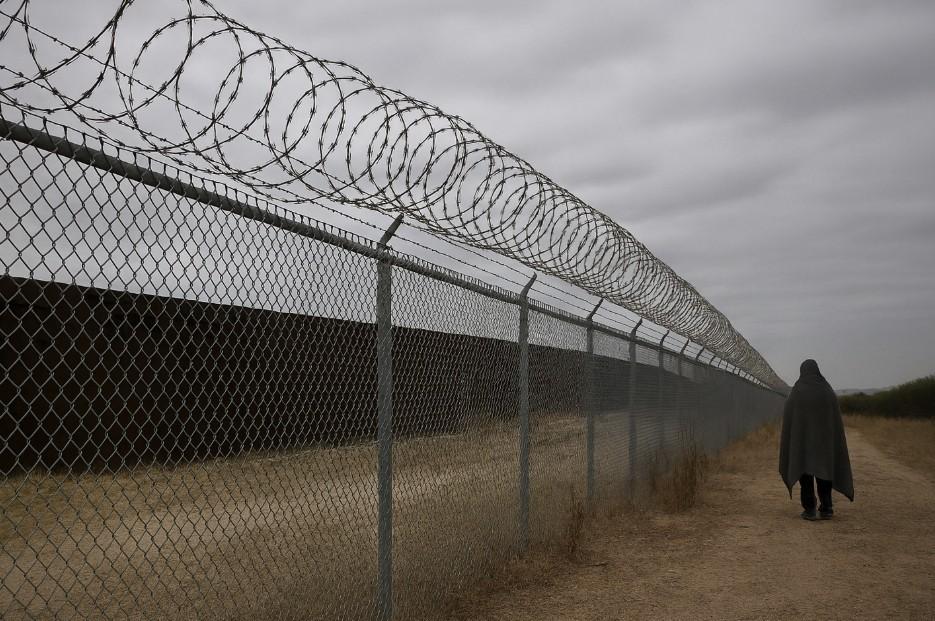
Italy finds itself at the epicentre of a migration paradox that exposes a fundamental disconnect between political rhetoric, policy intentions, and the lived reality experienced on Italian territory. As the primary Mediterranean gateway to Europe and a frontline state bearing the disproportionate burden of EU migration management, Italy exemplifies how restrictive European border policies systematically create the very conditions of vulnerability and exploitation they purport to address. This blog post argues that restrictive European border policies, designed to control and deter migration, systematically create the very conditions of vulnerability and exploitation they claim to address, turning migrants into a permanent underclass trapped between legal limbo and economic necessity.
This paradox has assumed particular urgency as the EU's Pact on Migration and Asylum enters its implementation phase, a development that will significantly impact Italy's role as both a reception state and transit corridor. Simultaneously, rising electoral pressures across Europe, notably reflected in Italy's own domestic political landscape, have placed migration policy under unprecedented scrutiny, intensifying the contradictions between humanitarian obligations and political imperatives that characterise contemporary European migration governance.
The Statistical Reality vs Political Narrative
Recent data from the Italian National Institute of Statistics (Istat) shows that 2024 witnessed the highest levels of both immigration and emigration in a decade, with 382,071 foreigners arriving and 155,732 Italians departing—figures that dwarf previous records.
This statistical reality sits uncomfortably alongside persistent political rhetoric linking immigration to crime and insecurity. Yet the evidence tells a markedly different story: crime rates across Italian regions have fallen by nearly 25% between 2007 and 2016, even as asylum permits increased exponentially following the 2013 migration “crisis”. More striking still, crimes committed by foreigners have declined by approximately 65% over the same period, reaching what researchers describe as "an unprecedented all-time low."
The Dublin Regulation: Manufacturing Vulnerability Through Legal Design
The disconnect between policy intentions and ground reality becomes most apparent when examining the EU's Dublin Regulation, which requires asylum processing in the first country of arrival. Italy's position as a frontline state in central Mediterranean crossings, combined with the Dublin framework, creates what scholars term "involuntary immobility": a legal limbo that traps migrants who intended to transit through Italy en route to other European destinations.
This regulatory framework generates profound vulnerabilities that extend far beyond legal uncertainty. Unable to legally move onwards, yet struggling to secure stable residence in Italy, many people seeking asylum find themselves pushed towards precarious employment in sectors like agriculture, where an estimated 230,000 workers labour without proper authorisation.
The Caporalato System: Exploitation by Design
The infamous caporalato system—sometimes dubbed the "agro-mafia"—represents the clearest manifestation of how restrictive policies create systematic exploitation. This exploitation is particularly insidious because the Dublin Regulation creates a population of migrants who cannot leave Italy yet lack formal employment rights, making them ideal targets for labour trafficking.
Caporali (gang masters) position themselves as intermediaries between desperate workers and agricultural employers, creating a shadow economy where migrants live in squalid conditions whilst working gruelling shifts in fields for as little as €3 per hour. The system operates through a web of dependencies where migrants are charged up to €5 for a ride to work sites that should cost €1, whilst "rent" for a bed in an overcrowded, unsafe dwelling can consume half their meagre earnings.
These workers cannot report abuse or seek better conditions because doing so risks exposure to authorities and potential deportation attempts—even though, paradoxically, they cannot actually be removed due to the Dublin rules. This represents the policy paradox in its starkest form: measures designed to control migration instead create the conditions for its most exploitative forms.
Policy Responses and Their Contradictions
Italian policy responses have oscillated between restriction and pragmatic accommodation, consistently demonstrating the gap between policy intentions and ground realities. The 2015 law allowing asylum seekers to work legally 60 days after filing applications represented recognition of labour market realities, yet subsequent measures like the 2018 Security Decree and 2023 Cutro Decree have progressively narrowed legal pathways whilst extending detention periods.
In June 2024, the death of Indian farmworker Satnam Singh, abandoned after suffering a severed arm in a workplace accident, galvanised public attention on exploitation within Italy's agricultural supply chains. Singh's case illustrates how the policy paradox operates at the human level: he was simultaneously essential to Italy's economy yet denied basic protections, trapped by policies that created his vulnerability whilst depending on his labour. Italy's internal geography compounds these policy-manufactured challenges. The country's economically struggling South continues to lose population—with nearly 1% of Calabria's residents relocating northwards in 2023-2024—whilst simultaneously receiving the majority of Mediterranean arrivals. This geographical mismatch between arrival points and economic opportunities further concentrates vulnerabilities in regions least equipped to provide adequate reception and integration services.
Italy's experience illuminates broader questions about European border control's effectiveness and humanity. The latest Istat figures—showing Ukrainians as the largest national group among recent arrivals—remind us that migration patterns reflect complex global dynamics extending far beyond European policy choices. Nearly 270,000 Italian emigration cases over 2023-2024 suggest that mobility operates in multiple directions.
Conclusion: Breaking the Paradox
The challenge for European policymakers lies in developing frameworks that protect migrants' rights whilst addressing legitimate concerns about integration and social cohesion. Italy's agricultural sector demonstrates that migration can serve essential economic functions, yet current governance structures systematically undermine the conditions for legal, dignified employment.
As Europe grapples with ongoing migration pressures, Italy's paradox offers crucial lessons about the unintended consequences of border control policies that prioritise deterrence over protection. The evidence suggests that security and humanity need not be opposing goals—but achieving both requires confronting the structural contradictions that currently define European migration governance.
The path forward demands acknowledging that migration is a complex social and economic phenomenon that cannot be simply deterred through restrictive policies. Only by breaking free from the current paradox—where policies create the conditions they claim to prevent—can Europe develop migration frameworks that serve both migrants' dignity and member states' legitimate interests.
Any comments about this post? Get in touch with us! Send us an email, or find us on LinkedIn and BlueSky.
How to cite this blog post (Harvard style):
L. M. Sardella and M. Mantuano. (2025) Italy's Borders Immigration Paradox: Rising Numbers, Falling Crime, and the Reality of Exploitation . Available at:https://blogs.law.ox.ac.uk/border-criminologies-blog/blog-post/2025/09/italys-borders-immigration-paradox-rising-numbers. Accessed on: 18/05/2026Share:
With the support of