From the Field: Psychological Operations and the Policing of Migrants in the Netherlands
Posted:
Time to read:
3 Minutes
Guest post by Paul Mutsaers, a researcher with the Police Academy of the Netherlands. He’s finishing his dissertation, A Public Anthropology of Policing: Policing Migrants in the Netherlands, at Tilburg University.
In a recent post on Border Criminologies, Abdelhay Tali gives his readers a palpable sense of how it feels to be subjected to psychological techniques used in detention. Discussing his experiences at Dover Immigration Removal Centre in the United Kingdom, he writes that ‘in detention you feel like your whole body, spirit and mind are together, and your awareness is ON all the time.’ Multiple methods are used to let him know that guards are protecting the community from him, an immigrant detainee. Muscular effort becomes superfluous once the mind is targeted.
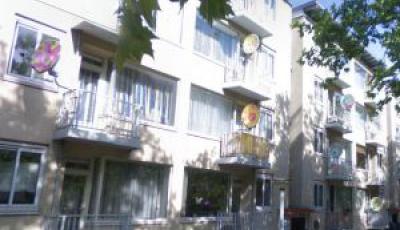
The Chief Inspector defended the idea that PsyOps was also applicable in the officers’ own backyard. Amsterdam West has one of the highest percentages of non-western ethnic minority residents in the Netherlands. Many of these residents, according to the Chief Inspector, are ‘trouble-prone’ and over-represented in crime statistics (in his experience―it is not a standard procedure in the Netherlands to link crime statistics and ethnic background of suspects or delinquents). Contacts between the police and ethnic minority juveniles are highly problematic, with police brutality and ethnic profiling as features of daily life in the neighbourhood. In an interview, the Chief Inspector told me:
I want to know everything about them. Knowledge is power. So, for instance, I have a Moroccan target group. I want to know: where do their parents come from, exactly? Which specific areas? What kind of religion do they adhere to? Who has contact with whom?
In his desire to know all about kinship ties, political networks and the innermost aspects of the lives of these people in order to optimize policing, he started to collaborate with the army and military personnel were sent into the neighbourhood to conduct observations on the four ‘target groups’ in the area: people originating (and presumed to be originating) from Morocco, Turkey, Surinam, and the Dutch Antilles. In an official document (the ‘Plan of Action’) I accessed through my research, it was stated that information (i.e., ‘intelligence’) needs to be gathered about kinship ties, political affiliations, cultural values, religion, race, gender, age, and so forth. Such information was deemed necessary to determine what ‘lines of persuasion’ would be more successful to ‘influence target groups psychologically.’ Subsequently, an analysis is made of the ‘weaknesses’―‘lost integrity’ is given as an example―of a target group, which is also deemed to be useful information for such kind of manipulation.
In short, what we’re facing here is a full-blown psychological operation, jointly executed by the police and the military, against non-western minorities in a Dutch neighbourhood. It’s obvious that this boils down to nothing less than a thickening of borderlands. The border is no longer geographically fixed; it is all around us. But this does not mean that it imposes the same constraints on everyone. Borders mean different things to different groups and work differently on different groups (see here and here). This much is clear from the foregoing. Other researchers―such as the anthropologists Roberto Gonzalez and Leo Chavez―have drawn similar conclusions. They have scrutinized what they call the biopolitics of citizenship and governmentality in the United States, which works through the minutiae of paper-based control (immigration documents, employment forms, birth certificates, tax forms, drivers’ licenses, credit cards, bank accounts, insurance papers, etc.). When control is everywhere, people are forced to lead sclerotic, undercover and careful lives; lives that are physically, socially and psychologically frustrated.
Any comments about this post? Get in touch with us! Send us an email, or post a comment here or on Facebook. You can also tweet us.
__________
How to cite this blog post (Harvard style):
Mutsaers, P. (2014) ‘Psychological Operations’ and the Policing of Migrants in the Netherlands. Available at: http://bordercriminologies.law.ox.ac.uk/psychological-operations/ (Accessed [date]).
Share:
With the support of