Stepping out of the ordinary? Spain’s regularisation of undocumented migrants
Up to half a million migrants can apply for permits after Spain passed a landmark amendment. But it's not the first regularisation – and critics say the policy doesn't go far enough
Posted:
Time to read:
6 Minutes
Guest post by Dr Ainoa Cabada. Ainoa is a postdoctoral researcher and lecturer in International Security at Adelaide University. Her book entitled The UN Charter, the Refugee Convention and the Responsibility to Protect Doctrine: Towards a Preventative Protection Regime (Routledge, 2026) argues that the current international refugee protection regime articulates a narrow and reactive approach to protection and suggests that protection ought to be also preventative.
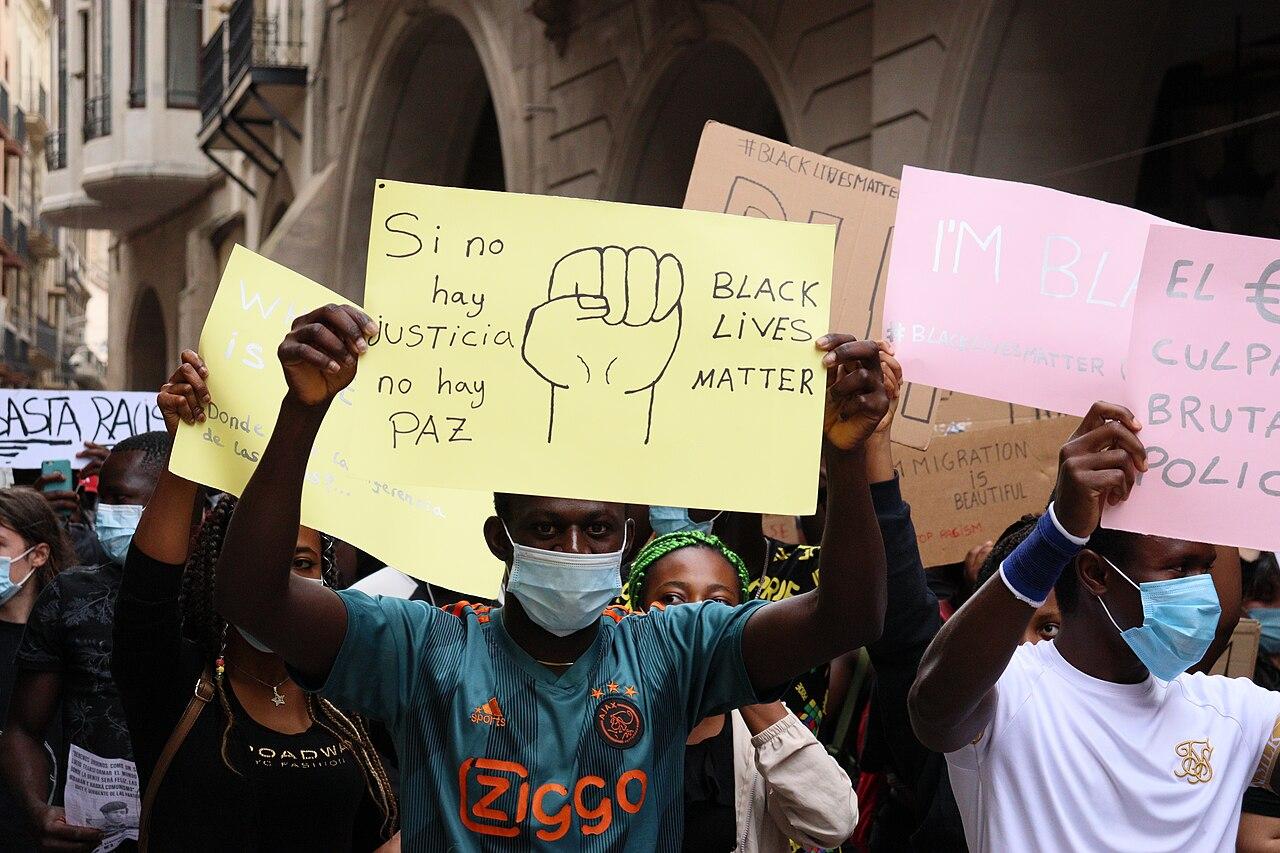
Spain has adopted a landmark amendment to legislation to regularise undocumented foreigners living in the country. This represents a departure from current migration policy in the EU and elsewhere by shifting the focus from administrative exclusion to social cohesion and economic benefits. The measure also addresses the informal economy by granting work and residence permits to foreigners in Spain, and regularising migrants’ status without needing a pre-existing formal job offer.
Royal-Decree 316/2026 is an extraordinary result of a citizen-led initiative supported by the Spanish government for diverse reasons, including the positive contributions of migrants to the country’s economy. It is expected to award legal residency and a work permit of up to one year to an estimated half million migrants in 2026.
However, publication of the final draft has prompted concerns about the exclusion of stateless people and unaccompanied minors who hold papers that contradict their date of birth. Operational shortcomings have also been highlighted – revealing the need for more comprehensive regularisation measures that prioritise human dignity over economic value.
Spain’s regularisation: what’s the big deal?
In April 2024, Regularización Ya! took a proposal to Spain’s Congress of Deputies to consider a legislative amendment that could grant residency and work permits to undocumented foreigners living in Spain. The proposal was backed by more than 600,000 signatures and 900 organisations and was accepted for consideration as deputies voted 310-33, with only far-right party Vox voting against.
On 27 January 2026, the Spanish government adopted the amendment enabling undocumented migrants to access legal status. Spain’s Minister of Inclusion, Social Security and Migration, Elma Saiz confirmed that existing immigration laws will be amended by Royal Decree, granting final approval to the Executive and bypassing further parliamentary debate. Hundreds of migrant groups and prominent Catholic associations, who campaigned for the initiative, welcomed the news. Official estimates reported that 500,000 people contributing to Spain’s growing economy could benefit from this initiative.
Spain’s regularisation is available to foreign nationals without criminal records and who can prove they lived in Spain for five months prior to 31 December 2025. Applicants who are in the process of seeking international protection must demonstrate that their application was submitted before the 31 December 2025. The Royal-Decree was published on 15 April, with a deadline for applications just two months later, on 30 June – which civil society organisations have criticised for being insufficient time for potentially hundreds of thousands of people to apply.
Responses from opposition parties
While the measure was mostly welcomed and considered “good news”, conservative and far-right parties raised concerns. The leader of the conservative Popular Party, Alberto Núñez Feijóo, said that the measure will “increase the pull effect” and “overwhelm [Spain’s] public services.” Vox’s leader Santiago Abascal went further in saying that this is “a new crime of [Spanish Prime Minister] Sánchez that directly attacks sovereignty and coexistence.”
The criticism continued, with Vox decrying the measure as “encouraging the pull effect” and a “substitution of census”, and Popular Party arguing that regularisation “is not a distribution of documentation but a distribution of ballots.”
It is important to note that this extraordinary measure does not grant migrants voting rights, and only Spanish nationals can vote in regional and national elections. The spread of disinformation around the decree was contested by the Minister of Inclusion, Social Security and Migration, Elma Saiz.
Regularisation of undocumented migrants: A long-lost friend
This extraordinary measure might appear innovative, but it is not the first time the Spanish government regularises undocumented migrants – nor the first time initiatives of the kind have been implemented across the EU. Regularisation has been undertaken in Spain six times since the establishment of democracy in 1978. Both socialist and conservative governments have legalised the status of more than 1.2 million immigrants between 1986 and 2005. Across the EU more than 40 regularisations were initiated since the 1990s, with the latest initiatives implemented by Italy in 2020 and Portugal in 2021. This data shows that regularisation of undocumented migrants is a consolidated practice and thus, a long-lost friend.
Key aspects to consider in the regularisation of migration include setting clear goals and rationales, which differ across nations and can leave some migrants without entitlements. Kate Brick indicates that “some are for entire immigrant groups, others only for workers in a specific sector” or that some offer temporary status while others permanent. residence Importantly, Geraldine Asiwome Adiku noted that “simplifying processes of regularisation enables migrants to lead better lives.”
Recent regularisation programmes have generally focused on economic gain and boosting labour shortages, rather than the welfare, autonomy, and security of migrants. Spain’s regularisation emphasised economic and legal grounds for the measure – including migrants’ rights and social justice.
Shortcomings of the Spanish Royal-Decree 316/2026
One of the most contentious shortcomings of the announced regularisation is that it excludes stateless people, impacting the Sahrawi community, who lodge the most applications of statelessness in Spain. The reasoning for this is justified by the specific protection frameworks for stateless people which are in place through Royal-Decree 865/2001. While Article 11.1 of the decree indicates that stateless status determination will last no more than three months, evidence suggests that it can take up to three years. This exclusion came as a shock to advocates, since previous drafts included stateless peoples.
The regularisation is underpinned by an assumption that undocumented migrants in Spain are in a vulnerable situation – therefore requiring them to provide a certificate to demonstrate this. However, difficulties have emerged for those aiming to obtain it. Catalan entity Arrels argues that this requirement leaves homeless people without proof due to a lack of fixed address. This also poses a challenge for seasonal workers who split time between Spain and their home country, and for those who move for work between Spanish regions without registration with local authorities. The €40 payment for applications is also a barrier for those without financial capacity.
All applications require a certificate of criminal records from the country of origin and/or the countries where the person lived for five years before arriving in Spain, which can present an additional challenge. Individuals with criminal records or with pending expulsion or deportation orders do not qualify for regularisation. Yet, there are 3,500 migrant pre-trial detainees who might be able to apply, since they are in custody without conviction.
Another shortcoming is the exclusion of unaccompanied minors who possess two documents contradicting their date of birth. This could affect around 2,500 young people in Spain. While some have passports indicating that they are minors, physical tests undertaken by the Attorney General, and criticised by international organisations, may indicate that they are older. This has left some people homeless because they lack a legal guardian authorisation to access education, accommodation, and medical services.
Several operational issues have also emerged, including the limited number of appointments available for social services, the need to open alternative venues to absorb the large number of applications, and confusion of applicants due to lack of information. Some applicants have been sleeping outside city halls to access an appointment as they were afraid of missing the deadline. Civil society organisations have been working to bridge these gaps.
Another key shortcoming is the short-term nature of the permits offered – which risks returning many to unauthorised limbo in future. Adult beneficiaries will be granted an initial one-year residence and work permit, with children receiving five-year permits. Applicants might be able to extend these, but there is a lack of information about routes to permanent status. Thus, regularisation is an entry point to legal status, not permanent residency.
Beyond economic benefits, migration is a human right
Spain is one of the few nations in the Global North that has conveyed the importance of immigrants for the economy. Evidence shows that Spain’s economy has been performing well with a GDP growth of nearly 3% in 2025. Spain’s unemployment level dropped to 10.5% last year – a significant improvement from 26.1% in 2013. The Spanish government projects that regularisation will positively contribute to economic growth by enabling migrants to work with rights, pension contributions, and judicial security.
But economic benefits should not be the end goal. Under Articles 13 and 14 of the Universal Declaration of Human Rights, migration is a human right – everyone has the right to leave any country and to seek asylum. This initiative is significant, but the decree falls short of adequately addressing these rights. Scholarship examining the potential of regularisations shows that these initiatives are often demand-driven, with economics no doubt a primary motive of this decision.
A better approach to regularising undocumented migrants should focus on offering both temporary and permanent solutions, as well as considering alternative options for immigrants who might not be able to contribute to the labour force. Conflicts and human rights abuses around the world continue to force people to migrate – host countries must be prepared to adequately protect populations seeking sanctuary and economic stability.
Any comments about this post? Get in touch with us! Send us an email, or find us on LinkedIn, Bluesky and Instagram.
How to cite this blog post (Harvard style):
A. Cabada. (2026) Stepping out of the ordinary? Spain’s regularisation of undocumented migrants. Available at:https://blogs.law.ox.ac.uk/border-criminologies-blog/blog-post/2026/05/stepping-out-ordinary-spains-regularisation. Accessed on: 18/10/2026Keywords:
Migrant workers
Share:
With the support of