Deportation as gendered violence: Afghan women’s experiences at the Iran-Afghanistan border
Afghan women have been exposed to severe forms of violence at the border, after Iran initiated a major crackdown on migrants
Posted:
Time to read:
5 Minutes
Neela Hassan is an Afghan refugee and a PhD candidate [ABD] in the Department of Sociology and Legal Studies at the University of Waterloo in Canada. Her research examines the intersection of immigration status and domestic violence through post-colonial feminist and critical race theory, with a focus on immigrant women’s experiences in Canada.
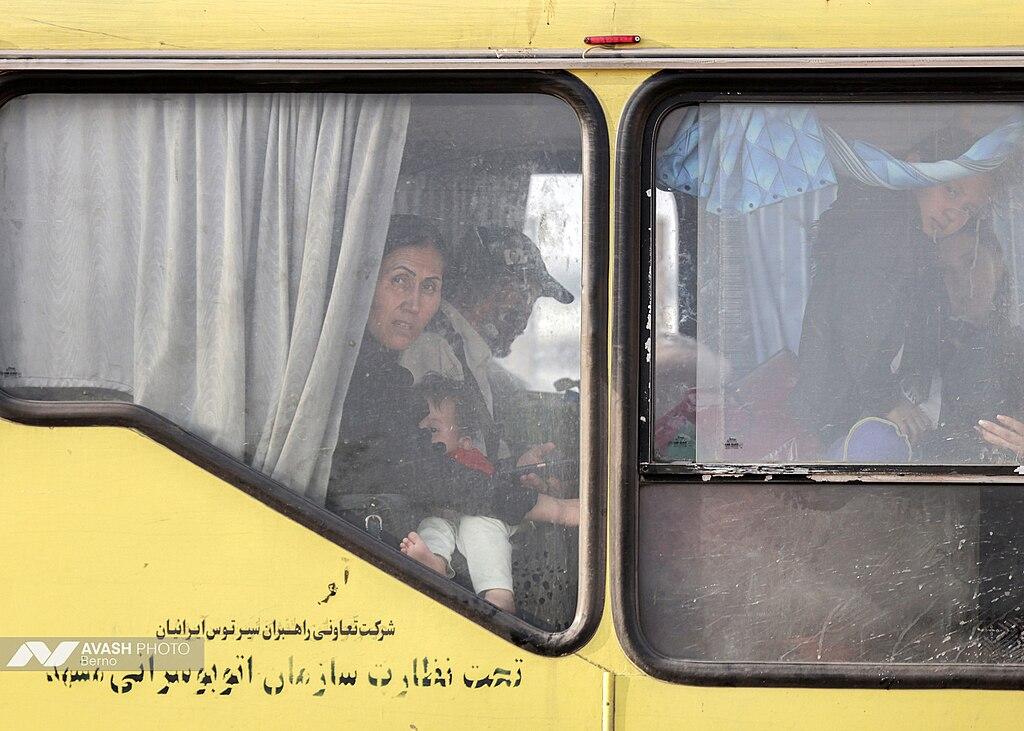
Since Iran began cracking down on undocumented Afghan migrants in 2024, women have found themselves at the sharp end of their hostile border policies. A qualitative analysis of 40 publications from humanitarian and human rights organisations found that women faced heightened vulnerabilities during detention and deportation, reflecting serious violations of international refugee and human rights law that expose women to severe forms of violence and abuse.
Following the Taliban’s return to power in Afghanistan in 2021, Iran adopted increasingly restrictive immigration policies toward Afghan refugees – a shift largely driven by growing anti-Afghan sentiment among government officials and the general public. The country that was once the largest host of Afghan refugee populations in the world announced in 2024 that it would revoke bargeh sarshomari (census slips) – documents that had provided protection to over two million Afghans.
Following this directive, in May 2025, the Iranian government declared that four million undocumented Afghan migrants, including those with census registration papers – which had previously served as a form of temporary status – were required to leave the country by July 6. The majority of Afghans in Iran remain undocumented, due to the significant lack of long-term pathways to regularisation in the country.
As a result of these policy changes, the monthly number of deportations and forced returns has risen sharply throughout 2025. According to reports from the United Nations High Commissioner for Refugees (UNHCR), between April and October 2025 alone, approximately 1.5 million Afghans were deported from Iran, with deportations accounting for about 65% of all returns. The reports do not provide a breakdown of how the remaining number of people returned.
Of the total undocumented Afghan returnees recorded by the IOM, 8% were women, 21% were children, and 71% were men. Most women were recorded to be travelling as part of family groups. In this context, the category of “undocumented returnees” refers to both forced deportations and voluntary returns. Many Afghans returned “voluntarily” in response to the Iranian government’s deadline, in order to avoid the risk of arrest and detention. It is important to note that these figures reflect only the number of recorded returnees documented by UN agencies at border crossings, not the total number of people returning, which is likely to be higher. Research shows that women deportees often experience heightened fear of harassment at the border, and without someone they trust or feel safe with, many decline assistance offered by government and humanitarian agencies, resulting in their underrepresentation in official data.
This article is informed by qualitative analysis of reports from NGOs, including international humanitarian and human rights groups, concerning the experience of Afghans deported from Iran between August 2021 and October 2025. The findings draw on 40 publications (including annual and special reports, policy briefs, response plans, snapshots, and updates) from eight organisations. The organisations include United Nations agencies such as International Organization for Migration (IOM), United Nations High Commissioner for Refugees (UNHCR), United Nations Entity for Gender Equality and the Empowerment of Women (UN Women), as well as the Center for Human Rights in Iran, and local advocacy organizations such as Zan Times. These organisations were selected for their political independence, long-standing support for Afghan refugees – including assistance at the zero point (the unofficial border line where people are dropped off, pushed back, or arrive without having official travel documents) – and their evidence-based reports on the vulnerabilities of Afghan women and girls since the Taliban’s return.
The findings indicate that women face heightened vulnerabilities during arrest and deportation, experiencing discrimination and harassment by police and border authorities, along with a lack of, and/or denial of basic services such as food, water, healthcare, and sanitation. In detention centres, where migrants are held until they pay the required travel fee to Iranian authorities, women endure overcrowded and inhumane conditions and, in many cases, sexual harassment and humiliation.
Although the Iranian government claims that Afghan refugees are deported due to a lack of documentation, both the act of deportation to Afghanistan (given the Taliban’s restrictions on women’s rights) and the manner in which deportations are carried out, reflect a form of state violence against women. Amnesty International states that Iran’s mass expulsion of Afghan migrants, especially women and girls who face gender-based persecution and serious risks to their lives and rights in Afghanistan, constitutes a violation of international law. The Center for Human Rights in Iran also notes that returning Afghan migrants without an individualized review violates due process under international human rights law and goes against the principle of nonrefoulement.
Abuse and mistreatment
All organisations referenced in this study point to the mistreatment and harassment Afghan refugees experience at the hands of Iranian authorities, specifically by the police during arrests and in detention centers, as well as by border police at the Iran-Afghanistan border. According to the UNHCR Emergency Response report published in July 2025, approximately 68% of Afghan returnees from Iran reported experiencing harassment during their journeys or upon arrival. The mistreatment includes verbal abuse, physical violence, threats, and denial of basic rights, such as the ability to inform loved ones about their arrest or the opportunity to collect personal belongings and essential documents before deportation.
The findings suggest that women experienced distinct and, at times, severe forms of mistreatment, abuse, and neglect in detention centers. Several reports include testimonies from deported Afghan women, revealing experiences of mistreatment and sexual harassment. One woman described her ordeal, saying:
The officers shouted things like ‘Get lost, you sons of bitches, dog bastards’ and threw us out of the hall. The officers shouted insults at us [...] We were treated shamefully. Some women were even groped.
Mistreatment and sexual harassment of women were also confirmed by interviews conducted by the Gender in Humanitarian Action UN Working Group in Afghanistan, in which women who had been returned reported fear and distress due to abuse and harassment experienced at border crossings. It is important to note that in these contexts, and given Afghanistan’s deeply conservative culture, most cases of sexual assault go unreported. The absence of testimonies does not necessarily mean the abuse did not occur. Rather, as Ussher and colleagues suggest, it is often cultural shame, social stigma, and fear of judgment that prevent survivors from sharing their experiences.
Pregnant women and female-headed households
At border crossings and upon arrival in Afghanistan after deportation, pregnant women and female-headed households encounter multiple overlapping vulnerabilities, intensified by uncertainty over how to secure even the most basic family needs. For example, during deportation, women without a Maharam (male guardian) are often exposed to harassment and mistreatment by Iranian authorities. These fears are echoed in testimonies collected by Zan Times, where one woman described her experience during her deportation and the crossing into Afghanistan: “We stood in line for hours. The Iranian officers would laugh at us. They’d pass our passports around to different officers just to prolong our suffering. One even told us outright that they enjoyed making us wait”.
Similarly, according to UNHCR’s Border Monitoring Report, many pregnant women are held in camps without essential services – including food and water – before being forcibly deported to Afghanistan. Focus group interviews conducted by UN Women in Afghanistan further reveal that pregnant women face particularly dangerous conditions on this journey, with some women reporting suffering early pregnancy loss during the return process (both among those who were deported and those who returned ‘voluntarily’). In one account, a 24-year-old pregnant Afghan woman described being confined in a stifling space with hundreds of others, saying: “I fainted often. I had no medical care. My four-year-old son was sick, but I couldn’t get him medicine. We had nothing”.
Together, the reviewed reports highlight how deportation and forced return exacerbate women’s vulnerability to gender-based violence perpetrated by both state and non-state actors. In the case of the mass deportation of Afghans from Iran, this vulnerability is intensified by the absence of legal protections on both sides of the border, the lack of comprehensive humanitarian assistance at key crossing points, entrenched patriarchal cultural norms, and the exclusion of women’s voices from humanitarian and media narratives. Addressing the mass deportation crisis in Afghanistan requires not only immediate humanitarian responses but also coordinated international efforts to share responsibility and implement structural reforms to support Afghan refugees.
Any comments about this post? Get in touch with us! Send us an email, or find us on LinkedIn and Bluesky.
How to cite this blog post (Harvard style):
N. Hassan. (2026) Deportation as gendered violence: Afghan women’s experiences at the Iran-Afghanistan border . Available at:https://blogs.law.ox.ac.uk/border-criminologies-blog/blog-post/2026/02/deportation-gendered-violence-afghan-womens-experiences. Accessed on: 19/10/2026Keywords:
Gendered violence
Share:
With the support of