Crimmigration control: Australia’s (over)regulation of unwanted non-citizens
Australia is using criminal law to control migrants on deportation pathways, in tandem with heightened immigration law restrictions – allowing them to circumvent constitutional law limits on detention
Posted:
Time to read:
6 Minutes
Guest post by Professor Peter Billings, TC Beirne School of Law, The University of Queensland. Peter teaches and researches in public law with a focus on immigration and refugee law.
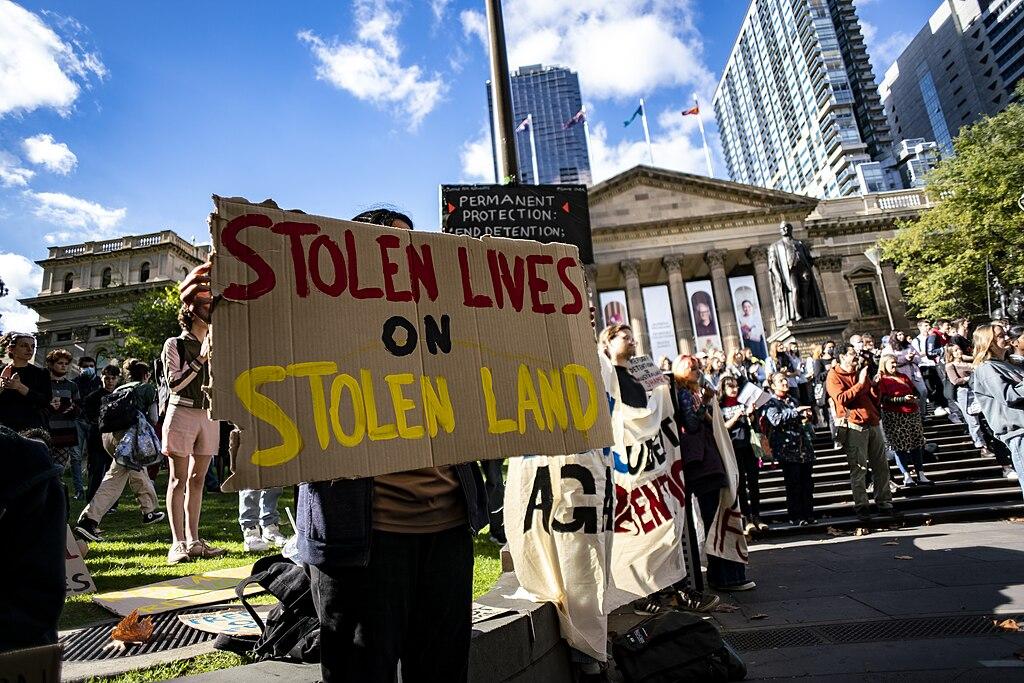
Recent rulings by the Australian High Court (HCA) have, essentially, placed time limits on the use of immigration detention and restricted other punitive forms of public power intruding on non-citizens’ liberty. In response, the federal government have legislated reforms that reveal new and troubling intersections of criminal justice and immigration enforcement. These are principally directed at non-citizens with criminal records (including refugees and stateless persons) who cannot be straightforwardly deported, nor held in immigration detention indefinitely.
This blog post complements Ananian-Welsh’s post on administrative power over “undeportable migrants” in Australia. I summarise part of an article, recently published online, that analyses stringent ‘crimmigration’ law reforms enacted in response to several seminal HCA rulings, protective of non-citizen’s liberty.
The Aftermath of NZYQ
As Anthea Vogl and I have previously argued, in NZYQ v Minister for Immigration, Citizenship and Multicultural Affairs (2023) the HCA decided the applicant’s indefinite immigration detention was unconstitutional where there was ‘no real prospect of the removal of the plaintiff from Australia becoming practicable in the reasonably foreseeable future.’ The ruling led, progressively, to the release of 358 immigration detainees by October 2025, and created a politically inconvenient gap in the federal government’s approach to intractable removal cases: i.e. seemingly ‘non-deportable’ non-citizens whose presence was unwanted.
The first legislative salvo, after the HCA issued ex tempore orders (an oral decision after the hearing) in NZYQ, enabled the government to impose strict conditions (including a night-time curfewand electronic monitoring) on temporary ‘bridging’ visas granted to those freed from detention. Additionally, breaching visa requirements was criminalised, exposing former detainees to the risk of significant gaol time, with a mandatory minimum 12 months for each proven offence. Crimmigration law exhibits its distinctive character here by denying its subjects proportionality in criminal punishment.
Soon after the HCA’s written reasons, in NZYQ, were published, came more amendments to the temporary visa scheme and a new community safety order (CSO) regime. The revised ministerial powers governing the imposition of strict visa conditions were ill-defined and ambiguous, and this lack of specificity in the rules proved to be the scheme’s downfall in the case of YBFZ v Minister for Immigration, Citizenship and Multicultural Affairs in 2024.
An extraordinary feature of the second suite of reforms after NZYQ, and a clear case of legislative overreach, was the measure permitting a state or territory Supreme Court to impose a CSO for the preventive detention or supervision of the most dangerous, non-deportable, non-citizens released from indefinite detention in the aftermath of NZYQ. The introduction of this CSO scheme came shortly after a critical review of a pre-existing preventive detention regime intended for high-risk terrorist offenders. The report’s author recommended abolishing the regime, stating the laws had made Australia a ‘coarser and harsher society’ without promoting community safety. At present, no preventive detention orders under the new CSO regime have been sought by the government and it appears to have effectively failed.
Legislating in haste to bypass a politically inconvenient court decision, as Twomey has suggested, risks creating and in this case did create, a “spiral of litigation and legislation”.
New Migration Laws to Pre-empt Litigation Outcomes
Early in 2024, the government tried, unsuccessfully, to rush through the Migration Amendment (Removal and Other Measures) Bill 2024. The ‘Removal Bill’ sought (inter alia) to address the intractable removals caseload. This was to be achieved by introducing behavioural expectations – around ‘removal’ directions given to non-citizens in detention or those with certain temporary visas, who had exhausted legal avenues to prevent removal – wedded to new criminal offences for those who refuse to comply and engage with official’s efforts to remove them.
The Australian government hurried to enact the bill due to their desire to get ahead of a pending case involving a ‘failed’ asylum seeker known as ASF17. The asylum seeker had been detained for almost ten years and was not cooperating with Iranian officials for his removal due to a declared (but unproven) fear of persecution. ASF17 argued removal was impracticable in the foreseeable future and so the limit established in NZYQ was reached.

In ASF17 v Commonwealth (2024) the HCA rejected this argument, and found that a person in the position of ASF17 who has the capacity to cooperate with administrative officials but voluntarily decides not to, may be kept in detention. The case demonstrates that the principles articulated in NZYQ do not yield a complete end to prolonged and indefinite immigration detention, and the government can lawfully detain a non-citizen refusing to cooperate. Approximately 200 people are in a similar position to ASF17.
The Removal Bill was, ultimately, assented to on 4 December 2024. It seems doubtful that the threat or actuality of criminal sanctions will coerce these detainees into compliance. As ASF17 explained in court, “If I didn't fear harm, I wouldn't have stayed in this camp for 10 years. I would have quickly gone back to begin with the first day. Who [...] will leave their family and prefer the prison?” Imposing an arbitrary minimum prison sentence on a non-citizen for failing to follow an administrative direction will further criminalise many held in immigration detention and within the wider community.
The Legislative Repercussions of YBFZ
In November 2024, YBFZ, a stateless refugee with a criminal history in Australia, challenged the constitutionality of visa conditions imposed on them after their release from detention following the NZYQ ruling.
By a majority, the HCA decided that imposing a nighttime curfew and electronic monitoring on YBFZ, were punitive conditions in substance and in effect. This was deemed unconstitutional by the court – contrary to the separation of powers which prohibits the executive from imposing punishment on people. The government immediately responded with new regulations supported by the Migration Amendment Act 2024, that adjusted the process for surveillance and monitoring conditions in line with the judicial reasoning in YBFZ.
Consequently, a new ‘community protection test’ was legislated for stipulating that the Minister for Immigration must be satisfied that the bridging visa holder poses a substantial risk of serious harm to community safety by committing a serious offence, and that each visa condition is reasonably necessary, and reasonably appropriate and adapted, for the protective purpose. Therefore, a more calibrated decision is now required, as opposed to visa conditions being presumptively imposed on a person (as in YBFZ’s case).
Significantly, the migration amendments also enabled the re-detention of non-citizens when the government reaches a financial arrangement with a third country to allow the non-citizen to enter and remain. In this circumstance, the minister must issue a notice which triggers visa cancellation. This cessation process renders a non-citizen unlawful and liable to immigration detention, because the third country agreement raises the spectre of removal being practicable in the reasonably foreseeable future, thus meeting the NZYQ threshold.
In February 2025, under an agreement (costing $2.5bn Australian dollars) between Australia and Nauru, the impoverished Pacific island offered 30-year visas to members of the NZYQ cohort.
The Latest Legislative Twist and Litigation
In September 2025, the Migration Act 1958 was further amended, via the Home Affairs Legislation Amendment (2025 Measures No 1) Act 2025, again targeting non-citizens on a removal pathway. The reforms, essentially, intended to reduce the scope for future legal challenges that might frustrate the swift exclusion of unwanted non-citizens. Presently, the legality of a removal decision taken pursuant to the arrangements with Nauru is under review by the HCA, in TCXM v Minister for Immigration and Citizenship.
One member of the NZYQ cohort, re-detained pending removal to Nauru under the new arrangements, stated:
These days are like living in a nightmare. I made mistakes since I came to Australia – I have been punished for those mistakes. I have tried everything to put my life back on track. I am not a young man – I cannot keep rebuilding my life. I do not know why Australia has selected me for this terrible punishment.
Australia: a case study in excessive crimmigration
In recent years, the Australian government has employed criminal law and immigration law in innovative, interchangeable and mutually reinforcing ways to (over)regulate a group of unwanted non-citizens. Australia has remobilised criminal law to control migrants on a removal pathway, in tandem with heightened immigration law restrictions, to circumvent constitutional law limits on immigration detention.
This coupling of visa restrictions and removal directions with new criminal offences and severe penalties – alongside the CSO scheme – exemplifies crimmigration control as an “‘instrumental panoply of laws, geared towards the exclusion of undesirable non-citizens, from which immigration officials may ‘cherry-pick’ at their wish”. The rapid legislative replies to NZYQ, ASF17 and YBFZ have underscored Australia’s position as a state at, or near, the global forefront of crimmigration controls.
Any comments about this post? Get in touch with us! Send us an email, or find us on LinkedIn and Bluesky.
How to cite this blog post (Harvard style):
P. Billings. (2026) Crimmigration control: Australia’s (over)regulation of unwanted non-citizens. Available at:https://blogs.law.ox.ac.uk/border-criminologies-blog/blog-post/2026/02/crimmigration-control-australias-overregulation. Accessed on: 20/10/2026Keywords:
Australia
Share:
With the support of