From Invisibility to Vulnerability: Twenty Years After Menezes and the Ongoing Erasure and Criminalisation of Brazilians in the UK
Posted:
Time to read:
3 Minutes
Dr. Thi Bogossian (they/them) is a Brazilian Teaching Fellow at the School of Global Development, University of East Anglia. Their work focuses on the intersections of migration, inequality, marginalisation, education, and childhood, with a strong emphasis on social justice.
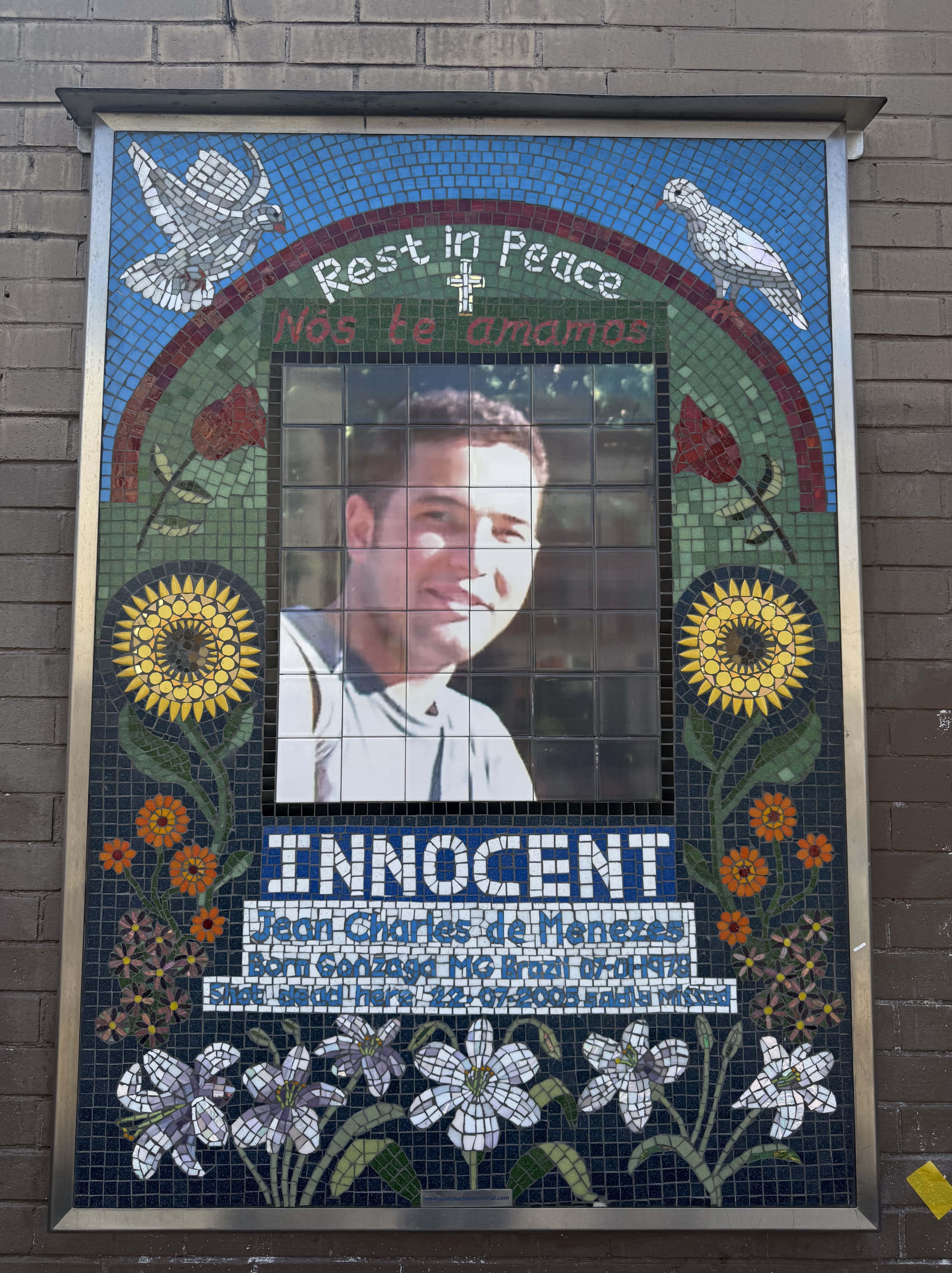
In July 2025, we mark twenty years since Jean Charles de Menezes, an unarmed 27-year-old Brazilian national, was shot eight times by Metropolitan Police officers at Stockwell station in south London. His killing, part of a counter-terrorism operation following the 7/7 bombings, became a symbol of racialised policing and state violence in post-9/11 Britain. The Met Police mistook him for a suicide bomber, noting he had “Mongolian eyes”. This event, now the subject of a fictionalised television series, marked the entry of Brazilians into public consciousness in the UK through the lens of state-led violence.
The killing of Jean Charles de Menezes exemplifies how racialised assumptions about threat become operationalised through policing. Menezes was misidentified, surveilled, and killed because he “looked suspicious”, an assessment based on the intersection of race, class, and migration status. The subsequent investigation revealed multiple institutional failures. Although the Met was fined £175,000 and ordered to pay £385,000 in costs after being found guilty of endangering the public, no individual was held accountable.
Detention and Deportation: Criminalising Brazilian Migrants
Two decades on, the structural conditions that enabled this tragedy not only remain largely intact, but have been further entrenched. In 2024, the Home Office deported more than 600 Brazilians, including 109 children, via charter flights, quietly and without public scrutiny. These removals took place under the current Labour government, which has committed to “efficient” border enforcement. While framed as voluntary returns, many of them were conducted in detention contexts under coercive conditions. One high-profile case that drew media attention involved a Brazilian family whose children, Guilherme, 11, and Luca, 7, were issued removal notices by the Home Office—even though their parents had been granted permission to stay in the UK.
In my advocacy work with detainees, I have documented first-hand accounts of Brazilians subjected to indefinite detention, medical neglect, and re-traumatisation. Many are survivors of torture, gang violence, or persecution in Brazil. Yet their asylum claims are often dismissed on evidentiary grounds that fail to account for the specificities of structural violence in their country of origin.
Lucas (name changed), who overstayed his visa and worked as a food delivery driver, was detained for several weeks in the UK without due process. He showed me burn marks on his legs from torture in Brazil. Denied trauma-informed care, he was also subjected to abuse by legal professionals who claimed to represent him. Despite suffering from health complications, no Portuguese interpreter was available. The only person he had close relationships in the UK was his wife who, fearful of being detained herself, was unable to visit him. Lucas’s experience is not isolated, it reflects systemic flaws in how the UK processes, and frequently discredits, claims from Latin American nationals. These claims are often dismissed on the basis of blanket assumptions that categorise Brazil as a universally “safe” country, overlooking the complex and uneven realities of violence and insecurity that affect different communities.
Community Presence
The killing of Jean Charles also drew attention to the growing Brazilian presence in the UK, particularly in London. Following diversification of migration patterns to Britain, Brazilians and other Latin Americans—despite lacking postcolonial ties—have established dynamic communities. Cultural spaces such as nightclubs, restaurants, and festivals celebrate Brazilian identity, while grassroots organisations have built robust infrastructures of support. Although some Brazilian migrants are highly skilled, many report being deskilled in the job market, experiencing gender-based violence, and facing exclusion and deportation under strict border regimes.
Organisations such as the Latin American Women’s Rights Service, Indoamerican Refugee and Migrant Organisation, and the Latin American Disabled People’s Project provide vital services in areas neglected by the state: legal advice, mental health support, housing advocacy, and community organising. Brazilian-owned barbershops and small businesses thrive in areas like Southwark, where persistent lobbying led the council to be the first to officially recognise Latin Americans as an ethnic category. However, this remains the exception rather than the norm.
At the national level, Latin Americans continue to be collapsed into “Other” categories in official data, despite being more than 250,000 and constituting a 395% increase in England and Wales between 2001 and 2021. The UK government’s failure to recognise Latin Americans as an ethnic group is not simply an oversight, but a form of institutional erasure. Without visibility in data and policy, Latin Americans are excluded from targeted funding, service provision, and policy reform. Invisibility, in this context, is a political condition that exacerbates vulnerability and enables abuse.
Concluding Remarks
As anti-immigration policies harden and hostile environment measures become increasingly normalised, Brazilian migrants in the UK face heightened suspicion, surveillance, and institutional neglect. The Labour government’s recently announced migration white paper proposes reducing legal migration routes, a move that will likely push more people into irregular channels. This will only deepen precarity, making it more difficult for migrants to access healthcare, report crimes, or claim employment rights.
These dynamics—racialised suspicion, bureaucratic indifference, and the denial of personhood—are not new. They are the same structural logics that enabled the killing of Jean Charles de Menezes and continue to place racialised migrants at risk today. While Brazilian communities have responded with resilience and self-organisation, recognition and justice require more than community-led efforts.
As scholars, practitioners, and members of the migration research community, we must interrogate how migration regimes manufacture vulnerability and amplify the voices of those who, like Menezes, are too often treated as collateral damage in the name of border control. Recognition is not just a matter of representation, it is a precondition for justice.
Any comments about this post? Get in touch with us! Send us an email, or find us on LinkedIn and BlueSky.
How to cite this blog post (Harvard style):
T. Bogossian. (2025) From Invisibility to Vulnerability: Twenty Years After Menezes and the Ongoing Erasure and Criminalisation of Brazilians in the UK . Available at:https://blogs.law.ox.ac.uk/border-criminologies-blog/blog-post/2025/07/invisibility-vulnerability-twenty-years-after-menezes. Accessed on: 15/10/2026Share:
With the support of