
Upper Tribunal remakes and narrows FTT remediation order
Robert Read is a lecturer in construction law at King’s College London.
Posted:
Time to read:
3 Minutes
This note considers the Upper Tribunal decision of Monier Road Limited and Blomfield and Others [2025] UKUT 157 (LC) in which a landlord successfully appealed against a remediation order made by the FTT, by challenging the breadth of the order. The order had required the landlord to rectify cladding and various other defects in relation to Smoke House and Curing House.
FTT raised points on its own initiative
In the FTT application, the leaseholders had only specified the cladding and combustible insulation in the courtyard as defects for which a remediation order was sought [para 19]. However, the remediation order made by the FTT included other purported defects which went beyond those contained in the application, such as the timber elements of the walkways and balconies [paras 32-33]. The landlord argued that, by doing so, the FTT had raised points on its own initiative in circumstances in which it was not entitled to do so. In addressing this, the Upper Tribunal highlighted that there were only three scenarios in which the FTT could make points of its own initiative. These were (a) where the point was about the FTT’s own jurisdiction, (b) where a statute required the FTT to raise the point and (c) in order to clarify a party’s case [para 41]. None of these applied here.
Further, even if the FTT was entitled to raise these additional items, it needed to follow an appropriate procedure, namely to consider allowing the applicant to amend its statement of case to cover the point and hearing from both parties as to whether that should be allowed and, if it is allowed, giving both parties the opportunity to make representations on the item [para 44]. The FTT did not invite the leaseholders to amend their pleadings, instead framing these additional items as “tribunal’s issues” as distinct from the leaseholders’ issues [para 50].
FTT not following expert evidence and using own expertise
The landlord also argued that the FTT had not followed the expert evidence. Instead, it relied on its own expertise without providing reasons for rejecting the evidence. In refusing permission to appeal the decision, the FTT referred to itself as an “expert tribunal”, taking the view that it was entitled to disagree with the expert [para 56]. However, the Upper Tribunal did not agree that the FTT was entitled to do so without giving reasons as to why its expertise led to a different conclusion than the evidence. Any such contrary view should have also been put to the witnesses so that they had the chance to address it [para 63].
For the above reasons, the Upper Tribunal remade the remediation order, limiting its scope to the defects identified by the leaseholders in their application.
No further clarification on whether a roof garden counts as a storey for the purpose of identifying whether a building is a higher-risk building
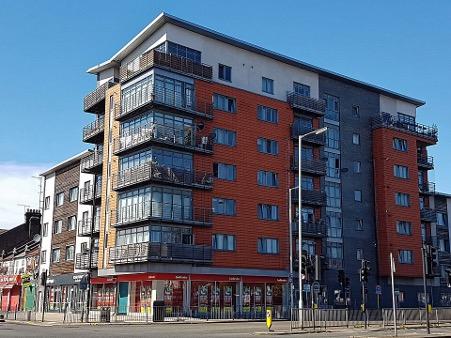
© Acabashi
In the earlier FTT decision, the FTT had also expressed a view that the roof garden counted as a storey and therefore that the building fell within the higher-risk building regime (see my commentary here). The FTT subsequently refused permission to appeal its earlier decision but in doing so stated that its comment had been “an expression of opinion, not a decision” and it accepted that it did not have jurisdiction to make a determination on this. There was, therefore, no appeal in relation to this statement. It follows that the Upper Tribunal’s comments on it are limited and the Upper Tribunal does not offer a view on whether it agrees that the building is a higher-risk building.
However, the Upper Tribunal does criticise the FTT’s decision to have given a view on this. In particular, it notes that “its public expression of its opinion in its decision, including its comments on government guidance, has doubtless caused concern and confusion for building safety professionals” [para 69]. This is particularly the case given that the decision contradicted previous Government guidance which had been issued clarifying that a roof garden did not count as a storey.
How has the Government responded to the FTT’s view?
Following the FTT’s decision, the Government issued a statement in October 2024 stating that they were considering the FTT’s views and that in the meantime the sector should refer to existing Government guidance (which provided that a roof garden is not a storey). The Government issued a further statement in May 2025 stating that they “are consulting the Building Safety Regulator and other relevant stakeholders on a proposal to amend the Higher-Risk Buildings (Descriptions and Supplementary Provisions) Regulations 2023 to make it clear that roof gardens should not be considered a storey when determining whether a building is a higher-risk building under section 120D of the Building Act 1984 and section 65 of the Building Safety Act 2022. In the meantime, the department’s view remains that roof gardens are not storeys for these purposes. This is the basis for current [G]overnment guidance, which the sector and regulatory bodies should continue to refer to.” This makes it clear that the Government stands by its guidance and disagrees with the view taken by the FTT. It remains to be seen whether legislation will be amended to clarify this.
What do we learn from this decision?
As mentioned above, the Upper Tribunal’s decision itself offers no clarity over whether a roof garden counts as a storey for the purpose of determining whether a building is a higher-risk building, although it is clear from later Government statements that the Government disagrees with the FTT’s view on this. Although the points relating to procedure before the FTT are not specific to building safety cases, they do illustrate the limits of the FTT’s jurisdiction and show how the FTT should proceed if it wishes to raise points which go beyond those covered in the applicant’s application.
Share: