
DPRU Q&As: Shahindha Ismail, Maldivian Democracy Network, The Maldives
Posted:
Time to read:
In this instalment of the DPRU's Q&A series with death penalty experts from around the world, DPRU Project Manager Daniel Cullen speaks to Shahindha Ismail, Founder and Director of the Maldivian Democracy Network (MDN), about her organisation's work on the death penalty, the current status of the death penalty in the Maldives, recent legislation to expand its scope to encompass drug offences, and the role of religious rationales in justifying its retention.
Please could you tell us about the work of the Maldivian Democracy Network (MDN) and where your organisation’s work on the death penalty fits within this?
The Maldivian Democracy Network (MDN) is one of the oldest human rights organisations in the Maldives. Despite more than two decades of work, civil society in the country remains very weak. Most organisations are run by small groups of volunteers, and the issues to be addressed far outnumber the adequately resourced organisations able to take them on.
MDN began its work after the 'Black Friday' mass arrests in 2004, which followed the violent crackdown on the first large-scale demonstration in 30 years. The demonstrators called for democratic reforms and the resignation of the then-president Maumoon Abdul Gayyoom.
We were originally registered in 2005 as the Maldivian Detainee Network and our work focused on detainee rights, police and prison reform, and judicial transparency. We built a network of detainees’ families and conducted nationwide public awareness campaigns on detainee rights – and later the Chapter of Rights. We were also part of a loose network of civil society actors that mobilised a voter education campaign ahead of the country’s first democratic elections in 2008, which took place a few months after the ratification of the current constitution. These were highly volatile times marked by political violence, disinformation campaigns targeting politicians, activists, and civil society, and frequent arrests of anyone criticising the government.
Following the ratification of the democratic constitution in 2008, MDN amended its statutes to broaden its mandate in support of the democratic transition and rebranded as the Maldivian Democracy Network. This change allowed us to work with the Chapter of Rights of the constitution. We began working on the topic of the death penalty in March 2014 when a new regulation on the death penalty - Regulation on Conducting Investigations into and the Implementation of Penalties Arising from Intentional Murder (2014/R-33) - came into force. Until then, the Maldives had enjoyed an 'unofficial moratorium' under which death sentences were automatically commuted to life imprisonment (25 years). The new regulation appeared to coincide with the trial of a young man accused of murdering a sitting Member of Parliament and religious scholar, Dr Afrasheem Ali, in October 2012. The case is riddled by allegations of political motivations and a questionable judicial process which I have addressed previously. MDN advocated to protect the life of the accused and two other death row prisoners whose sentences were confirmed by the Supreme Court shortly after.
The Maldives is an ‘abolitionist de facto’ state which has not carried out an execution since the 1950s, but where death sentences are still imposed. What explains this historic pattern of retaining the death penalty without executions?
The 'abolitionist de facto' label is confusing and does not reflect the reality in the Maldives. The death penalty has always been part of the country’s legal system as a measure of compliance with Islamic law. In fact, our constitution requires all laws of the land to comply with the tenets of Islam.
As I mentioned, death sentences were always (in the past) commuted. The question of execution never arose until former president Abdullah Yameen Abdul Gayyoom (in office 2013-2018) decided to push for executions. This sudden change in policy highlights how problematic the abolitionist de facto label can be. The Maldives is currently an 'abolitionist de facto' state that has built a gallows, is training executioners, has extended the death penalty to more crimes, and currently has a bill on the death penalty in parliament. It could hardly be further from abolitionist. The danger of the label is that it conceals the state’s real intention to kill and it allows governments to move from their responsibility to protect a life to taking a life within seconds, with no process, no notice, and no room for negotiation.
Despite everything, no executions have been carried out so far. Until now, in the absence of an enabling law, implementation has remained at the discretion of the President of the day. Should the bill currently in parliament be passed and ratified, it will no longer be up for debate.
There are currently 20 prisoners on death row in the Maldives, three of whom have had their sentences confirmed by the Supreme Court. Could you describe the conditions that death-sentenced prisoners live under in Maldivian prisons?
These numbers recently increased, as the Supreme Court confirmed the death sentence of a fourth man on 8 November 2026.
In 2019 I had the rare opportunity to meet and speak with all three prisoners whose death sentences had been confirmed by the Supreme Court. I was conducting prison monitoring visits in my capacity as a member of the Prison Audit Commission. Before I was taken to the high security prison block where all three young men were held, prison guards informed me that two of them had refused the daily 30 minutes of recreation in the open yard of the prison. The third was not allowed outside due to risk of violence and self-harm.
Speaking to two of these prisoners separately, they told me that they had no desire for recreation when they were awaiting death every moment of every day. They told me not to waste my time on them since they expected to be hanged any day. However, they changed their minds when I explained that an unofficial moratorium was in place, and what it meant. I also explained to them that Islamic law required a lengthy process of psychological evaluation, assurance of a fair trial, and mediation with the family of the victim, which could potentially result in the withdrawal of qisas (the Islamic legal principle of retribution, under which families of murder victims can demand the death penalty). They were both surprised by this new information – even shocked. With renewed hope, they requested support and asked me to continue our advocacy on their cases. I had a similar conversation with the third prisoner.
By withholding information directly related to their sentences, the authorities had left these prisoners to suffer for over two years prior to this point.
Additionally, under prison rules, people convicted of intentional murder or those held in high security blocks of the prison are not eligible for work within the prison system. This also means that those whose death sentences are confirmed are unable to support their families, and forced into perpetual waiting for their deaths. I believe this kind of treatment constitutes torture and cruel treatment or punishment.
Can you tell us about one of the most notable capital cases that you/MDN have been involved in?
We were deeply involved in the case of Hussain Humaam Ahmed, the first person whose death sentence was confirmed by the Supreme Court (in 2016) after Regulation 2014/R-33 was enforced. Our attention was brought to this case by comments from the government alluding to an imminent execution. Humaam was 22 years old at the time and had spent most of his adolescent life inside the juvenile justice system. Branded a lifelong criminal at a young age, he did not have the privilege of political or any other kind of support.
We monitored his trial, including the Supreme Court hearings, and one thing was absolutely clear: it was not a fair trial. Early in the proceedings, Humaam had reported that he had provided a confession under duress and named powerful politicians who he claimed had been involved in the murder he was accused of. He never pretended that he had not been involved in other violent crimes, but he insisted that he was innocent of the murder for which he was accused and later convicted.
Over several hearings (and during my meeting with him) Humaam described prolonged solitary confinement and incidents that amounted to torture. What stood out most were his references to the voice of the murder victim, which he claimed to hear frequently at night. Some prison guards corroborated these descriptions, saying that Humaam often suffered hallucinations and had attempted to take his own life several times.
One of our key demands was an independent psychiatric evaluation of Humaam before the trial proceeded, to determine whether he was fit to stand trial. To my knowledge, no psychiatric evaluation was conducted at the time of his arrest, which was shortly after the murder would have taken place. Such an evaluation would have helped to establish his state of mind at the time the state claims he committed the crime. The government insisted on a specific psychiatrist about whom psychosocial health advocates and former clients alike have raised concerns. The prison authorities did not disclose Humaam’s medical records with his family, reserving the contents and any findings in the report to the state only.
Equally concerning, the court proceedings did not respect the processes set out in Islamic law. For a death sentence to be confirmed or carried out, Islamic law requires all immediate heirs of the victim to declare qisas and if the heirs included children below 18, that the process should be postponed until all heirs turned 18. The youngest son of the murder victim was a child at the time and therefore ineligible to decide on qisas at the time – yet the sentence was passed regardless.
A second issue concerned the Supreme Court’s confirmation of the sentence. One of the adult heirs of the murder victim sent a letter to the Supreme Court, shortly before the final hearing began, clearly stating his wish to withdraw his decision to seek qisas in the case. Despite the court’s receipt of the letter, which was witnessed by several people, including myself, the verdict was heard and the sentence confirmed.
MDN called for a retrial and compiled a report setting out the justifications for one, a copy of which was also sent to all the relevant state institutions. We were sadly forced to take the report down from our website following heightened pressure from the government and non-state actors.
To what extent is the death penalty an issue that is discussed in domestic political and media discourse at present?
Opposition to the death penalty remains a taboo subject in the Maldives, expression of which carries serious risks including violence. Although the topic remains mostly undebated, the media has begun factual reporting on recent developments including the introduction of the death penalty against drug smuggling (December 2025) and the submission of a bill on the death penalty (November 2026).
Anyone who opposes the death penalty risks being labeled 'anti-Islamic' or a 'blasphemer', and no one wants to be targeted in this way. Interestingly, however, in 2016 when Humaam’s execution appeared imminent, we spoke with hundreds of people while collecting over 800 signatures for a petition calling on the president to halt the execution. Almost everyone we spoke with said they did not believe the government would actually go through with an execution, and many said that even if they did not oppose it publicly, they did not support the executions.
In 2025, the Maldives adopted legislative amendments extending the death penalty to certain drug offences. Why has this happened, and do you consider it a sign of the possibility of resumption of executions?
Drug trafficking and drug abuse have plagued the Maldives since the 1990s. Successive governments have failed to make adequate interventions to prevent drug trafficking or to support users with effective rehabilitation. Because the Maldives has a majority youth population, it is unfortunately young people who get caught up in both drug use and trafficking offences.
These issues carry significant stigma, and the government has made little effort to address the social problems that drive young people to drug related offences. Youth unemployment, for example, has increased steadily over the years. Policies pushing centralisation have also forced families and young people from across the country to move already congested cities including the capital, Malé, which is a hub for drugs. Rather than taking effective steps to identify and prevent leaders of drug cartels from conducting this trade, the government appears intent on catching the drug mules who, more often than not, are desperate to earn some money. This approach will never solve the drug problem, but it will certainly normalise the death penalty.
In this context, I believe the government is targeting one of the most neglected groups in society to justify the death penalty and win public support for it.
What are the main justifications for capital punishment among domestic political leaders who support its retention?
The main justification has always been Islamic law. I believe that governments have benefited from the unofficial moratorium: they are considered abolitionist de facto by the international community, while still opposing abolition and using the death penalty to target individuals.
The government has used different rationales to maintain the status quo. At the Maldives’ Universal Periodic Review (UPR) at the UN in 2020, the Attorney General stated that the death penalty could not be abolished, but that the government was not ready to implement executions until the judiciary could be reformed – an indicator that is difficult to measure.
Islamic law no longer justifies the insistence of the Maldivian politicians on retaining the death penalty. The 2025 amendments to the Drug Act, which introduced the death penalty for drug smuggling, have never been justified with reference to Islamic law. Instead, President Mohamed Muizzu has announced that the Maldives will follow Singapore as an example on this issue. Sadly, no one seems to have noticed how quickly the Maldives has moved from treating the death penalty as a mandatory penalty for intentional murder under Islamic law to treating it as the best solution to drug smuggling because of the Singapore model.
Unsurprisingly, no politician has used the religious argument to justify the death penalty for drug smuggling – simply because there is none. This shift should be obvious to the public. However, open debate about the death penalty appears still to be considered risky, so it is not a topic of discussion. With no counter arguments from the media or public, the government will likely rush through legislation to begin executions, in a similar manner to how other regressive legislation has been implemented in the past.
What do you think are the prospects of full abolition of the death penalty in the Maldives in the coming years?
I believe we are very far from even discussing abolition. Even after several other Islamic majority states have abolished it, calls for abolition on the Maldives are often met with harder reactions – for example, when advocates called on the Maldives to vote in favour of the UN resolution on a moratorium in 2024, rather than asking for abstention, the Maldives voted against it. This is despite having a record of abstention and even one vote in favour in previous votes.
We have also moved further away from the long-held 'unofficial' moratorium, which sets us back more than 70 years. If, or rather when, the bill on the death penalty is passed and ratified, we will have to start from zero and work towards a moratorium again.
What are the biggest challenges you face as an organisation working on the death penalty in the Maldives?
The political price of opposing the death penalty in the Maldives is being labeled anti-Islamic, which carries the threat of persecution as well as violence from non-state actors. Being labeled and targeted as an anti-Islamic organisation has been our biggest challenge. It not only puts us in danger of violence but also undermines the legitimacy of the information we disseminate for the purpose of public education. It becomes very hard to engage with people who believe that we have an ulterior agenda to wipe out Islam, which we most certainly do not. When the state turns its dis/misinformation machinery on a small NGO, there is little we can do to counter it or protect ourselves on our own.
In 2019 the Maldivian government arbitrarily deregistered MDN, seized all our funds from our organisation’s bank accounts, and officially declared an extrajudicial death sentence on me and some of my colleagues at MDN. These actions came after a violent smear campaign accusing us of blasphemy and apostasy, and inviting violent threats against us.
Despite these actions against us, and despite being forced into exile, MDN continues to be the only organisation consistently opposing the death penalty, promoting the right to life, and monitoring the ground for advocacy needs.
What motivates you to continue working on the death penalty and human rights issues?
The short answer is that I feel a sense of duty to continue my work. There is no other right without the right to life. I strongly believe that no human being may take the life of another, be it on the streets at the hands of a violent gang or on the order of a judge. I believe that we have enough non-lethal tools to find remedies within the criminal justice system.
The longer I work in human rights and the more I engage with people who have experienced the worst kinds of deprivation of their rights, the stronger I feel that I must continue. Besides, as someone who has experienced serious violations of my rights, I know how it feels to be supported, and I will continue to give that support to anyone I can, whether in a small way or by doing my part to save a life.
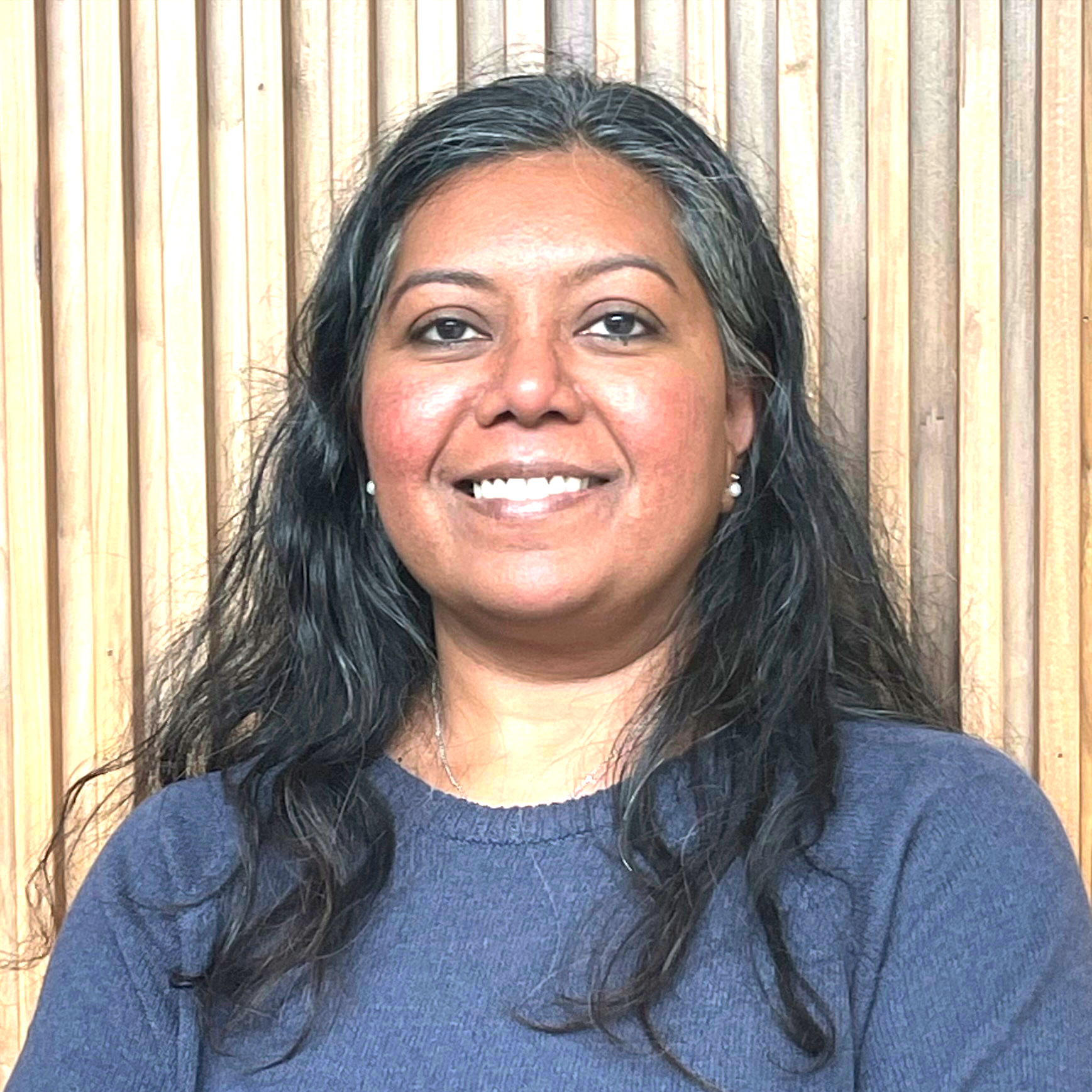
| Shahindha Ismail is the Founder and Director of the Maldivian Democracy Network (MDN). She holds an MA in Human Rights from the University of London and has been undertaking advocacy work in in the Maldives and South Asia for over two decades. Following a violent smear campaign against MDN which ended with the arbitrary de-registration of the organisation, Shahindha and her colleagues were forced to seek political asylum in 2020. She continues to run MDN in exile from Germany. She was elected as a Secretary-General of the International Federation for Human Rights (FIDH) in October 2025. |
Share: