
When opposition becomes treason: Capital punishment and 'sovereign anxiety' in sub-Saharan Africa
Posted:
Time to read:
When former President Joseph Kabila was sentenced to death for treason in the Democratic Republic of Congo in September 2025, he became the thirteenth former head of state in postcolonial sub-Saharan Africa to face capital treason charges. Much of the region is abandoning capital punishment, with seven countries abolishing the death penalty for ordinary crimes since 2020. Yet its retention for treason offences has remained remarkably resilient. My recent article, ‘Treason, Punishment and Postcolonial Insecurity in sub-Saharan Africa’, published in Punishment & Society, examines why the death penalty for treason has maintained political significance, even as the region has moved increasingly towards abolition.
The exceptional status of treason is not unique to sub-Saharan Africa. Historically, countries have often abolished the death penalty for ordinary crimes while retaining it for offences against the state. The United Kingdon, for example, took almost three decades after abolishing capital punishment for murder to abolish it for treason. What is different about the retention of capital treason in sub-Saharan Africa is the fact it isn’t retained merely as a symbolic law: it has continued to be deployed, specifically in response to threats against state power. Since independence, death sentences for treason have repeatedly followed coups, attempted coups, insurgencies and other challenges to governments. I have proposed the concept of ‘sovereign anxiety’ to explain how challenges to the authority of the ruling party are treated as threats to the state itself. I argue that when governments repeatedly face challenges to their authority, the boundary between protecting the state and protecting the people governing it can become blurred: a threat to the ruling party becomes conflated with a threat to the state itself, resulting in the use of capital treason laws to manage political opposition.
Postcolonial state insecurity created the political conditions in which treason laws operate. At independence, African states inherited political and legal institutions that had been designed for colonial control rather than consensual rule. Colonial governments frequently relied on coercive means to enforce their authority, and capital punishment formed part of this repertoire. At independence, nascent states were left with the task of building nation-states within colonially bequeathed borders, amalgamating people and cultures who were united by little more than geography, frequently relying on militaries and state structures from colonial rule to enforce their control. Some managed this better than others. Tanzania, for example, under the skilful leadership of Julius Nyerere, dismantled the colonial make-up of the army, and ensured the military remained under civilian control. Tanzania has never experienced a successful coup. Although people have been sentenced to death for treason, nobody has been executed for the offence on the mainland.[1] Uganda, by contrast, followed a different trajectory. Political authority became entwined with military power after independence. The country experienced a series of military takeovers, and treason charges have frequently been brought against political opponents, with a number publicly executed. These contrasting experiences suggest that colonial inheritance alone does not explain the persistence of capital treason. What matters is how those institutions interacted with postcolonial state-building, military power and political legitimacy.
These conditions gave rise to coups, insurgencies and repeated challenges to political authority for many sub-Saharan African states. 80% of countries in the region have experienced at least one coup or failed coup attempt, and 61% have suffered several military coups. Treason, in turn, became an important means of responding to perceived threats to the state. Treason offences were often removed outside the criminal justice system, and instead tried in military courts or special tribunals, where there were few, if any procedural protections or opportunity for appeal. This made the death penalty more readily available for crimes against the state. Following coups, this could produce rapid transitions from political defeat to conviction and execution. After Liberian President William Tolbert was overthrown in 1980, thirteen former government ministers were tried for treason and publicly executed. In Equatorial Guinea the previous year, deposed President Francisco Macias Nguema and six others were executed only hours after conviction by a special military court. Such executions served to publicly demonstrate the authority of the new regime.
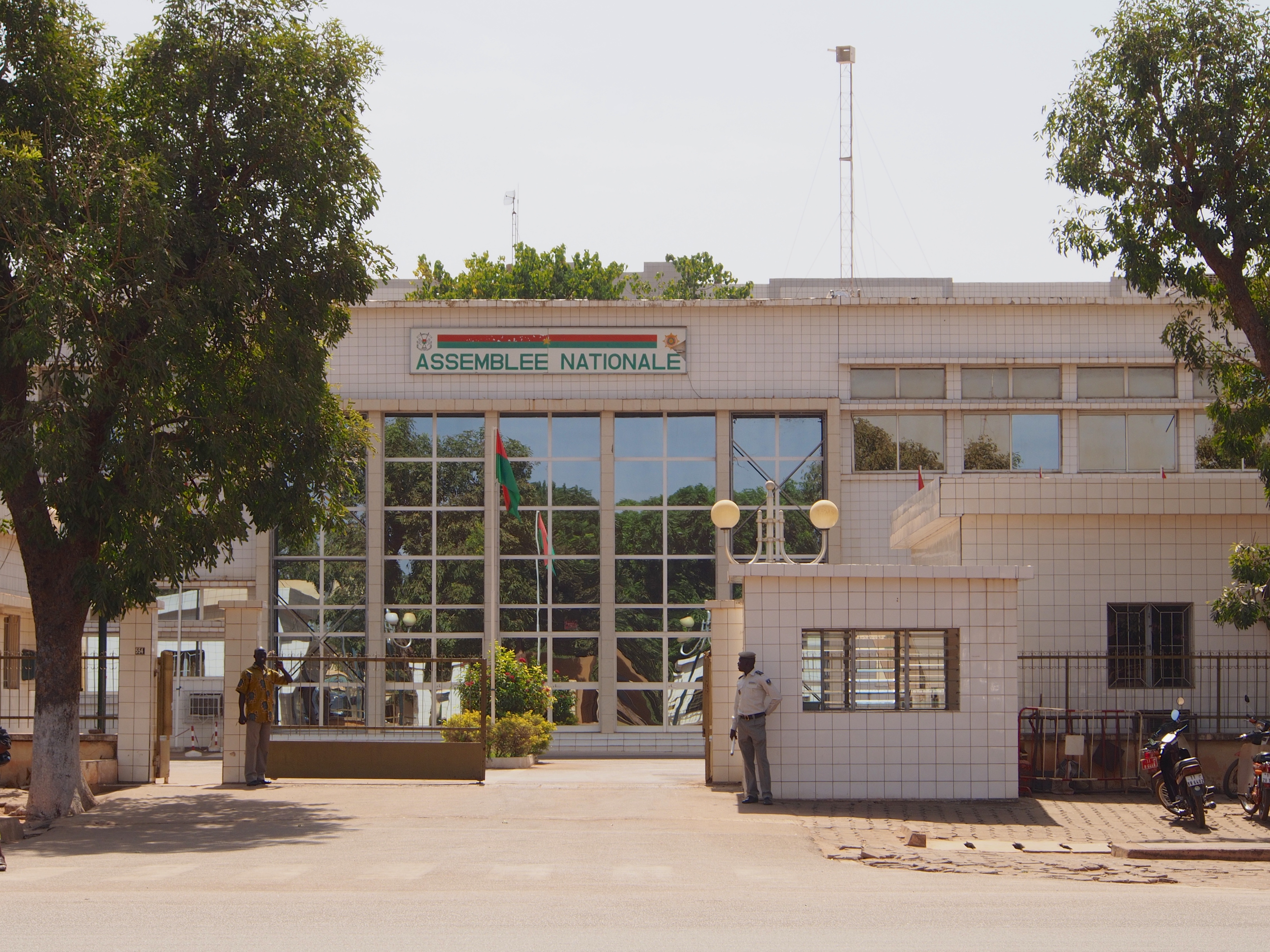
The transition to democratic rule in the 1990s saw a decline in the use of the death penalty. But as military coups make a resurgence in Western Africa, and presidents are usurping term limits to stay in power, capital treason laws have once again become relevant, as challenges to power are treated as a betrayal of the state rather than legitimate political opposition: both the current and former leaders of the opposition in Uganda have been tried with treason – as has one of their lawyers. The Democratic Republic of Congo has declared an end to a two-decade moratorium due to the ongoing conflict with the M23 armed group in east of the country. In Burkina Faso, where the death penalty was abolished in 2018, the military government adopted a new penal code in October 2026 to bring back the punishment, including for treason, 38 years since the country’s last execution. Chad, too, has considered reintroducing the death penalty – for the second time – due to the ongoing instability in the country. These developments are occurring at the same time as much of sub-Saharan Africa continues to move away from capital punishment, demonstrating the precarity of progress in the face of threats to sovereign authority.
The persistence of capital treason is not a relic of incomplete abolition; it serves a fundamentally different purpose from capital punishment for ordinary crimes. Treason sits at the intersection of criminal law and political power. Its persistence demonstrates how the death penalty can remain available as a means through which governments respond to insecurity and assert sovereignty. As sub-Saharan Africa continues to move towards abolition, the question is therefore not whether states retain capital punishment, but what they retain it for – and whose security it is being used to defend.
[1] Summary executions were reported in Zanzibar after the assassination of its ruler, Sheik Abeid Amani Karume in 1972.

| Diana Peel is a Research Fellow in the School of Law at the University of Leeds, whose research examines capital punishment, colonial legacies and the relationship between law, state power and political legitimacy. Her work draws on historical, socio-legal and criminological approaches to explore how states justify and exercises the power to punish, particularly in contexts of political and institutional change. |
Share: