
The botched execution of Christa Pike: Understanding a background of violence, abuse and confinement
Posted:
Time to read:
Christa Pike, the only woman on death row in Tennessee, was scheduled to be executed on 30 September. After two doses of pentobarbital were administered during the “lethal injection” process (the second of which the state permits if the person “is not deceased” after the first dose), Pike was still alive. Her attorneys reported that lifesaving care was administered in an ambulance called at 8:50pm. Pike remained unconscious and on a ventilator at the hospital. On 6 October, Pike regained consciousness and began to communicate, although the extent of her cognitive injuries remains unclear. On 10 October, Pike was discharged from the hospital and returned to the women’s prison. Although the extent of her injuries is not established, her arms are severely discoloured due to blistering, swelling, and burns from the procedure.
Most coverage will ask two questions: what was Christa Pike’s crime? And what exactly happened in the execution chamber? But these questions, however important, leave another question unexamined: what are we seeking by executing her?
Perhaps we should begin with Pike’s early life. Her extensive publicly documented history of gender-based violence is, as one clinical psychologist who interviewed Pike expressed, “almost impossible to grasp because it is so severe.” It began at age two. Her legal documents detail compounded forms of abuse throughout her life, including sexual violence and rape. Throughout her childhood, she survived violence committed by various men. Most of these men were not held accountable for the violence inflicted upon her. Her clemency petition detailed the state’s responses to her experiences of abuse: a reduced charge and release for her rape as an 11-year-old, and a restraining order. The adults responsible for Pike and her safety repeatedly failed to protect her.
In 1995, Pike was 18 years old when she participated in the murder of Colleen Slemmer, a 19-year-old classmate in Knoxville, Tennessee. According to court records, the offence took place over the course of a period of 30 minutes to an hour, and resulted in in blunt-force injuries to Slemmer’s head that caused her death. Pike was accompanied by two other co-conspirators, Tadaryl Shipp (Pike’s boyfriend at the time) and Shadolla Peterson. Pike was 20 years old when, in March 1996, she was sentenced to death for premeditated first-degree murder and conspiracy to commit first-degree murder.
As a researcher on the conditions of confinement for the women on death row in the United States for five years, I have consistently encountered cases involving backgrounds of this kind, including extensive documentation of gender-based violence. Pike’s experiences are not an isolated case. I mention this not to erase the suffering of Colleen Slemmer, who had horrific violence inflicted on her. Her death is devastating, and so is the grief of her loss. Rather, I mention Pike’s background to hold a harder truth: Pike, a perpetrator of violence, was also herself a victim of violence, who endured it first as a child. Both are true. Neither cancels out the other.
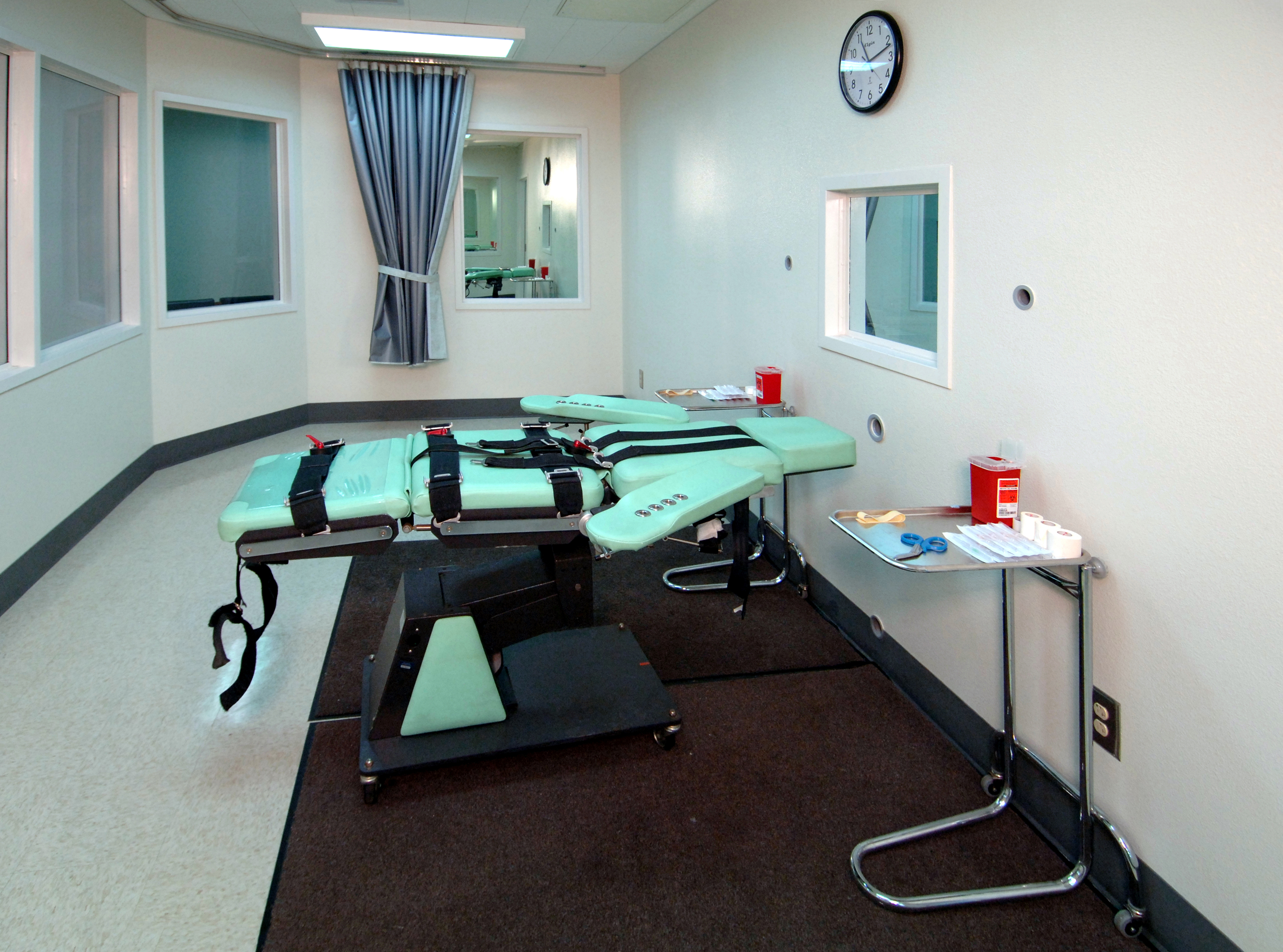
In many ways, society often chooses to look away when a victim’s narrative is too complicated. We are comfortable with victims who are blameless and perpetrators who are monstrous. The clean and neat line permits us to freely give our compassion to those who are “pure” victims and to seek punishment for those who are “evil” perpetrators. Survivors who “fight back,” who find themselves held to impossible standards to prove their victimhood, or who act in ways we find blameworthy or unforgivable, complicate society’s otherwise seemingly tidy dividing line of justice. When you work with women on death row especially, that line ceases to exist.
As the only woman on death row in Tennessee, Pike’s conditions of confinement (similar to those of many women on death row) were predominantly in isolation, or de facto solitary confinement, for over two decades. In the prison, women on death row are often housed in sections within the prison facility characterized by severe mental illness and addiction. Her day-to-day living standards prior to 2024 (following a settlement) were marked by sensory deprivation, overload and intrusion. Pike was not only severely restricted from human contact, she was also surrounded by persistent fluorescent light and the constant sounds of screaming and taunting from other distressed prisoners in the section. Pike described these sensory conditions as “horrendous.”
Prisons can be regarded as institutions with structures that inherently produce sexual coercion and violence. Scholars like Alice Ristroph argue these policies are inherent in institutions with dominance at their centre. Policies for women on death row range from mandatory strip-searches to other nonconsensual surveillance and intervention policies, often at the discretion of correctional officers or other officials. As a survivor of sexual violence, these experiences carry the potential for repeated retraumatization. Pike’s attorneys submitted, based on the views of trauma experts, that strapping a rape survivor to a gurney is a procedure that could force her to relive the sexual violence she has survived. These types of experiences only provide a partial picture of the conditions of confinement women like Pike are subjected to on death row in the United States.
Prisoners sentenced to death experience what is sometimes referred to as “death row phenomenon,” or the torment experienced by individuals on death row, associated with the looming threat of a state-sponsored killing. The phenomenon is regarded as its own form of suffering, where punishment is already being experienced by the prisoner. The psychosocial and psychological effects of the penalty, including psychological distress, prolonged isolation, uncertainty about when one will be executed, in addition to degrading conditions of confinement, are researched extensively, and many international and domestic legal scholars have described it as akin to torture. The women I have worked with would agree unequivocally.
Turning to the actual execution, the state’s attempt to execute Pike led to her critical condition in a hospital, where she received life-saving treatment, and was later discharged back to the prison. The irony is chilling: in a single day, the state both lethally injected Pike with a physician present, and minutes later transported her to a hospital to receive life-saving medical care. The state is effectively fighting to keep her alive, just so that it can attempt to take her life again. This is the reality of the death penalty in the United States.
By law, Tennessee can attempt to execute Pike again. Her sentence has not changed, and she remains on death row. However, any attempt to execute her again is likely to be met by a series of constitutional challenges.
On 30 September, Pike’s death warrant legally expired. As such, the Attorney General would need to make a formal motion to the court, and the court would set a future date and time for the execution. However, if the court takes this step, it will certainly trigger a host of legal challenges from Pike’s defence team and other experts from across the United States. This is due to three main issues:
1) Pike’s mental capacity: Her execution attempt, with drugs administered to her intended to be fatal, could potentially render her unable to meet the threshold necessary to be deemed competent to be executed.
2) Double jeopardy: The Fifth Amendment in the U.S. Constitution prevents individuals from being punished for the same crime twice. In 1947, the Supreme Court ruled that a second execution attempt following a failed electrocution did not violate the Constitution. However, the state of Tennessee administered the complete and maximum amount of lethal injection permitted in its protocol in Pike’s case. Because Pike did not die, this case is now in uncharted legal territory: Pike is the only person known to have survived a complete execution attempt in the U.S.
3) Cruel and unusual punishment: The Eighth Amendment bans “cruel and unusual” punishment. Although the Supreme Court has upheld capital punishment under certain circumstances, particular methods of execution have raised concerns under the Eighth Amendment. As such, the court might determine the punishment is unconstitutional in Pike’s case due to evidence, including that of severe pain, trauma and even humiliation. Given that Pike’s defence team raised serious concerns on medical grounds concerning the state’s decision to lethally inject her prior to the attempted execution, to require her to experience it again would require the court to address each of these issues.
In my research interviewing women on death row across the United States, I have learned how much of their punishment takes place outside of the public’s view. Their conditions of confinement – some of which are described in this piece – are especially gruesome, and rarely part of the public conversations or legal debates about capital punishment. Yet, these conditions, which they can be subject to for decades, shape the harrowing reality of the decades under a sentence of death. Given this background of extreme punishment, I argue that even attempting to execute someone once, after decades on death row, constitutes double jeopardy.
Each of these lenses on the life of a prisoner – from their early childhood to their decades in prison, to the execution chamber’s gurney – reveals a different, insidious layer to what occurs “behind the curtain” of the death penalty.
When we decide each of these layers is wholly irrelevant once someone is a perpetrator, we pay a price: the systems that failed Pike, the adults who turned a blind eye to her abuse, the jury that never heard her story, the state and prison policies that enabled and compounded her suffering – all become part of a backstory. And if we never really become proximate to these layers, then the only violence we see is that of her offence. It follows, then, that the only response we consider is the state’s. The cost is personal. It is a piece of our own mercy, our own humanity.

| Dr Serene Singh completed her DPhil in Criminology and Criminal Justice and Master's in Public Policy at the University of Oxford as a Rhodes Scholar. Her doctoral research was the first study to examine the conditions of confinement and material prison experiences of the women on death row across the United States. She served as an academic consultant for the Netflix/BBC documentary 'Aileen: Queen of Serial Killers' (2025) and wrote the foreword to the book Killing Lisa: The Life, Crime, and Execution of Lisa Montgomery (2026). |
Share: