
DPRU Q&As: Professor Ron Dudai, Leverhulme Visiting Professor, Queen’s University Belfast
Posted:
Time to read:
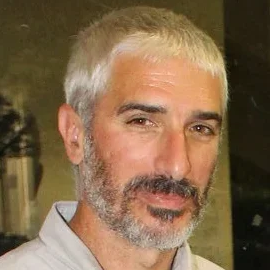
In this instalment of the DPRU's Q&A series with death penalty experts from around the world, DPRU Project Manager Daniel Cullen speaks to Professor Ron Dudai, Leverhulme Visiting Professor at Queen's University Belfast, about new death penalty legislation adopted in Israel earlier this year, developments since the passing of the legislation, his sociological perspectives on Israel's shifting death penalty politics, and the lessons and potential implications for the global abolitionist movement.
Please could you provide some background on Israel’s new death penalty laws?
There are two new pieces of legislation which were passed almost in parallel, though framed very differently.
The first law, which passed at the end of March, introduced a new capital offence to the Israeli Penal Code for murder in so-called terrorist circumstances. It also made the existing capital offences in Israel’s military court in the West Bank virtually mandatory, and removed a host of safeguards that previously effectively prevented the imposition of a death sentence in the military courts. This legislation attracted lots of media attention and political controversy, among other reasons due to its blatant discrimination against Palestinian defendants. It was passed by 62 votes to 48 in Parliament, so not with a huge majority, and with quite substantial opposition.
The second law, passed in May, provides for the establishment of a special military tribunal to try suspects accused of involvement in the October 7 massacres. The main issue there was the establishment of the tribunal and various jurisdictional and legal issues, as well as budgetary and other matters. It includes provision for the tribunal to impose the death penalty. However, in the political and media discourse, the death penalty was present but certainly not the main issue. This law passed with almost no opposition, both in Parliament and in the media and public debate – its final vote passed 93 to zero.
Since the adoption of these laws, have there been any developments with respect to their implementation?
Regarding the first law, there are several petitions to the Supreme Court of Israel arguing that the law is unconstitutional. The first Supreme Court hearing on these petitions is scheduled for January 2027. The Supreme Court hasn’t issued an injunction freezing the law, although it might do further down the line, so as of now the law is in place. However, in practice I would be very surprised if any executions take place prior to the Supreme Court having chance to discuss it, including due to the timeframe of holding murder trials.
When the first law passed, there was a lot of media coverage and international attention, but the spotlight has since moved away. Itamar Ben-Gvir, Israel’s Minister of National Security, who has been the driving force behind the death penalty legislation, has been performing media provocations throughout the process, such as celebrating his birthday with a cake decorated with the image of a noose. Two weeks ago, he released a video of himself apparently at the site where the gallows for executions are being built, but there have been no additional details made available about this. These stunts appear to be attracting less attention over time.
Regarding the second law, for the October 7 tribunal, even regardless of the death penalty, this will be a huge undertaking. Right now, there is disagreement over the budget between different ministries, and the budget for the physical construction of the site and so on, so it could take several years just to start the proceedings.
The Member of Parliament who chairs the Law and Constitution Committee, who was very influential in turning the Bill for the Special Tribunal into law, was interviewed just after its passing, and indicated that he hoped there would be ‘hundreds’ or ‘dozens’ of executions, and that he would consider it a failure of the justice system if this did not occur, so for many there are expectations that executions will happen. In addition to the death penalty, there are many concerns that the proceedings would not be compatible with fair trial norms, and it was recently reported that judges slated to serve in the tribunals are reluctant to do so and have expressed concerns that they might be subject to international sanctions.
Which themes have been most prominent in the discourse justifying the legislation?
I think there is some difference between the official discourse and the public or more informal discourse on these issues. The issue of deterrence has been used quite prominently, albeit not exclusively, in the official discourse. Professor Carolyn Hoyle and I submitted an expert opinion in one of the Supreme Court petitions, detailing the inefficacy of capital punishment as a deterrent, both generally and with respect to terrorism offences. But I think most of the public realise that the death penalty will not act as a deterrent, given that the same people that are considered as terrorists will not be deterred by the prospect of an execution, and the Israeli security establishment has traditionally opposed the death penalty on this basis. So I think that deterrence-based arguments have been used just superficially.
What underlies this is a discourse of revenge, sometimes couched in the wording of retribution, sometimes in the concept of justice – this has been the driving force behind the death penalty laws.
The pro-death penalty camp has been very effective in linking the ideas of justice, and what is owed to victims and bereaved families, with executions. I think this equation of justice with the death penalty has been really insidious, and this is one of the key challenges for those of us who would oppose the death penalty. There has been research in the American context showing that bereaved families haven’t found that executions bring psychological well-being or closure from the perpetrators being killed, so it is important to say that this expectation is not supported by evidence.
In terms of the October 7 tribunal, it is important to emphasize that there are already many problematic issues in the way it is envisaged, even aside from the matter of the death penalty. However, if we look at the possibility of executions, in addition to my general opposition to the death penalty I believe they would also be detrimental to what could be legitimate and important goals of such trials. From a transitional justice perspective, if perpetrators have committed crimes against humanity or war crimes (from all sides), they should be punished, and the narrative and the truth should be revealed. Denialism and conspiracy theories about October 7 are already very prevalent, and part of the reason to have proper trials is to have the true narrative emerging. If you have unfair trials leading swiftly to quick executions, this will only encourage more conspiracy theories. Rather than equating success with executions, I think the measure of success should be establishing and telling the truth in an authoritative way, to have an incontestable narrative emerging and a sense of dignity that, as much as possible, provides closure for the victims. I would argue that executions are going to put that at risk and undermine those aims.
What, if any, are the links between the punitive politics of the death penalty laws and the issue of torture and deaths in detention of Palestinian prisoners?
For Ben-Gvir, while not explicitly using the word ‘torture’, he is clearly saying in the same breath that he has made prison conditions worse for Palestinian prisoners, and intends to carry out the death penalty. There is definitely a link with the underlying legitimation of revenge, whether through torture, prison conditions, extrajudicial killings, or the death penalty. In terms of the general climate, it’s tied to the sense of moral anarchy where no vengeful proposal is off the table, and from Ben-Gvir in particular a kind of ‘performative cruelty’ against Palestinians.
Writing for +972 Magazine, you noted that prior to these laws, “…Israel routinely carried out extrajudicial killings while touting its own refusal to execute.” What do you see as the intention behind the use of judicial executions as distinct from extrajudicial killings?
With killings termed as ‘assassinations’ or ‘targeted killings’, the accompanying discourse would usually be to justify it as a preventative act, e.g. stopping an imminent threat. With the judicial death penalty, instead you have a cold ritual of punishment, with the figure of the executioner, in this case the hangman. The symbolic expression of power through this is part of the value for some of those who supported the death penalty laws. It also expropriates the violence from the military and security services to the civilian sphere through the judicial system. So there is no need for any pretense around preventative justifications, instead judicial executions are explicitly punitive and being proclaimed as such.
What does this shift in Israel’s position on the death penalty reflect about its relationship to international institutions and fora?
Of course I think it reflects a general growing disregard for international norms and international critique, as being exhibited in Gaza and in the West Bank as we speak.
My only cause for optimism amidst this is that both in Israel and many corners of the globe, as I mentioned we appear to have reached a place of moral anarchy, where it seems as if anything goes, and I think that opposition to the death penalty could be a place to start rebuilding a sense of morality. Although this is a difficult time for international human rights institutions, the overall trend with the death penalty worldwide is clear, as a growing majority of states move towards abolition. It’s not that this issue is more important than other issues, but it could be one on which to start re-engaging with international norms, for people to say: “We don’t want to be a society where hangmen are appointed and operating,” and hopefully to build broader attachment to human rights norms from this.
Based on the recent Israeli experience, would you identify any wider lessons with regard to the risk of changes in states where executions are suspended?
I think one lesson we should take from the recent developments in Israel is that the international community and global anti-death penalty movement should not be complacent about abolitionist de facto (ADF) states (those that have suspended the death penalty but retain it in law). Prior to October 7, Israel’s death penalty situation had not been on anyone’s radar, so those who were working against the death penalty around the world were not engaging with the issue in Israel, and I think that was a mistake. Once it became clear this year that the legislation was moving ahead, anti-death penalty efforts started too late and as of now have not been effective enough. I think it would be useful to have some sort of early warning system for ADF states that might be at risk of backsliding, to avoid complacency where executions are suspended.
I think another important lesson is about the idea of exceptions to opposition to the death penalty, e.g. that one can generally oppose the death penalty, but make an exception for particularly heinous crimes or in certain specific cases. In this case, there are many people in Israel who would generally oppose the death penalty, but would make an exception for the October 7 perpetrators. There should be a relentless effort to make the death penalty beyond the pale, as an absolute moral position without exception, otherwise things can change and it will be easier to resurrect it. In Israel, we can see that by continuing to discuss the death penalty as an option over previous decades, it was given legitimacy, and then it suddenly became a real possibility again. It is also the case that once death penalty is authorised for an ‘exception’, it is hard to contain it.
What do you see as the implications of these developments in Israel for global abolitionist strategy?
Almost all of the abolitionist toolkit was created in trying to reduce, minimise and abolish existing legal and practical infrastructure of the death penalty, but what we have here is a fight against resurrecting the death penalty or building a new death penalty. So while a lot of what is required will overlap with that original toolkit, it does also trigger some new challenges and some new ways of thinking.
The global abolitionist movement should be vigilant against the risk of such resumptions elsewhere. In that sense, without wishing to overstate it, I think the struggle against the death penalty in Israel could define the terms of the global debate over abolition for the next generation. The statistics are clear that the number of persistently executing states is being reduced, but if Israel were to join the retentionist group with hundreds of executions, this would probably be the biggest setback of the past 20-30 years. If this were to happen, it could have a momentum that influences other countries to resume executions as well.
At the same time, if there are no executions in Israel, this would be an important victory for the abolitionist movement. For those who it oppose it, the objective should be to deprioritize the death penalty within Israel discourse and articulate the potential cost in terms of international and other repercussions, both to the Israeli public, elites, politicians and judges. It’s not too late for this in any sense - this is exactly the time to do it.
Professor Ron Dudai is Leverhulme Visiting Professor at Queen's University Belfast and Research Associate at the Centre for Criminology, University of Oxford. His work has been published in leading journals including British Journal of Sociology, British Journal of Criminology, Law & Social Inquiry, and Punishment & Society, and his monograph Penality in the Underground: The IRA's Pursuit of Informers (2022) is published by Oxford University Press.
Share: