
A decade ago, I joined my colleagues on a project that sought to address the dearth of mitigation specialists in Florida. One of the greatest challenges we faced was the confusion surrounding what mitigation is, why we need it and who mitigation specialists are. The lack of understanding surrounding mitigation affects even those specialising in law and the benefits of mitigation beyond the law are almost never contemplated.
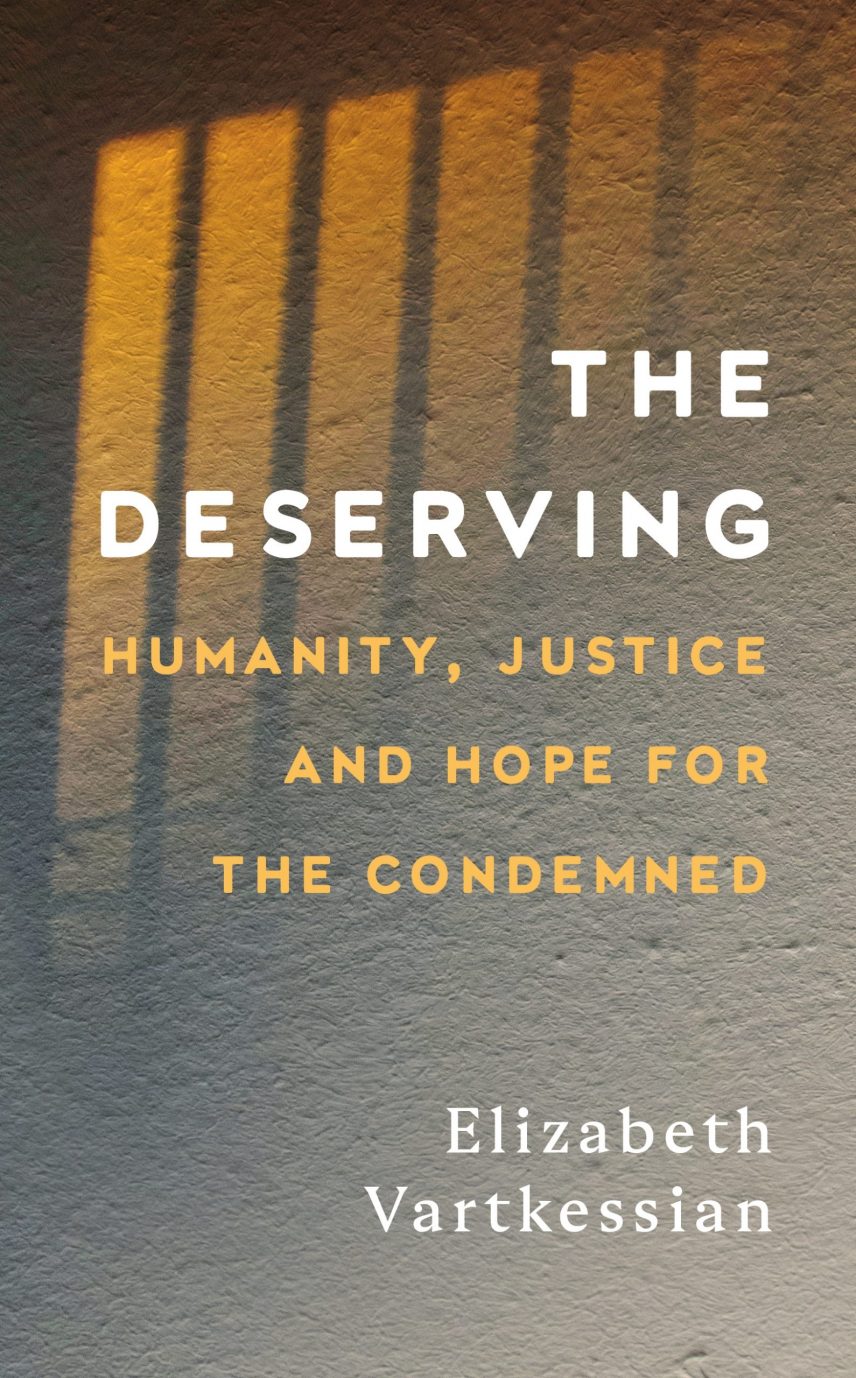
Cue The Deserving, an accessible book penned with the precision that only a seasoned mitigation specialist and pioneer can bring. With a foreword from Sister Helen Prejean, Elizabeth Vartkessian gifts us with eight quirky-named chapters and an epilogue that leave us in no doubt as to what mitigation is and its benefits. By interlocking the stories of eight clients and others she came to through her research, Dr Vartkessian makes a powerful case for change to the US criminal justice system and a better society. She advocates that "we cannot incarcerate our way out of violent crime" and explains that the "unmatched power of mitigation investigation" is integral to justice. She calls for us to honour human dignity by choosing compassion and genuine connection so that we might create a society that "would provide the type of life and opportunity everyone deserves."
Dr Vartkessian starts the book with a description of her first visit to death row in Texas, symbolising the upcoming discussion about the cold criminal justice system that removes human connection and strips people of their identity. Indeed, in defining what mitigation is, she states that "a key function of the mitigation specialist... is ensuring that, in the theater of the legal process, a client's humanity is not lost."
Dr Vartkessian addresses the realities of the process early in the book and weaves examples throughout the book in her and her clients’ stories. We are left with no doubt as to the overwhelming amount of difficult and intensive work required.
The importance of relationships and connectivity is a recurring theme throughout the book: whether it is a relationship between client and legal team, corrections officers, judges, prosecutors, jurors, potential witnesses and family, or attorneys. Readers come away with an understanding that time and patience are key. They also gain an appreciation of the delicate dance required to navigate the complexities of the dichotomy of different relationships.
Before we know it, we are showered with examples of the fruits of mitigation investigation as Dr Vartkessian narrates her clients' stories and shares extracts of her interviews. The reader comes to learn that openness, gullibility and an eagerness to please can be signs of the impact of trauma, as are symptoms of incontinence, blackouts and tremors. The book forces us to rethink behaviours we might be tempted to write off as traits of an "asshole." In addition, Dr Vartkessian educates the reader as to common misdiagnoses, flagging her skepticism around conduct and oppositional defiant disorders.
Significantly, before providing information about the crimes her clients have been convicted of, Dr Vartkessian details the mitigation present in their cases - something the criminal justice system does not afford. The impact is great: it protects us from our human propensity to react emotionally and apply prejudice, allowing us to connect and understand how this person wound up taking a life. An example of this is the depiction of little George, living in 'Little Saigon': vulnerable to sexual assaults and suffering from blackouts, George had to navigate fifteen flights of stairs filled with drug-abused bodies, and avoid beatings, muggings and shootings just to get to school. Knowing this gives us perspective on his trajectory.
Dr Vartkessian guides the reader to question the role of society and responsibility of the community in acts of violence by providing countless incidences of institutional failures. Through Connor we hear about the damaging consequences of the Straight program, which purported to be a treatment centre for adolescents but actually neglected and tortured children. We understand that Ledell was exposed to environmental neurotoxins found in water, soil and paint, which would significantly impact his brain development. In William's case, we are forced to reckon with detrimental prison conditions and the inadequacies of restoring competency in pre-trial proceedings. Anyone would be hard pushed not to agree with Dr Vartkessian when she demands the community holds itself to account for its role in creating the violence that then ensues.
To contextualise mitigation, Dr Vartkessian explains the basics of the relevant law, procedure, scientific research or literature through bitesize paragraphs littered throughout the book. She discusses the foundational cases that explain the history of mitigation in reference to the death penalty, its birth in the 1970s and subsequent rise. The Deserving provides an overview of all stages of a case through examples of Dr Vartkessian's work: we learn how a young Elizabeth was trained by colleagues on the complicated nine stages of trial and appeal and appreciate, through her client Edward's case, the importance of re-investigating a case, as it ultimately showed the failings of his attorney at trial.
Dr Vartkessian expertly describes the pre-trial process of seeking the death penalty via her presentation at the meeting with federal prosecutors for her client William. As we follow William signing the plea deal at the painful visit with an attorney who visited him just once in two years, we also get closer to understanding the plea process. Later, we learn about the law of death qualification (requiring a juror to be able to vote for the death penalty in order to sit on a capital trial) via accounts of jurors making the harrowing decision. Dr Vartkessian reflects on her research on capital jurors and points to the weakness of a system that predisposes jurors to find guilt and sentence a person to death.
We also gain insight into the effects of legal changes: Dr Vartkessian guides us through the role mitigation plays in the resentencing of thousands of individuals after mandatory life sentences for juveniles were abolished. She draws our attention to the casual tone used by politicians and prosecuting attorneys regarding restarting executions in Alabama, botching executions as well as the use and ultimately shortage of drugs used to administer the lethal injection. Ultimately, we are exposed to the final stage of execution via Ledell and Wes - insight that makes your stomach drop and heart ache.
The book's inclusion of scientific research reinforces the point that Dr Vartkessian makes about the need to understand her clients' life trajectories. By taking the time to explain the role of epigenetics, the reader comes to understand the importance of multigenerational investigation. Further, by outlining the Adverse Child Experiences (ACEs) research, the reader gains an understanding of trauma's imprint and how "the past is always walking with us in the present, whether or not we choose to acknowledge it." Her critique that the research doesn't consider community and institution harms reinforces the view that the community must take account for its societal failures.
One of the most beautiful aspects of the book is the demonstration of compassion and human connection that Dr Vartkessian provides in drawing parallels between her own life and that of her clients, by talking about her grandparents' trauma of fleeing genocide, her anxiety surrounding death, the difficulties of the relationship with her father and her goodbye to him on his deathbed. Dr Vartkessian's ability to identify with her clients makes us do the same. By personally acknowledging the difficulties of the line of work - the impact of difficult interviews, lonely travel trips, circumstances that test team relationships, the unhealthy patterns of high caffeine-intake, smoking and drinking in dark bars and the need for therapy - she consoles those in the practice, leads by example and helps us build a stronger, more resilient community of mitigation specialists.
I expected to read more on the topic of the community of mitigation specialists (perhaps this is a topic for another book!) as The Deserving, whilst speaking to a popular audience, also serves as an informal training guide to current and future mitigation specialists. I think a little time dedicated to the range of backgrounds from which mitigation specialists are born, the structures in which we work (often alone as independent practitioners which further perpetuates the difficulties of the work) and the need for the community to provide better support, accessibility into the profession and resources would be great.
There is a lot to think about in this book: it is insightful, if not gobsmacking. If you arre reading and genuinely connecting, it is heart-breaking. If you are an empath, it is probably traumatising. If you are a mitigation specialist, it is comforting (to know you are not alone). Regardless, it is a wake-up call that is filled with hope.
For when the future looks back upon this antiquated system of purported justice, books like this will be hailed as the catalyst.
Elizabeth Vartkessian's The Deserving was published in January 2026 by Bloomsbury (US) and in February 2026 by Footnote Press (UK). This review was originally published in Issue 49 of the Amicus Journal.
Hannah Gorman is Director of the Florida Center for Capital Representation (FCCR) at the Balanced Justice Project (BJP), Florida International University Law Clinic. She is a UK-US (NY) attorney and has worked on death penalty cases for over 20 years. Hannah, trains, is instructed as, and instructs others on mitigation investigation in both capital and non-capital cases. She has a special interest in restorative legal practices as well as international mitigation and has worked on cases in the US, Southeast Asia and the Middle East exchanging best practices related to the introduction of mitigating evidence.
Share: