
At the age of 25, I was mistakenly arrested for an offence that I didn’t commit. At the time, I was a matatu (minibus) conductor in Nairobi, and while walking home one evening, I passed the scene of a robbery. Three men had been assaulted and robbed, and an angry mob blamed me. I was arrested and while in custody, others told me that I could face the death penalty for the offence I was accused of: robbery with violence. Despite the fact that I was innocent, I was filled with fear. At my trial, fabricated evidence was presented against me, I didn’t have any legal representation, and I wasn’t able to call any defence witnesses. I was found guilty, sentenced to death by hanging, and found myself on death row.
The conditions on death row in Kenya were very harsh. We were not given basic material provisions, so things like toothbrushes, toothpaste, toilet paper and soap were only available to those whose families would provide them. The food was very minimal, often subsisting only of weak ugali (maize porridge) and a few beans. Some prisoners’ skin was affected by the lack of sunlight; others developed health problems due to the conditions, including losing their sight. Prisoners confined in small cells lived under a lot of stress, so minor issues would lead to big conflicts, and fighting was common. Death row prisoners were assumed to be highly dangerous, and the prison officers would fear interacting with us. Even to leave the prison to go to hospital, prisoners were kept in handcuffs and chains, with a red label on their uniforms marked ‘CON’ (meaning ‘condemned prisoner’).
The experience of being sentenced to death is hard to put into words. The sentence removes any sense of a future, and fellow prisoners would often give in to despair, believing that they had little chance of living. In the cells, you would find people cowering under their blankets, sobbing quietly. Being told “you will die” causes a lot of psychological harm, and some people developed mental health conditions as a result. The death penalty is a draconian sentence which tortures people’s minds, because the future becomes so uncertain. Without this sense of a future, many prisoners lived a hopeless life. Some would murder others in prison over very little, because they were just awaiting the hangman’s noose.
While I was on death row, even though executions had not recently been carried out in Kenya (the last execution was in 1987), I still lived in fear. We would hear people on the radio debating about whether to execute those sentenced to death. It really demanded perseverance for me to survive. I appealed my case to the High Court but my appeal was dismissed. I also appealed to the Court of Appeal, but was dismissed again. My only remaining hope was to receive a pardon from the President. Then, in August 2009, after I had been on death row for four years, President Mwai Kibaki announced that the sentences of all 4,000 death row prisoners would be commuted to sentences of life imprisonment.
On the day that the commutation was announced, it was a total surprise to all of us at the prison. The despair of those who had been waiting to be hanged suddenly turned to hope. It threw everybody into a state of confusion, because nobody had expected it. Many prisoners couldn’t believe what had happened, asking: “Is it really true?” Some thought that the announcement must have been mistaken. It felt as if everyone was daydreaming. Once hopeless people saw that they would live and might be able to pursue a meaningful future. Just one or two weeks later, the atmosphere of the entire prison had changed. You could see how relaxed the prisoners were compared to when they were on death row: their minds had been freed from the heavy mental burden of the death sentence.
At that time in Kenya, death row prisoners were not able to access training programmes. We would be stuck inside the cells all day, just sitting, eating and waiting, not allowed to develop any new skills. We used to yearn to do something beneficial, both for ourselves and others. Having the opportunity to learn skills that are useful outside of prison is also an important part of maintaining hope for the future. In this way, the death penalty didn’t only threaten to take away life, but took away talent and potential. Too much time spent in idleness is destructive. However, after the commutation of death sentences in 2009, everyone who was resentenced to life imprisonment was able to work for the first time, and access vocational training opportunities.
Once I was allowed to work, I decided to train as a mechanic, and completed several years of training, as well as training in upholstery and carpentry. I also joined theological classes, and completed a number of educational qualifications in theology. In one of the prisons I was in, Naivasha Prison, there was a rehabilitation programme called Naivasha Inmates’ Education Programme (NIEP), which had a school crowded with more than one thousand men who were keen to be educated. Some of us who had already been educated were subsequently recruited as teachers. I believe that prison should provide a conducive environment to help prisoners self-actualise and contribute back to society, and thankfully the government has since allowed death row prisoners to work and train.
After my death sentence was commuted, I remained in prison for another 11 years under the life sentence. Finally, in 2020, I was able to petition for re-sentencing, and this gave me a way out of prison. I submitted my petition to Kibera Law Court – the same court which had originally sentenced me to death – and was released on a one-year probation. Many prisoners face significant challenges when it comes to their time of release: there can be a lot of social stigma, and sometimes former prisoners can be scapegoated for local crimes and attacked by mobs. My family had always come to visit me in prison and I was fortunate to be well supported by them after my release. The main challenge that I faced was in getting a job or finding money to start a business, but I eventually received financial assistance from the NGO Crime Si Poa to start my own business using the upholstery skills I had gained while in prison.
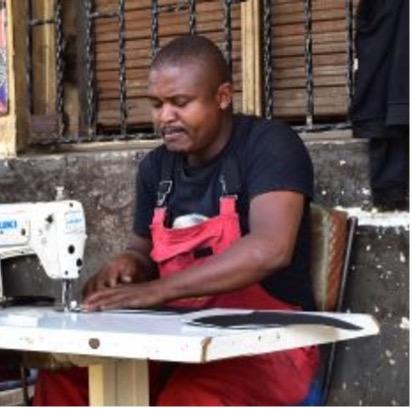
James Macharia is an entrepreneur based in Nairobi, Kenya, and a former death row prisoner. He is currently seeking support for the publication of a longer version of his personal story of death row, and can be contacted via Crime Si Poa. |
Share: