
The case of Luigi Mangione: Testing the arbitrary application of America’s death penalty
Posted:
Time to read:
Introduction
On 30 January, Judge Margaret Garnett of the U.S. District Court for the Southern District of New York dismissed the capital-eligible charge (murder through use of a firearm), against Luigi Mangione, thereby precluding the possibility of the federal death penalty. United States v. Mangione is a dual New York–Pennsylvania matter that was brought federally based on Mangione’s alleged crossing of state lines to stalk and murder UnitedHealthcare CEO Brian Thompson in December 2024.
Authorities allege that Mangione travelled to New York and fatally shot Thompson with a partially 3D-printed pistol equipped with a silencer and loaded Glock magazine. They further allege that Mangione was found with multiple handwritten notes on him, including one addressed to federal law enforcement authorities expressing disdain for the American healthcare system. Unlike the United Kingdom’s National Health Service (NHS), the American healthcare system is a largely private, insurance-based system, with coverage often tied to employment and supplemented by limited public programmes such as Medicare and Medicaid. It is widely criticised because the United States spends more per person than comparable countries and yet millions are uninsured or underinsured, which authorities allege was the defendant’s political rationale for Thompson’s murder.
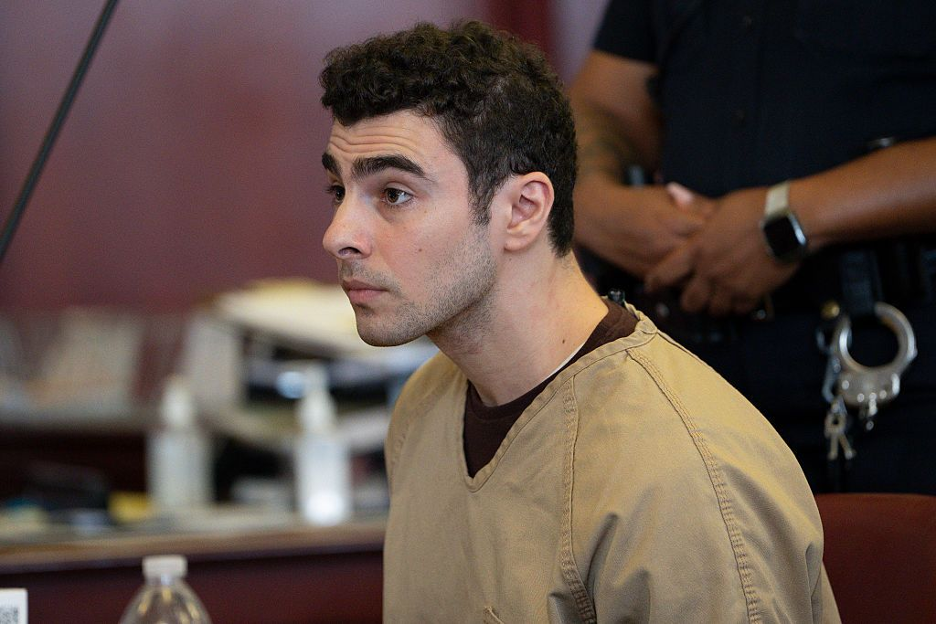
Mangione now faces life without parole for each of his two remaining federal counts and a maximum of 25 years to life in his New York State case. The practical endpoint may still be death in custody rather than by execution—a reality that also characterises many capital cases in which prisoners die of natural causes after decades on death row. Mangione reportedly suffers from L5–S1 spondylolisthesis and other medical abnormalities, raising additional concern about what long-term confinement means in a system that has repeatedly been faulted by watchdogs for inadequate or delayed medical treatment.
Mangione is the first federal prosecution under President Donald J. Trump’s Death Penalty Executive Order and, in this context, the January decision precluding the federal death penalty provides legal precedent on America’s ability to withstand the pressures of penal populism and political instrumentalisation.
On 20 January 2025, within days of his second inauguration, President Donald J. Trump issued an Executive Order on Restoring The Death Penalty and Protecting Public Safety, directing the Department of Justice to “pursue the death penalty wherever possible” and stating that America’s “Founders knew well that only capital punishment can bring justice and restore order” for the most “heinous” of crimes. The Order explicitly identified certain classes of defendants—including illegal immigrants—as suitable for federal execution.
Directing prosecutors to seek the death penalty based on categorical offender identities—rather than aggravating or mitigating circumstances under federal policies—marked not only the re-politicisation of capital punishment in the United States but also a decisive departure from modern legal norms of proportionality and restraint. The Executive Order reanimates constitutional concerns articulated in Furman v. Georgia (1972), wherein the Supreme Court invalidated death sentences imposed under statutes that permitted arbitrary imposition, and later mitigated by the case of Gregg v. Georgia (1976), which reinstated capital punishment under procedural safeguards. The court in Gregg underscored that, “on a matter so grave as the determination of whether a human life should be taken or spared, that discretion must be...limited so as to minimize the risk of wholly arbitrary and capricious action.”
The United States: A nation of fluctuating capital punishment governance
The United States is the only economically developed, Western democracy that still actively carries out executions. As of 2025, over 140 countries have abolished the death penalty in law or practice, and only 18 states worldwide carried out executions in 2024. This situates the United States not alongside peer democracies but within a small cohort of retentionist states—including China, Iran, Saudi Arabia and North Korea. Since 1973, more than 165 death row prisoners in the U.S., mostly people of colour, have been exonerated of charges related to their death sentences. The American Civil Liberties Union (ACLU) estimates that at minimum 21 wrongful executions have occurred, which would include posthumous exonerations, predominantly of African Americans. Notably, the wrongful conviction figure may be higher, since the difficulty of establishing successful collateral attacks after a jury's guilty verdict can be significant. For example, most capital cases do not involve evidence that may be DNA-tested and are prone to high rates of ineffective defence attorneys as well as prosecutorial misconduct.
On 1 April 2025, Attorney General Pam Bondi announced that the Department of Justice would pursue the death penalty against Mangione to “carry out” President Trump’s Death Penalty Executive Order. Mangione’s defence attorney, Ms Karen Friedman Agnifilo, denounced the decision as “barbaric” and “against the recommendation of the local federal prosecutors, the law, and historical precedent.” Indeed, it runs afoul of modern federal case precedent to pursue federal execution for the killing of one adult civilian absent an exceptional accompanying crime, such as rape, trafficking, drug offences or crimes committed on federal grounds. Likewise, it vitiates long-established practice for the Attorney General to announce the decision publicly and ahead of federal prosecutors, a mitigation defence, and a federal indictment of any charges. The death penalty decision signalled a reversion to political executions, an approach which defined America in the first half of the twentieth century, when most single-victim federal executions were of Black men convicted for offences against white victims, whereas no white people were executed for single-victim federal offences against Black victims.
Historically, the federal death penalty has been sought only in the most egregious cases involving a demonstrable federal interest. After the 1963 execution of Victor Feguer, the federal government did not carry out another execution for nearly four decades until that of Timothy McVeigh in 2001, following the Oklahoma City bombing which killed 168 civilians, including 19 children. Some 16 individuals were executed by the federal government between the reinstatement of the federal death penalty in 1988 under the Anti-Drug Abuse Act and the suspension of federal executions by the Biden administration in 2021. Even during the aggressive expansion of federal capital prosecutions under the Federal Death Penalty Act of 1994, courts and the Department of Justice maintained a posture of restraint consistent with the Supreme Court’s admonition in case of Woodson v. North Carolina (1976) that “[d]eath, in its finality, differs more from life imprisonment than a 100-year prison term differs from one of only a year or two,” demanding heightened procedural protections. The sole death penalty case authorised by Attorney General Merrick Garland and created during the Biden administration was that of Payton Gendron, in which the defendant is accused of fatally shooting ten Black individuals in a racially motivated attack at a Buffalo, New York supermarket in May 2022. Gendron’s federal trial is currently scheduled for 2026.
Statutorily, federal executions are limited to a narrow class of offences defined under federal law, including espionage, treason, terrorism, large-scale drug trafficking resulting in death, aircraft piracy and capital murder committed in furtherance of interstate crimes. In practice, prosecutors have pursued federal capital charges primarily where jurisdictional predicates exist—such as killings of federal law enforcement officers, murders committed on federal property or crimes crossing state lines—and where the aggravating factors outweigh mitigating circumstances. The Department of Justice’s Capital Case Review Protocol imposes a multi-tiered internal approval process, requiring evaluation by the Capital Case Unit, advisory committee review and final authorisation by the Attorney General, whose approval has traditionally been granted sparingly in accordance with the Supreme Court’s instruction that death must remain a sanction of “exceptional circumstances.”
Illustrative prosecutions include the case of United States v. Roof (2017), in which federal prosecutors sought and secured a death sentence for racially motivated murders of nine Black victims at a South Carolina church under federal hate crime and civil rights statutes; the execution of Alfred Bourgeois in 2020 for the murder of his infant daughter on a federal military installation, where federal jurisdiction arose from the locus of the offence; and the case of United States v. David Paul Hammer (2000), where the government initially secured a death sentence for a homicide committed within a federal penitentiary. Likewise, the U.S. Supreme Court has emphasised that statutory aggravating factors must “genuinely narrow the class of persons eligible for the death penalty” and reasonably justify the imposition of a more severe sentence compared to others convicted of murder, such as in the case of Zant v. Stephens (1983). This principle ensures that the death penalty is not imposed “arbitrarily” or “capriciously.”
Yet many eligible cases have not proceeded to capital prosecution following internal review, which frequently rejects authorisation due to insufficient aggravation, substantial mitigation or prudential concerns. Empirical data compiled by the Department of Justice in The Federal Death Penalty System: A Statistical Survey (1988–2000) (2000) and by related academic analyses, such as Judge James Spencer’s Federal Death Penalty Cases report (1998), confirm that the majority of federal death-eligible prosecutions do not advance to authorised capital charging, underscoring the historical rarity and institutional restraint that once characterised federal capital practice.
Under the first Trump administration, however, this restraint eroded. Between July 2020 and January 2021, the federal government executed 13 inmates, ending a 17-year de facto moratorium. While the Department of Justice justified these executions as administratively necessary to uphold “final judgments,” the timing—coinciding with the final months of an election year—suggested a performative element. The 2025 Executive Order institutionalises that logic, transforming the death penalty into a symbolic instrument of penal populism: a demonstration of executive resolve rather than an expression of proportionate retribution.
Looking forward: Judicial precedent against arbitrary executions
The defence’s claim of selective prosecution under political instruction situates the Mangione case within a line of litigation forbidding arbitrariness and discrimination in capital sentencing. In United States v. Bass (2002), the Supreme Court acknowledged that prosecutorial discretion in seeking death is susceptible to racial and geographic bias but required “clear evidence” of discriminatory intent to warrant discovery. While Bass limited judicial scrutiny of prosecutorial motive, the Trump directive fundamentally alters the calculus: the alleged bias is not statistical but structural, deriving from the executive’s own directive that non-penological categories of offenders should presumptively face capital charges. In fact, the Executive Order explicitly directs the federal government to pursue executions of undocumented immigrants and to seek to overrule Supreme Court precedent that limits governmental capital punishment powers.
This introduces a form of institutionalised arbitrariness that undermines both equal protection and the doctrinal foundation of individualised sentencing as developed through the cases of Furman v. Georgia (1972), United States v. Webster (1988) and Skinner v. Switzer (2011), to name a few.
Doctrinally, the Executive Order also implicates the “evolving standards of decency” test, first articulated in Trop v. Dulles (1958), which mandates that what is considered cruel and unusual punishment under the Eighth Amendment must draw from evolving standards as society progresses. Writing for the plurality, Chief Justice Earl Warren wrote, “[t]he death penalty has been employed throughout our history, and, in a day when it is still widely accepted, it cannot be said to violate the constitutional concept of cruelty,” indicating future Supreme Court consideration that capital punishment violates the Eighth Amendment when more accepted by society. This doctrine was later refined through judgments including Atkins v. Virginia (2002), Roper v. Simmons (2005) and Kennedy v. Louisiana (2008). Such decisions and federal case law collectively recognise that the scope of permissible punishment must reflect unbiased pursuit of executions.
By re-expanding the death penalty to political categories of defendants, the 2025 death penalty directive repudiates the jurisprudential trajectory toward narrowing capricious application of capital punishment. This also runs contrary to the international expectation that states which still use the death penalty should steadily narrow its scope, moving towards eventual abolition.
The preclusion of the death penalty in Mangione’s case marks a closing of this lacuna of American law, providing an important legal precedent within a capital punishment system that already disproportionately targets minorities and low-income detainees. By rejecting death eligibility, the court blocked an attempted expansion of capital punishment driven by political signalling rather than penological justification, re-anchoring the decision to statutory limits and established case law. The risk was never limited to Mangione: a precedent created in a high-profile case involving a well-resourced Caucasian defendant would almost certainly be invoked later against defendants who lack those buffers—populations already overrepresented in capital sentencing. This decision therefore not only provides a jurisprudential boundary marker against the politicisation of Mangione’s death, but death itself within American criminal law.

| Christine Savino is an MSc Migration Studies candidate at the University of Oxford and a Juris Doctor candidate at Cornell University. She was previously a Fulbright Scholar in Taiwan for the US Department of State and studied law as a visiting student at Oxford University. |
Share: