
Cruel punishments that extinguish hope have no place in Taiwan's democracy
Posted:
Time to read:
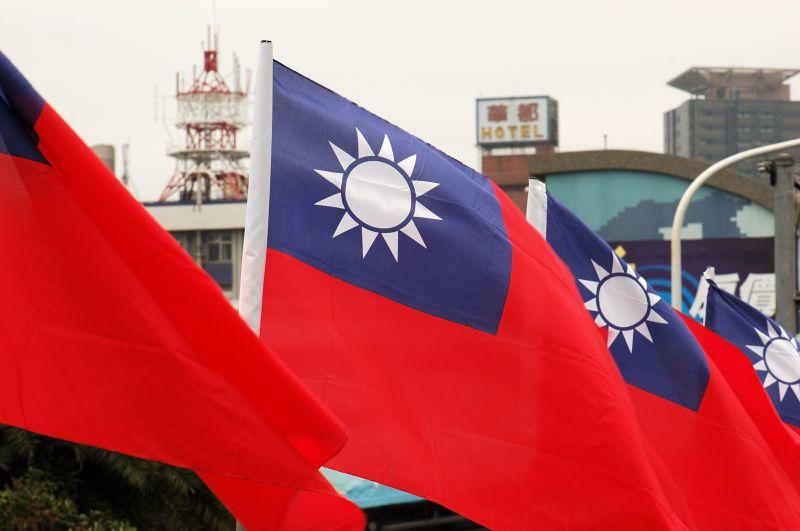
We have just returned from a visit to Taipei, the capital city of one of the safest countries in the world. Taiwan stands out for its exceptionally low crime rates – lower than many European nations, including the UK. Taiwan also stands out as one of the leading democracies in Asia, renowned for its respect for the rule of law and steady progress in advancing human rights. In fact, Taiwan is one of the only countries in Asia to have given domestic legal effect to the International Covenant on Civil and Political Rights and the International Covenant of Social Economic and Cultural Rights. Yet Taiwan continues to uphold the death penalty.
In recent months, the government has taken a number of regressive steps: executions have resumed; proposals for harsher prison sentences have surfaced from both legislators and the Ministry of Justice; and the introduction of life imprisonment without parole (LWOP) is under consideration. This shift is less about evidence than politics. Policymaking driven by political expediency risks producing laws that are unjust, disproportionate, and at odds with Taiwan’s own democratic ideals and the international obligations it has voluntarily accepted.
One year ago, on 20 September 2024, Taiwan’s Constitutional Court upheld the constitutionality of the death penalty. In doing so, the court missed a historic opportunity to end Taiwan’s use of the death penalty and align with the global trend toward abolition. The decision was profoundly disappointing. The Court was presented with clear evidence that capital punishment neither protects society nor deters serious crime. Instead, it is inherently arbitrary, disproportionate and discriminatory in its application. As such, it inevitably and always violates the right to life, as well as the prohibition on torture and cruel, inhuman and degrading treatment.
Whilst the Court upheld the constitutionality of the death penalty, it did restrict its use, ruling that capital punishment could only be imposed in the most serious cases of intentional homicide; defendants with mental health conditions cannot be sentenced to death or executed; defendants must be guaranteed legal representation at both trial and appeal; and death sentences must be decided unanimously by both trial courts and courts of appeal.
The Court acknowledged the tension between affirming the state’s power to execute its citizens and safeguarding fundamental human rights and due process. Yet in doing so, it treated the lawful imposition of the death penalty as somehow severable from its application and execution. The result is an uneasy and unworkable compromise: the death sentence is upheld, but the human dignity of those facing execution is recognised only in passing.
This contradiction was laid bare when Huang Lin-Kai was executed on 16 January 2025 – just months after the Constitutional Court’s ruling. At just 32, Huang was one of the youngest people on death row. Sentenced to death in 2017, he was executed far sooner than most – the average time spent under a sentence of death in Taiwan is 13 years, with some remaining on death row for decades. His execution was carried out summarily and unlawfully, with only a few hours’ notice. In its September 2024 judgment, the Court had expressly urged the Prosecutor General to review the cases of the 37 individuals then on death row and file extraordinary appeals wherever the safeguards had not been applied. Huang’s lawyers requested such an appeal, yet he was executed suddenly without any proper review, in blatant disregard of the rule of law and in contempt of the Court’s own judgment. Why Huang was singled out to be killed remains inexplicable, except as an act of political opportunism and arbitrariness.
What could have motivated the Minister of Justice to sign an execution warrant under such circumstances? One explanation may lie in dissatisfaction with the judgment of the Constitutional Court. Opponents of the death penalty condemned the Court for failing to abolish the death penalty altogether, whilst proponents denounced the new restrictions as amounting to a de facto ban, accusing the Court of making executions virtually impossible. These tensions escalated into political pressure: the Kuomintang (KMT)-led Legislative Yuan blocked judicial nominees who they perceived favoured abolition and amended the Constitutional Court Procedure Act to raise the statutory threshold for Constitutional rulings. The Executive responded by ordering the execution of Huang Lin-Kai – an unmistakable message that the Court’s judgment would not stand in the way of executions. More was to follow in April 2025, with the Ministry of Justice amending the Regulations for Executing the Death Penalty. The revisions have made it easier for executions to be carried out, as pending appeals or constitutional litigation will no longer provide a basis to stay an execution. From now on, an additional court ruling is required to halt an execution – an unnecessary, regressive and dangerous reform that is in clear violation of international minimum standards.
The recent handling of the death penalty by the judicial, legislative and executive branches of government has placed Taiwan in an unenviable position. Earlier momentum toward abolition – grounded in the human rights case against the death penalty – now appears to have come to a grinding halt. This damages Taiwan’s international reputation, for the death penalty has no place in a democracy that claims to uphold the rule of law. To endorse the death penalty is, in our view, to endorse torture.
It is notable that other aspects of the criminal justice system, not just the death penalty, have increasingly become hostage to political manoeuvring in Taiwan, rather than grounded in evidence or principle. The KMT’s recent proposal to add LWOP - a sentence that condemns a person to die in prison without any prospect of review or release - to Taiwan’s penal code while retaining the death penalty is a striking example. To introduce LWOP alongside the death penalty would entrench a dual system of death sentences, giving the state the power to execute its citizens or to impose what has been described as “death by incarceration”.
Both sentences extinguish hope, deny the possibility of rehabilitation and have been recognised internationally as cruel, inhuman and degrading forms of punishment. Experience elsewhere shows how deeply problematic adopting LWOP sentences can be. Research from the United States reveals that LWOP has become the routine substitute for the death penalty in many states, with more than 56,000 people now sentenced to die in prison. The consequence is stark: prisons turned into de facto geriatric wards, crowded with ageing, infirm LWOP individuals who no longer pose any threat to society but have no hope of being considered for release. Taiwan has already seen the despair that such hopelessness creates: in 2015, six individuals serving life sentences staged a hostage crisis to protest against excessive sentences and the lack of any realistic prospect of release, before taking their own lives. That tragedy points towards the urgent need for reform, not harsher life sentences.
By contrast, European countries and other jurisdictions have moved firmly in the opposite direction. The European Court of Human Rights has ruled that life sentences must always be reducible, with a meaningful chance of being considered for release. Constitutional courts in Belize, Germany, Italy and Zimbabwe and elsewhere have struck down LWOP as incompatible with the principle of human dignity, affirming that while life sentences may be indefinite, they must always preserve the possibility of rehabilitation, review and release – otherwise they amount to a death sentence by another name. This global momentum reflects a consensus: that neither execution nor irreducible life imprisonment has any place in a society that claims to respect the rule of law and human rights principles. To introduce LWOP would leave Taiwan isolated – out of step not only with international standards, but with the values of fairness, dignity, and humanity that underpin its own democratic aspirations.
Taiwan is not without a path forward. Around the world, countries once deeply committed to the death penalty have shown that change is possible. Policymakers, civil society, lawyers, academics, and ordinary citizens have worked together to build systems that uphold justice and human dignity without resorting to irreversible or irreducible penalties. Taiwan also has a strong, vibrant community of advocates who continue to press for reform, often in the face of political headwinds.
The global trend is clear: states are moving away from both the death penalty and LWOP, recognising that justice cannot be built on punishments that extinguish all hope. By doing the same, Taiwan would align with international human rights standards and show that justice can protect society while still upholding dignity, fairness and the human capacity for change – strengthening its democracy and elevating its standing in the global community.
Catherine Appleton is Deputy Chair of Penal Reform International and Senior Research Fellow at the Centre for Research and Education in Security, Prisons and Forensic Psychiatry, St Olavs University Hospital, Trondheim, Norway.
Saul Lehrfreund is Co-Executive Director of The Death Penalty Project, Visiting Professor of Law at the University of Reading, and Honorary Professor at the School for Policy Studies, University of Bristol.
Photo credit: Matthew Fang via Flickr: CC BY-NC-ND 2.0.
Share: